
Get In Touch
Pudgy Squirrel Marketing
The Shed Dealer’s Digital Playbook: How to Get Found Online and Fill Your Lot
By Tony
August 21, 2026
8 mins
Share:
Key Takeaways
- Most shed buyers start their search on Google before they ever visit a lot. If you are not showing up locally, you are invisible.
- A fast, mobile-friendly website with clear calls to action is your single biggest sales tool.
- Google Business Profile optimization is the fastest, cheapest way to drive local traffic.
- Paid ads and SEO work best together, not as either/or decisions.
- A CRM system turns missed follow-ups into closed deals.
- Consistent content builds trust and keeps you relevant in search results year-round.
Introduction: The Shed Industry Has a Visibility Problem
Your sheds are quality-built. Your prices are competitive. Your lot looks great. And yet, a competitor across town seems to always stay busier than you.
Chances are, they are not building better sheds. They are just easier to find.
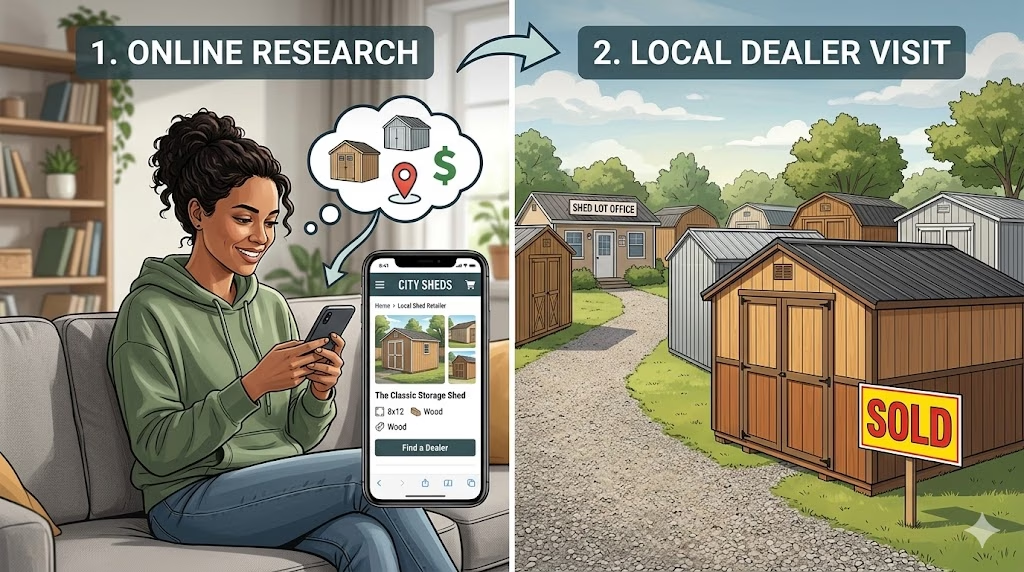
The outdoor storage and backyard building industry has grown significantly in recent years, fueled by homeowners adding workspace, storage, and recreational space to their properties. But that growth has also made the market more competitive. Buyers now research online before they ever step foot on a lot. They compare styles, prices, and dealers all from their phone.
If your digital presence is weak, you are handing those customers to someone else.
This playbook is built specifically for shed dealers. It covers the strategies that actually move the needle: local SEO, Google Business Profile, website conversion, paid advertising, and the follow-up systems that turn a lead into a sale.
Section 1: Understand How Shed Buyers Actually Search
Before you optimize anything, you need to understand your buyer’s search behavior.
Most shed buyers are not typing “portable storage buildings” into Google. They are typing things like:
- “sheds for sale near me”
- “12×16 shed [city name]”
- “rent-to-own sheds [state]”
- “wood sheds vs vinyl sheds”
- “shed delivery and setup [zip code]”
These are high-intent, local searches. The person is ready to buy or getting close. If you are not ranking for these phrases in your area, your competitors are capturing that traffic.
Three Stages of the Shed Buyer Journey
Stage 1: Awareness. The buyer realizes they need more storage or a workshop. They start researching shed types, materials, and sizes. Content like “What size shed do I need?” performs well here.
Stage 2: Consideration. They are comparing dealers and prices. Reviews, photos, and your Google Business Profile are doing the heavy lifting now.
Stage 3: Decision. They are ready to buy or inquire. This is where your website’s calls to action, contact forms, and response speed close the deal.
Your marketing needs to speak to all three stages. Most shed dealers only focus on Stage 3, which means they are missing the majority of their potential buyers.
Section 2: Your Google Business Profile Is Your Most Underused Asset
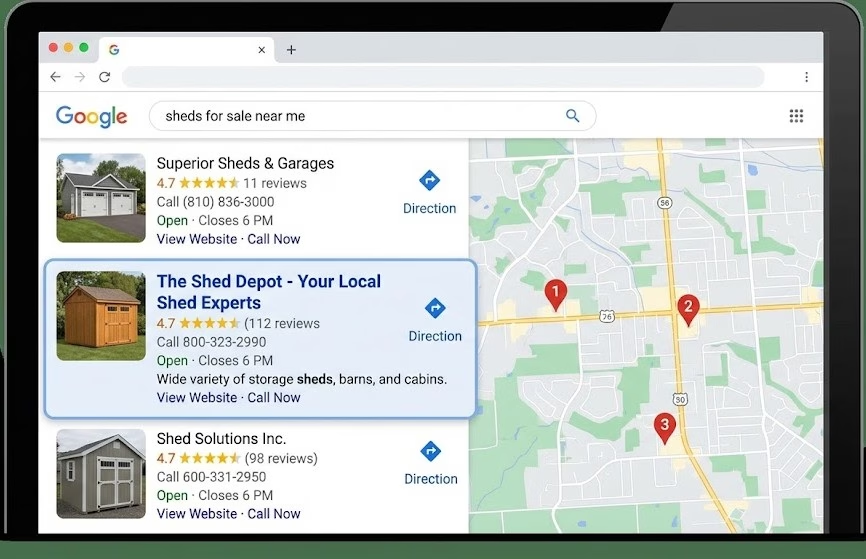
If you only do one thing after reading this article, optimize your Google Business Profile (GBP). It is free. It shows up before organic results in local searches. And most dealers treat it like an afterthought.
What a Fully Optimized GBP Looks Like
Business category: Choose “Shed Builder” or “Storage Building Dealer” as your primary category. Add secondary categories where applicable.
Photos: Upload at least 20 high-quality photos. Include exterior shots, interior shots, delivery setups, and your actual lot. Google rewards active profiles with better placement.
Description: Write a 750-character description that naturally includes your key services, the areas you serve, and what makes you different. Do not keyword-stuff it.
Products/Services: List your shed lines, sizes, and any rent-to-own options as individual entries with photos and prices.
Posts: Publish Google Posts weekly. Seasonal promotions, new inventory arrivals, and customer stories all perform well. These posts appear directly in your profile.
Reviews: Actively ask every customer for a Google review. Respond to every review, positive or negative. Google tracks engagement.
A fully optimized GBP can realistically land you in the “Map Pack,” the three-business block that appears at the top of local search results. That placement alone can double your inbound inquiries.
Section 3: Build a Website That Converts, Not Just One That Exists
A lot of shed dealer websites were built years ago and have not been touched since. They load slowly, are not mobile-friendly, and make it hard for a visitor to take the next step.
Your website is your 24/7 salesperson. It needs to do a few specific jobs very well.
The Non-Negotiables for a Shed Dealer Website
Speed. More than half of your visitors are on a mobile device. If your site takes more than 3 seconds to load, a large portion of those visitors will leave before they see your inventory. Google also uses page speed as a ranking factor.
Mobile layout. Buttons need to be large enough to tap. Text needs to be readable without zooming. Navigation needs to be clean and simple.
Clear calls to action. Every page should have an obvious next step: “Get a Quote,” “View Inventory,” “Call Us Now,” or “Request Delivery Info.” Visitors should never have to guess what to do.
Inventory pages with real photos. Shoppers want to see what they are buying. If your website only has stock manufacturer photos, you are losing buyers to dealers who show their actual product.
Local signals. Your city, county, and service area should appear naturally in your page content, not just in the footer. This helps Google understand who you serve.
Trust elements. Customer reviews, years in business, delivery and setup guarantees, and warranty information all reduce buyer hesitation and increase conversions.
A professional website built for your industry is one of the highest-ROI investments a shed dealer can make. The cost is recovered quickly when even one or two additional sales per month come through an optimized digital presence.
Section 4: Local SEO That Puts You on the Map
Once your website is solid and your GBP is optimized, the next step is building your local SEO foundation.
Local SEO is the process of getting your business to rank higher in search results when people in your area search for what you sell.
The Core Local SEO Pillars for Shed Dealers
Consistent NAP citations. Your business Name, Address, and Phone number need to be identical across every directory where you are listed: Google, Bing, Yelp, Facebook, the Better Business Bureau, and any industry directories. Inconsistencies confuse search engines and hurt your rankings.
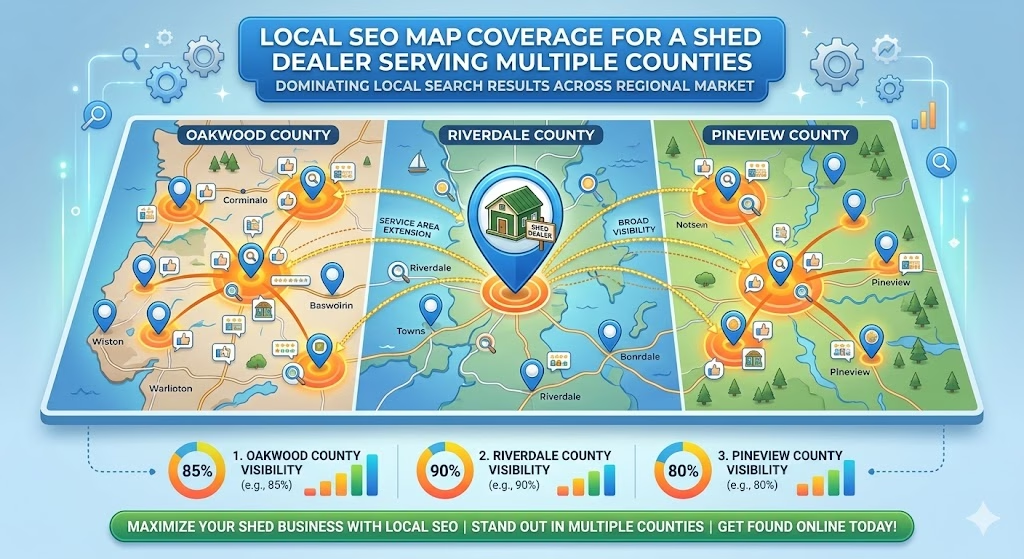
Location-specific landing pages. If you serve multiple cities or counties, build a dedicated page for each major area. A page targeting “sheds for sale in [City Name]” ranks far better than trying to target your entire region from one generic page.
On-page keyword integration. Work your most important search terms naturally into your page titles, headings, and body content. Think about how your customers phrase their searches, not how a manufacturer describes the product.
Backlinks from local sources. When other local websites link to yours, it signals authority to Google. Local business associations, chambers of commerce, and community directories are good starting points.
Schema markup. This is structured data added to your website’s code that helps Google understand your business type, location, hours, and reviews. A good web developer or marketing partner can implement this for you.
A dedicated SEO strategy built around your service area can take 3 to 6 months to show significant results, but the traffic it generates is highly targeted and does not require ongoing ad spend to maintain.
Section 5: Paid Advertising to Fill the Gap While SEO Builds
SEO is a long-term investment. Paid search advertising, specifically Google Ads, can drive leads immediately while your organic rankings grow.
For shed dealers, Google Ads works best when it is tightly focused.
How to Run Google Ads Without Wasting Budget
Target by geography first. Set your ads to only show to people within your actual delivery radius. There is no value in paying for clicks from someone 200 miles away.
Use high-intent keywords. Bid on specific, buyer-ready phrases like “buy a shed [city]” or “wood sheds for sale near me.” Broad keyword targeting burns budget on irrelevant searches.
Send clicks to dedicated landing pages. Do not send paid traffic to your homepage. Build a simple page for each campaign with a clear offer, strong photos, and a contact form. This dramatically improves your conversion rate.
Use negative keywords. Add terms like “free,” “plans,” “DIY,” and “how to build” as negative keywords so you do not pay for clicks from people who are not buyers.
Track conversions. Set up conversion tracking so you know exactly which ads are generating calls and form submissions, not just clicks. Clicks without context are not useful data.
Online advertising management is most effective when campaigns are actively monitored and refined. A set-it-and-forget-it approach wastes money. Regular adjustments to bids, ad copy, and targeting are what separate profitable campaigns from expensive ones.
Section 6: The Follow-Up System Most Dealers Are Missing
Here is an uncomfortable truth: most shed dealers are spending money to generate leads they never follow up with properly.
A customer submits a quote request on a Friday afternoon. Nobody responds until Monday. By then, they have already bought from the competitor who called them back in 20 minutes.
Speed to lead is one of the most significant factors in converting an inquiry into a sale. Studies across industries consistently show that responding within the first five minutes increases your chances of connecting with a lead by a factor of nearly 100 compared to waiting 30 minutes.
What a Good Follow-Up System Looks Like
Automated acknowledgment. As soon as someone submits a form or sends a message, they should receive an immediate response confirming their inquiry was received and giving them a timeframe for a personal follow-up.
Sequential follow-up. Not every lead converts on the first contact. A structured sequence of calls, texts, and emails over the first 7 to 14 days keeps you top of mind without being pushy.
Lead tracking. Every inquiry should be logged with contact info, interest level, timeline, and follow-up history. Without a system, leads fall through the cracks.
A CRM platform built for your business handles all of this automatically. It ensures no lead is forgotten, tracks where every prospect is in your sales process, and lets you see at a glance which leads need attention today.
Section 7: Content That Builds Trust Year-Round
Consistent content keeps your business visible between purchase cycles and builds the kind of trust that makes buyers choose you over a competitor they found at the same time.
You do not need to post every day. You need to post consistently and with purpose.
Content Ideas That Work for Shed Dealers
Buying guides. “How to Choose the Right Shed Size for Your Backyard” or “Wood vs. Vinyl vs. Metal Sheds: A Comparison” target buyers in the research phase and rank well in search.
Project showcases. Share customer photos of their sheds after setup. Tag the location. These build social proof and generate local relevance signals for SEO.
Seasonal promotions. Spring and early summer are peak buying seasons. Start your promotional content 6 to 8 weeks early so it is indexed and visible when buyers start searching.
FAQ content. Answer the questions your customers ask most often. “Do I need a permit for a shed?” is searched thousands of times a month in most states. A well-written answer positions you as the local expert.
Behind-the-scenes content. Short videos of delivery day, setup crews at work, or a walk-through of your lot builds authenticity. This type of content performs well on social media and supports your social media presence with original, brand-specific material.
Section 8: Putting It All Together
The shed dealers who consistently fill their lots are not doing everything perfectly. They are doing the fundamentals consistently and improving over time.
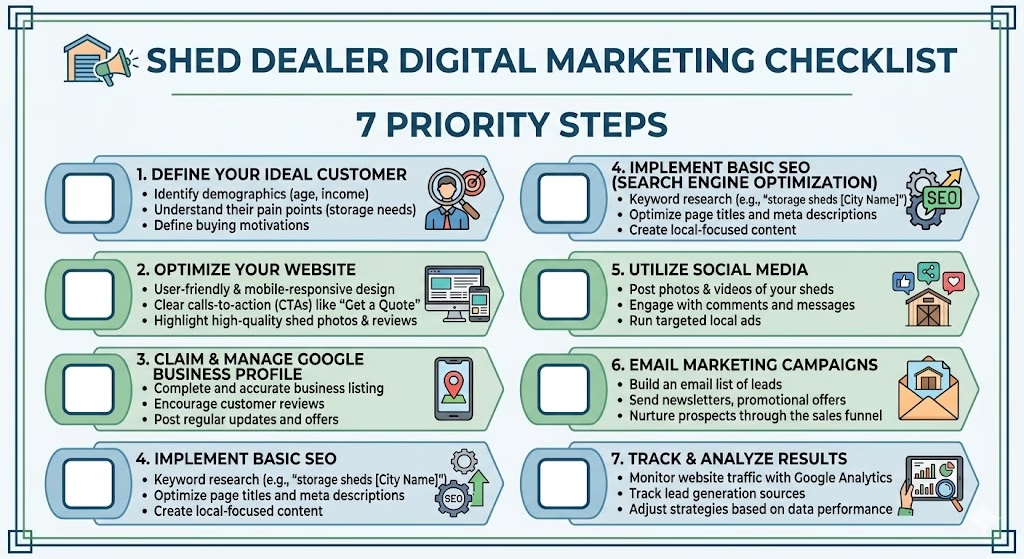
Here is a practical priority sequence to get started:
- Claim and fully optimize your Google Business Profile this week.
- Audit your website for mobile speed and conversion basics.
- Make sure your NAP information is consistent across all online directories.
- Set up a simple follow-up system for incoming leads.
- Start a Google Ads campaign targeted to your delivery area.
- Build out local landing pages for your top cities or counties.
- Publish one piece of useful content per week, starting with your most common customer questions.
None of these steps require a massive budget. They require consistency and a commitment to treating your digital presence as seriously as you treat your physical lot.
The Bottom Line
The shed market is not slowing down. But the buyers in your area are increasingly finding their dealer online, not by driving past your lot.
The businesses that invest in their digital presence now will capture the compounding benefits of search rankings, reviews, and brand recognition for years to come. The ones that wait will find the gap harder and harder to close.
You build quality structures. Make sure the digital foundation of your business is just as solid.
Ready to see where your digital presence stands? Get a free marketing audit from Pudgy Squirrel and find out exactly what is holding your business back and what your competitors are doing differently.
Why Schedule a Call?
Popular Insights
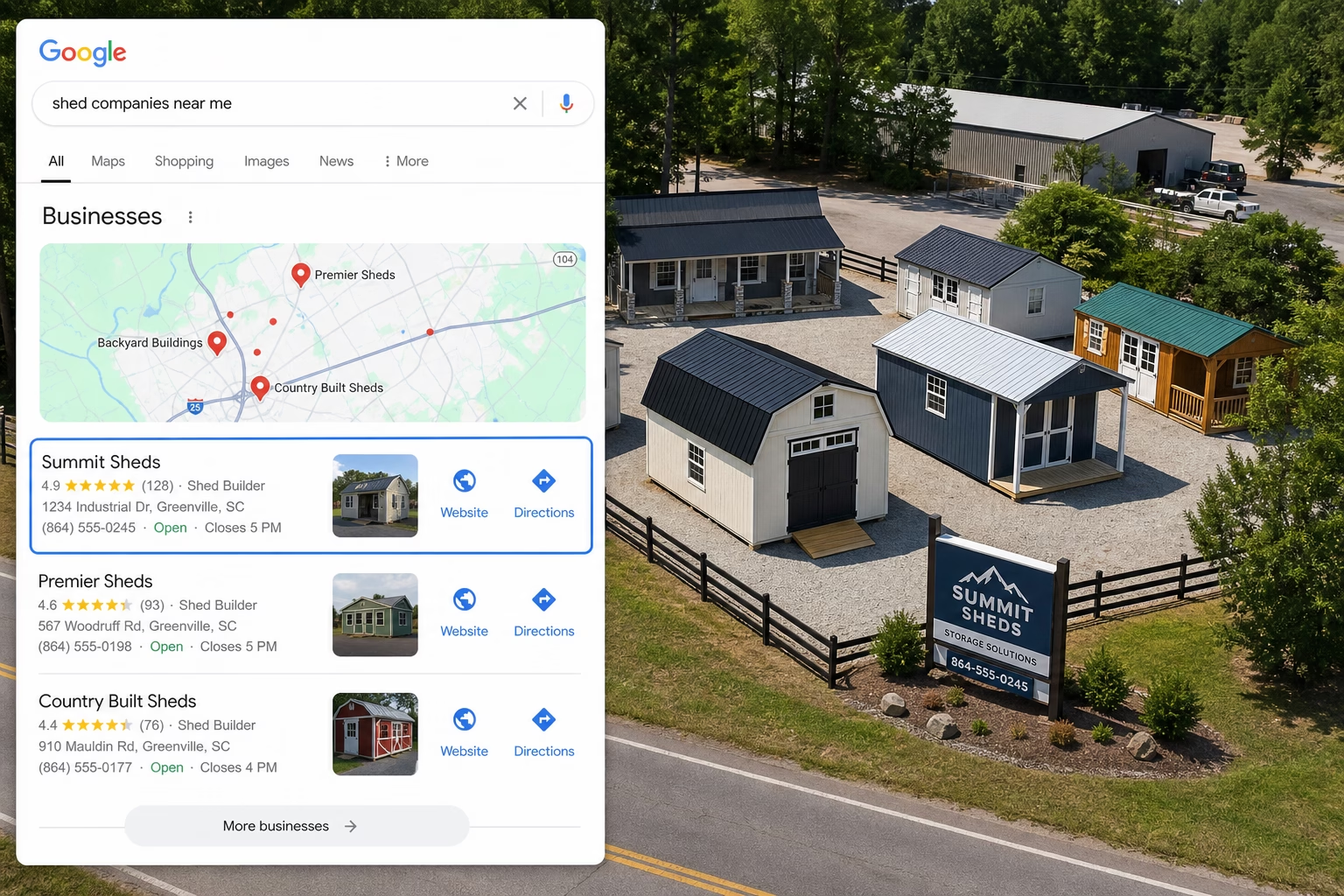
The Shed Business Owner’s Blueprint for Getting Found on Google
Aug. 14, 2026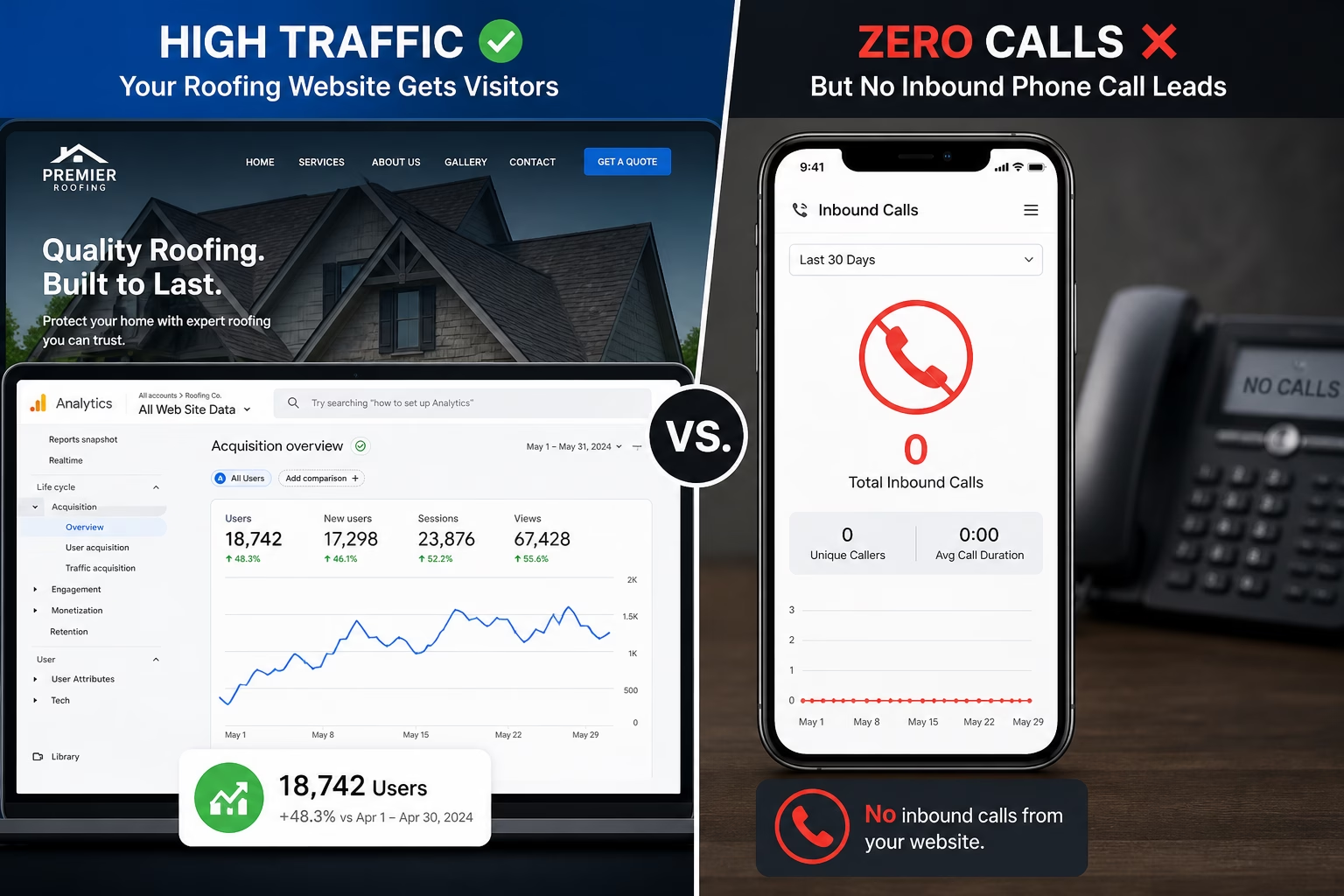
Why Your Roofing Website Gets Traffic But No Phone Calls (And How to Fix It)
Aug. 07, 2026How to Use Video to Book More Jobs as a Roofer or Builder (Even If You Hate Being on Camera)
Jul. 31, 2026The Anatomy of a High-Converting Contractor Website: What Customers Actually Look for Before Calling
Jul. 24, 2026
Seasonal Marketing: How Smart Contractors Stay Busy in the Slow Season
Jul. 17, 2026Topics
Pudgy Squirrel Marketing
The Shed Dealer’s Digital Playbook: How to Get Found Online and Fill Your Lot
Read More
Pudgy Squirrel Marketing
The Shed Business Owner’s Blueprint for Getting Found on Google
Read More
Pudgy Squirrel Marketing
Why Your Roofing Website Gets Traffic But No Phone Calls (And How to Fix It)
Read More

Pudgy Squirrel Marketing
How to Use Video to Book More Jobs as a Roofer or Builder (Even If You Hate Being on Camera)
Read More
Pudgy Squirrel Marketing
The Anatomy of a High-Converting Contractor Website: What Customers Actually Look for Before Calling
Read More
Pudgy Squirrel Marketing
Seasonal Marketing: How Smart Contractors Stay Busy in the Slow Season
Read More
Pudgy Squirrel Marketing
What Does a $1,500/Month Marketing Budget Actually Get a Shed or Construction Business?
Read More
Pudgy Squirrel Marketing
DIY vs. Agency: Should a Roofing Company Handle Their Own Marketing?
Read More