
Get In Touch
Pudgy Squirrel Marketing
Google Business Profile for Roofers: The Complete Setup and Optimization Guide to Dominate Local Search
By Tony
November 3, 2026
10 mins
Share:
Why Google Business Profile Is a Roofer’s Most Powerful Free Tool
Before a homeowner ever visits your website, they see your Google Business Profile.
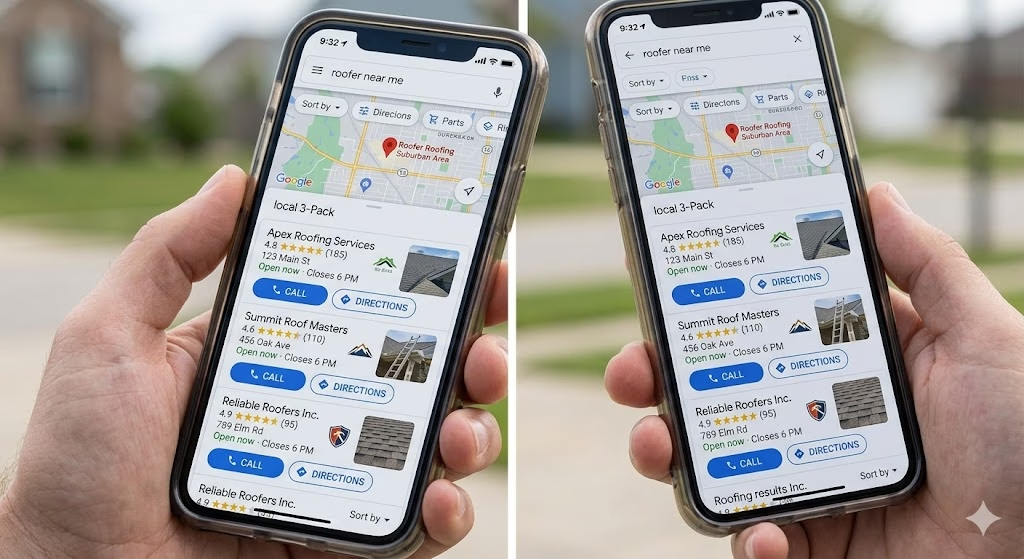
It shows up when someone searches “roofer near me,” “roof replacement [city],” or “hail damage roof repair.” It appears on Google Maps. It displays your star rating, your phone number, your hours, and your reviews, all before a single click.
For roofing companies, this is not a nice-to-have. It is the front door to your business online.
The local “3-Pack,” the three business listings that appear at the top of Google search results before the organic links, captures a large share of all clicks for local service searches. Roofers who earn a spot in that 3-Pack consistently outperform competitors who rely on organic rankings alone.
The challenge is that most roofing companies either have an incomplete profile, have never actively managed it, or set it up years ago and forgot about it.
This guide changes that.
Step 1: Claim and Verify Your Profile
If you have not already claimed your Google Business Profile, start here.
Go to google.com/business and search for your business name. If a listing already exists (Google often auto-generates listings from public data), claim it. If not, create a new one from scratch.
Verification Options
Google will ask you to verify ownership of the business. Current options include:
- Postcard by mail: Google mails a card with a PIN to your business address. This typically takes 5-14 days.
- Phone or text verification: Available for some businesses. Faster, but not always offered.
- Video verification: Google may ask you to record a short video showing your business location, signage, or equipment. This has become more common in 2025.
- Instant verification: Sometimes available if your business is already verified in Google Search Console.
Choose the fastest option available to you. Do not skip this step or leave it pending. An unverified profile has almost no ranking power.
Step 2: Fill Out Every Single Field (Most Roofers Skip Half of These)
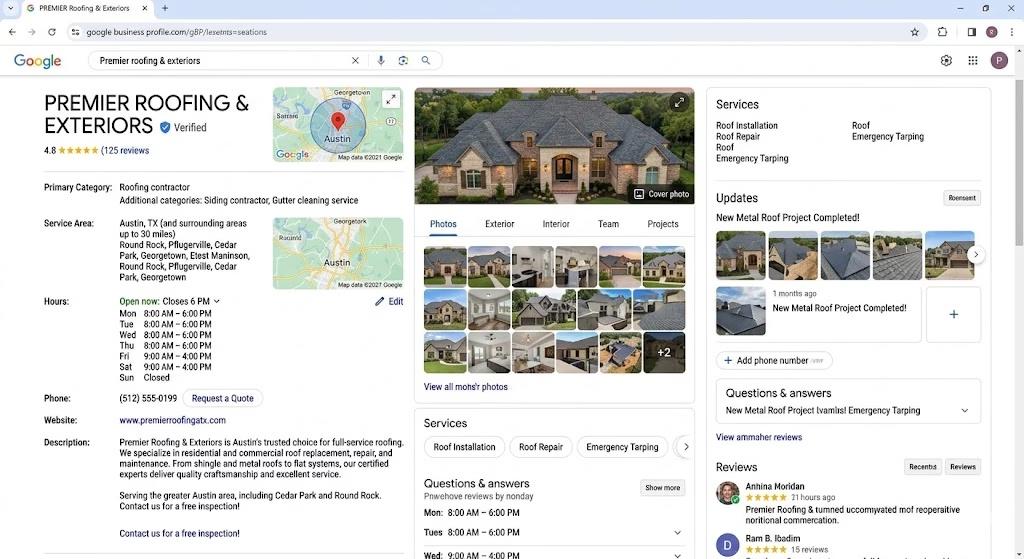
Completeness is a direct ranking factor. Google rewards profiles that are thorough because they provide a better experience for searchers. Think of each empty field as a missed opportunity.
Business Name
Use your exact legal or operating business name. Do not add keywords like “Best Roofer in [City]” to your business name. This violates Google’s guidelines and can result in a suspension. If your company is called “Apex Roofing LLC,” that is what your profile should say.
Primary and Secondary Categories
This is one of the most important and most misused fields in the entire profile.
Primary category: Select “Roofing Contractor” as your primary category. This single field has a significant impact on which searches your profile appears in.
Secondary categories: Add every relevant secondary category that applies to your services. Options to consider include:
- Gutter Installation Service
- Siding Contractor
- General Contractor
- Storm Damage Restoration Service
- Insulation Contractor (if applicable)
Do not add categories that do not apply to your business. Relevance matters more than volume here.
Service Area
If you serve customers at their location (which most roofers do), set a service area rather than relying only on a pin location. Add every city, county, or zip code you actively serve.
A common mistake is setting too small a service area out of caution. If you genuinely serve a 50-mile radius, claim it. Google cross-references your service area with your physical address and the locations of your reviews, so accuracy matters.
Hours of Operation
Set accurate hours and keep them updated. If you extend hours during storm season, update them. If you close for a holiday, add a special hours entry. An incorrect “Closed” listing when you are actually open is a lead killer.
Phone Number
Use a local phone number, not a toll-free number, as your primary contact. Local numbers signal local relevance to both Google and homeowners. Make sure this number matches exactly what appears on your website and every other online directory. This consistency is called NAP alignment (Name, Address, Phone) and it directly affects your local ranking.
Step 3: Write a Business Description That Works for You
You have 750 characters for your business description. Use them strategically.
The first 250 characters are the most important because that is what shows before the “More” button truncates the text. Lead with your primary value proposition.
A strong roofing description structure looks like this:
Paragraph 1 (first 250 characters): Who you are, where you serve, and your core service. Include your city name and “roofing” naturally. Example: “[Company Name] is a licensed and insured roofing contractor serving [City] and surrounding areas. We specialize in residential roof replacement, hail damage repair, and insurance claim assistance.”
Paragraph 2: Your differentiators. What makes you worth calling over the competitor one listing above you? Years in business, warranty offerings, certifications, financing options, storm response speed.
Paragraph 3: A soft call to action. “Contact us for a free roof inspection and honest assessment.”
Avoid keyword stuffing. Write for the homeowner first. Google is sophisticated enough in 2025-2026 to reward natural, informative descriptions over awkwardly repeated keyword phrases.
Step 4: Build Out Your Services Section
Most roofers list “Roofing” as a single service and call it done. This is a significant missed opportunity.
Google uses your services section to match your profile to specific search queries. A roofer who lists ten distinct services will appear in a wider range of searches than one who lists one.
Build out individual service entries for:
- Residential Roof Replacement
- Roof Repair
- Hail Damage Inspection
- Storm Damage Repair
- Insurance Claim Assistance
- Roof Inspection
- Gutters and Gutter Guards
- Flat Roof Systems (if applicable)
- Metal Roofing (if applicable)
- Emergency Roof Tarping
For each service, write a 1-3 sentence description that naturally includes relevant keywords. These descriptions are indexed by Google and contribute to your relevance signals.
Step 5: Upload Photos Strategically and Consistently
Google Business Profiles with photos receive significantly more direction requests and website clicks than those without. For roofers, photos serve an additional purpose: they are proof that you do real work.
Photo Categories to Prioritize
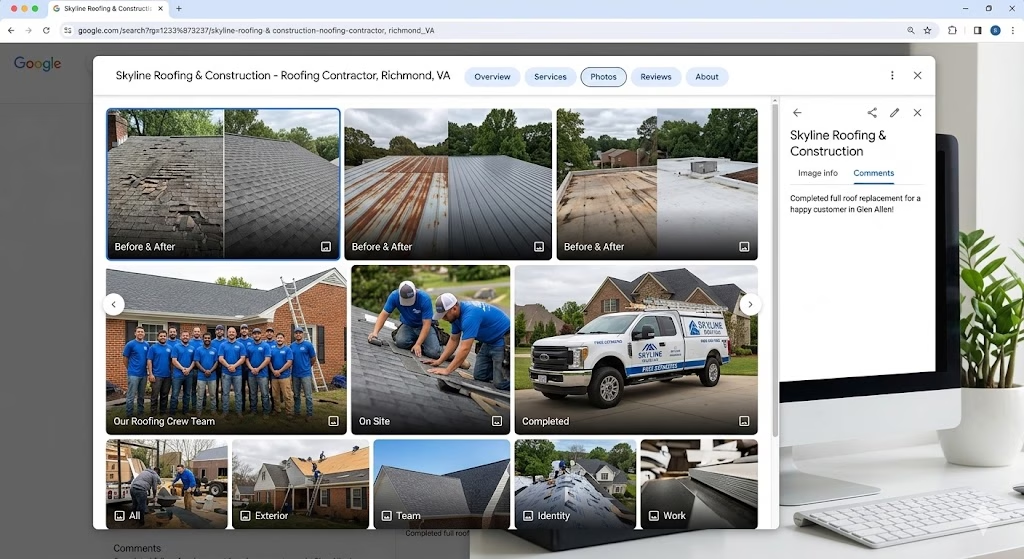
Exterior/Job photos: Before-and-after shots of completed roofs are the most powerful type of content you can upload. They show quality, demonstrate the transformation, and build immediate trust. Aim to add new job photos at least twice a month.
Team photos: A crew photo humanizes your business. Homeowners are letting a team of strangers onto their roof. A smiling, uniformed crew creates psychological comfort.
Equipment and materials: Showing branded trucks, safety gear, and name-brand materials signals professionalism and investment.
Cover photo and logo: Your cover photo should be a high-quality image of a finished roof or your branded truck on a job site. Your logo should be clean and high-resolution.
Photo Best Practices
- Upload photos taken on the job, not stock images. Google can identify stock photos, and homeowners can tell the difference.
- Use a smartphone with good lighting. You do not need a professional photographer.
- Geotag photos before uploading when possible. Geo-tagged images add a subtle local relevance signal.
- Aim for a minimum of 20 photos on your profile. Profiles with more photos consistently rank better.
Step 6: Generate Reviews Like Your Business Depends on It (Because It Does)
Reviews are the most visible trust signal on your entire profile. They affect your star rating, your ranking in the 3-Pack, and the click-through rate from search results.
Here is what most roofers get wrong: they wait for reviews to come in organically. That approach will always put you behind competitors who actively ask.
How to Build a Review System
Ask at the peak of happiness. The best time to ask a customer for a review is immediately after a job is completed and they have told you they are happy. That conversation might sound like: “I am really glad we could get that taken care of for you. It would mean a lot to us if you could leave us a quick Google review. I can send you the link right now if that is easier.”
Make it frictionless. Send a direct link to your Google review page via text message. A link that opens directly to the review form eliminates the steps that cause drop-off.
Follow up once. If someone says they will leave a review but has not within a week, one polite text follow-up is appropriate. Do not pressure or incentivize reviews. Google prohibits review gating (filtering who gets a review request based on their likely sentiment), and offering discounts for reviews violates their policies.
Respond to every review. Responding to reviews, both positive and negative, signals to Google that you are an active, engaged business. It also signals to prospective customers that you care. For negative reviews, always respond professionally and offer to resolve the issue offline.
Review Velocity Matters
It is not just about your total number of reviews. Google weighs recency heavily. A profile with 200 reviews, the last of which was posted 14 months ago, will often rank lower than a profile with 50 reviews that has received three new reviews in the past 30 days.
Build a habit of requesting reviews consistently, not just after a busy storm season.
Step 7: Post Weekly to Your Google Business Profile
GBP posts are one of the most overlooked tools in local SEO, particularly for roofing companies.
Just like a social media post, a GBP post appears on your profile and in some search results. It signals to Google that your business is active and current. Profiles that post regularly are rewarded with better visibility.
Post Types That Work for Roofers
Offer posts: “Free roof inspection for [City] homeowners this month. Call to schedule.”
Update posts: “We are now accepting new jobs in [Neighborhood]. Limited slots available this season.”
Job highlight posts: A short description and photo of a recently completed project. “Just finished a full roof replacement in [Suburb]. New architectural shingles, full ice and water shield. The homeowner was thrilled.”
Educational posts: “Three signs your roof needs attention before winter. [Short tip 1]. [Short tip 2]. [Short tip 3]. Call us for a free inspection.”
Storm response posts: (Covered in detail in our guide on storm season marketing for roofers.) These are time-sensitive posts published in the hours after a major weather event.
Post at least once per week. Set a recurring reminder on your calendar or assign it to a team member. Each post should include a call-to-action button linked to your phone number or booking form.
Step 8: Use the Q&A Section Before Homeowners Ask
The Questions and Answers section on your GBP is populated by anyone, including people who have never used your business. Left unmanaged, it can contain inaccurate information or unanswered questions that cost you leads.
The fix is simple: seed it yourself.
Log in to your profile and add the questions homeowners most commonly ask you, then answer them yourself. This is legitimate and encouraged by Google.
Strong starter Q&A entries for roofers:
- Q: Do you offer free roof inspections? A: Yes. We offer free no-obligation roof inspections for homeowners in [service area]. Call [phone number] or book online.
- Q: Do you work with insurance companies? A: Yes. We have extensive experience navigating the insurance claims process and can work directly with your adjuster.
- Q: How long does a full roof replacement take? A: Most residential replacements are completed in one to two days, depending on the size and complexity of the roof.
- Q: Are you licensed and insured? A: Yes. We are fully licensed in [state] and carry liability and workers compensation insurance. License number: [XXXXX].
- Q: What areas do you serve? A: We serve [City], [City], [City], and surrounding communities within [X] miles.
Monitor this section monthly. If a question comes in from a homeowner, answer it promptly and thoroughly.
Step 9: Track What Is Actually Working
Google provides a free analytics dashboard inside your Business Profile called “Performance.” Use it.
Key metrics to track monthly:
- Search queries: What exact phrases are people typing to find your profile? This is valuable keyword data you can use in your website content and ad targeting.
- Profile views vs. search appearances: Are people finding you but not engaging? That signals your photos or reviews may need work.
- Direction requests and calls: These are the metrics that matter most. If calls are flat despite strong views, your phone number placement or hours may be creating friction.
- Photo views: Which photos are getting the most impressions? Double down on that type of content.
Review this data every 30 days. Even small adjustments, like updating your description or adding a new photo category, can produce measurable changes in call volume within a few weeks.
The Bigger Picture: GBP Is One Piece of the Puzzle
A fully optimized Google Business Profile is powerful, but it performs best as part of a connected marketing system.
Here is why this matters in practice:
When a homeowner finds your GBP and clicks through to your website, what do they find? A slow, outdated site that does not load on mobile will cancel out every hour you spent optimizing your profile. A well-designed roofing website that is fast, mobile-optimized, and conversion-focused is what turns a GBP click into an actual phone call.
When a homeowner submits a form from your GBP or website, how fast does your team respond? If it takes 24 hours, you have already lost to the roofer who texted back in five minutes. A CRM built for roofing businesses automates that first follow-up so you never miss a lead, even on your busiest days.
And when you want to rank not just in the 3-Pack but in organic search results for high-value roofing keywords in your area, local SEO services tailored to the roofing industry are what close the gap between where you are and where your best competitors are.
GBP optimization is the foundation. The full system is what compounds it.
Google Business Profile Optimization Checklist for Roofers
Use this as your monthly audit tool.
Setup and Verification
- Profile is claimed and fully verified
- Business name matches exactly across all directories
- Primary category is set to “Roofing Contractor”
- All relevant secondary categories are added
- Service area covers every geography you actively serve
Content and Completeness
- Business description is 750 characters, benefit-led, and includes city name
- All individual services are listed with descriptions
- Hours are accurate and updated for holidays and storm season
- Phone number is local and matches your website exactly
Photos
- Minimum of 20 photos uploaded
- New job photos added at least twice per month
- Team photo and logo are current and high-resolution
- Cover photo shows a finished roof or branded truck
Reviews
- You have an active system for requesting reviews after each job
- All reviews (positive and negative) have a response within 7 days
- At least one new review received in the past 30 days
Ongoing Activity
- At least one GBP post published in the past 7 days
- Q&A section seeded with 5+ common questions and answered
- Performance dashboard reviewed in the past 30 days
- Any Google-suggested edits or alerts addressed promptly
Final Word
Your Google Business Profile is not a set-it-and-forget-it listing. It is a living marketing asset that rewards attention, consistency, and genuine effort.
The roofers who dominate the local 3-Pack are not necessarily the largest companies or the ones with the biggest ad budgets. They are the ones who show up consistently, earn reviews intentionally, post regularly, and treat their GBP as seriously as they treat their job sites.
Start with the checklist above. Audit your profile today. Fill in what is missing. Then build the habit of maintaining it every week.
If you want help building a local search strategy that goes beyond your GBP and connects every part of your digital presence, Pudgy Squirrel Marketing works exclusively with roofing and construction businesses. We know this industry, and we build marketing systems that actually generate calls.
Why Schedule a Call?
Popular Insights
Why Most Construction Company Websites Don’t Generate Leads and Exactly How to Fix Yours
Nov. 11, 2026
Storm Season Marketing for Roofers: How to Get More Calls in the 72 Hours After a Major Hail Event
Oct. 27, 2026
What a Roofing Company’s Website Needs to Convert Visitors Into Booked Estimates (With Examples)
Oct. 20, 2026
How Roofers Get More Leads in the Off-Season: A Practical Marketing Playbook for Slow Months
Oct. 13, 2026
How to Build a Referral Program for Your Roofing or Construction Business (Without Spending a Fortune)
Oct. 09, 2026Topics
Pudgy Squirrel Marketing
Why Most Construction Company Websites Don’t Generate Leads and Exactly How to Fix Yours
Read More
Pudgy Squirrel Marketing
Google Business Profile for Roofers: The Complete Setup and Optimization Guide to Dominate Local Search
Read More
Pudgy Squirrel Marketing
Storm Season Marketing for Roofers: How to Get More Calls in the 72 Hours After a Major Hail Event
Read More
Pudgy Squirrel Marketing
What a Roofing Company’s Website Needs to Convert Visitors Into Booked Estimates (With Examples)
Read More
Pudgy Squirrel Marketing
How Roofers Get More Leads in the Off-Season: A Practical Marketing Playbook for Slow Months
Read More
Pudgy Squirrel Marketing
How to Build a Referral Program for Your Roofing or Construction Business (Without Spending a Fortune)
Read More
Pudgy Squirrel Marketing
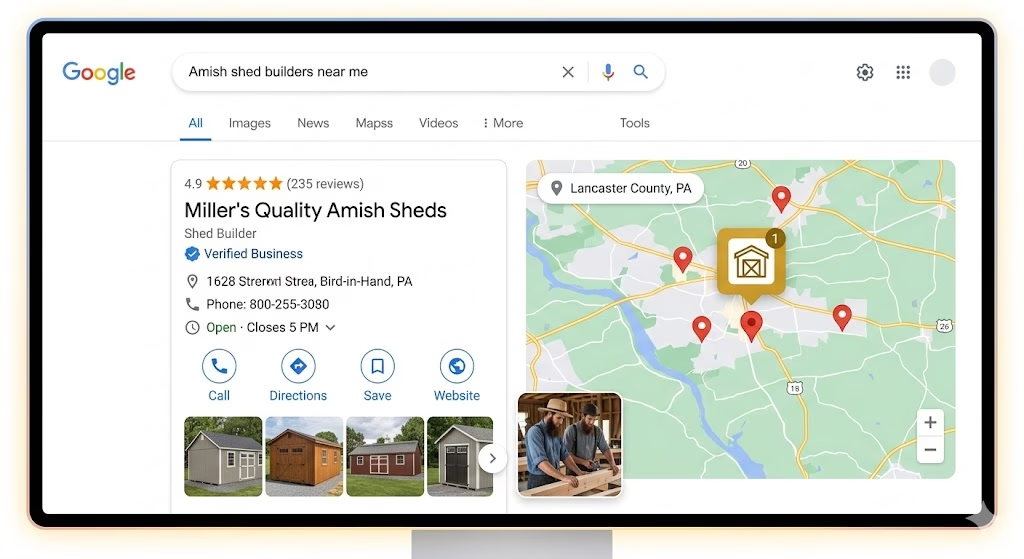
The Amish and Plain Community Business Owner’s Guide to Online Marketing
Read More
Pudgy Squirrel Marketing
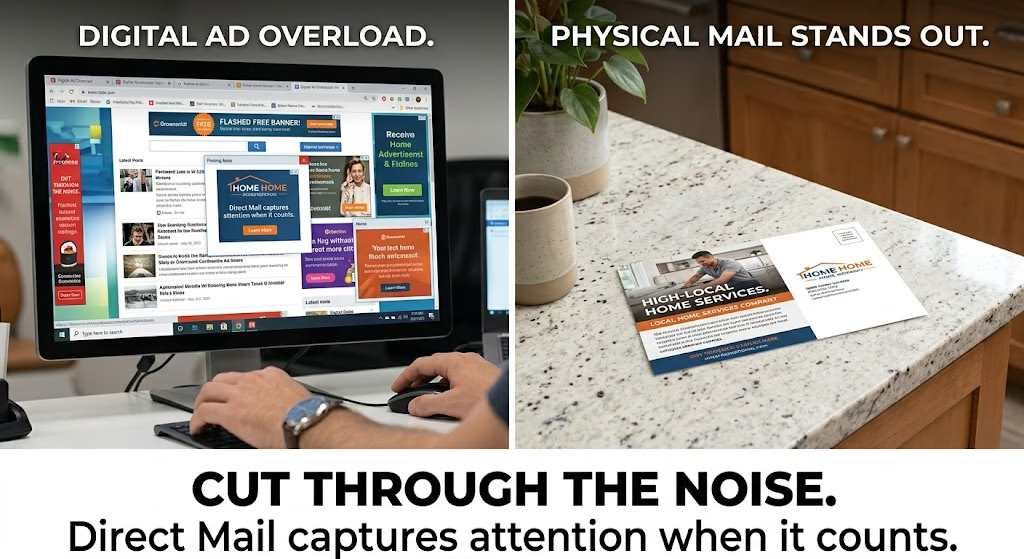
Mailers Aren’t Dead: Why Direct Mail Still Works for Roofing and Construction (And How to Run One That Converts)
Read More