
Get In Touch
Pudgy Squirrel Marketing
Mailers Aren’t Dead: Why Direct Mail Still Works for Roofing and Construction (And How to Run One That Converts)
By Tony
September 22, 2026
12 mins
Share:
Key Takeaways
- Direct mail response rates for home services businesses consistently outperform email and digital display advertising.
- The average household receives far less physical mail than a decade ago, which means less competition for attention in the mailbox.
- The most effective mailer campaigns for roofing and construction are hyper-targeted by geography, timing, and trigger event.
- Design, offer, and call to action are the three variables that determine whether a mailer converts or gets tossed.
- Direct mail works best when it is part of a coordinated campaign that also touches digital channels.
- Most contractors run mailers wrong. This guide covers exactly what to do differently.
Introduction: Everyone Went Digital. Your Mailbox Got Quieter.
There was a point about 10 years ago when every marketing consultant was telling roofing and construction businesses to abandon direct mail and go all-in on digital. Google Ads, Facebook, SEO. The future was online.
Most contractors listened. They pulled back from mailers and shifted budget to digital channels.
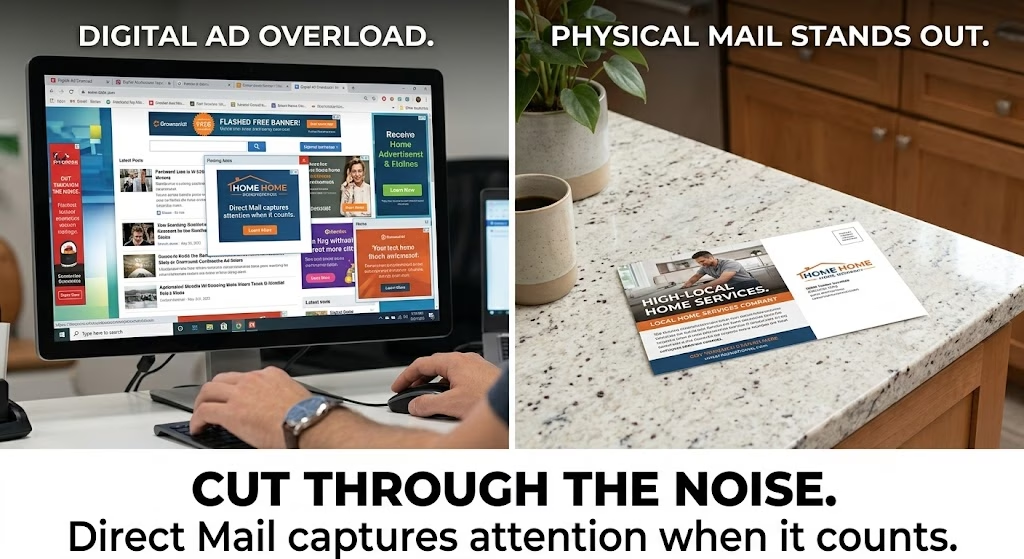
Here is the unintended consequence: the average American household now receives a fraction of the physical mail it did in the early 2000s. The mailbox went from a cluttered, competitive space to one of the least crowded marketing channels available.
Meanwhile, screen fatigue is real. The average person sees between 4,000 and 10,000 digital ads per day. Banner blindness is so pervasive that click-through rates on display ads now hover below one percent in most industries.
Direct mail, done well, lands in a quiet space. It gets picked up, physically handled, and often kept on a counter or pinned to a fridge in a way that no digital ad ever will.
For roofing and construction businesses in particular, the math on mailers is compelling and most of your competitors are not paying attention to it.
This guide gives you the complete playbook: why mailers still work, who to target, what to say, how to design for response, and how to integrate direct mail into a broader marketing system that compounds results over time.
The Data That Makes the Case for Direct Mail in 2026
Before getting into the how, it is worth anchoring the argument in actual numbers.
The Data and Marketing Association has consistently reported that direct mail achieves response rates of 4.4 to 9 percent for house lists (people who have interacted with your business before) and 1 to 3 percent for cold prospect lists. Compare that to average email response rates of 0.6 percent and display ad click-through rates well below one percent.
For a roofing company sending 1,000 mailers to a targeted neighborhood list at a 2 percent response rate, that is 20 inbound contacts. If the average roofing job is worth $12,000 and you close even half of those contacts, a single mailer campaign generates over $100,000 in revenue potential.
The cost to mail 1,000 pieces, including design, printing, and postage, typically runs between $500 and $1,500 depending on format and list quality.
That math is hard to replicate with most digital channels at comparable budget levels, especially in competitive roofing markets where a single Google Ads click can cost $15 to $50.
Additional factors that favor direct mail in 2026:
- Physical mail has a longer shelf life than any digital ad. A homeowner who is not ready to act today may look at your mailer again in three weeks when a storm rolls through.
- Mail does not require an algorithm to decide who sees it. Your piece lands in the targeted mailbox every time.
- There is no ad blocker for physical mail.
- USPS data consistently shows that homeowners in the 45 and older demographic, who represent a significant share of roofing and remodeling buyers, respond to direct mail at higher rates than any digital channel.
Why Roofing and Construction Are Uniquely Well-Suited to Direct Mail
Not every business benefits equally from direct mail. Roofing and construction companies have several structural advantages that make the channel particularly effective.
Geographic precision. You already know exactly where your ideal customers live. You serve specific neighborhoods, zip codes, and counties. Direct mail lets you target those geographies with precision that most digital platforms struggle to match at the hyper-local level.
High average transaction value. A mailer that generates one additional roofing job per month at $10,000 to $20,000 per job has an extraordinarily favorable return on a $500 to $1,500 investment. High-ticket trades can absorb the cost of direct mail far more easily than low-margin businesses.
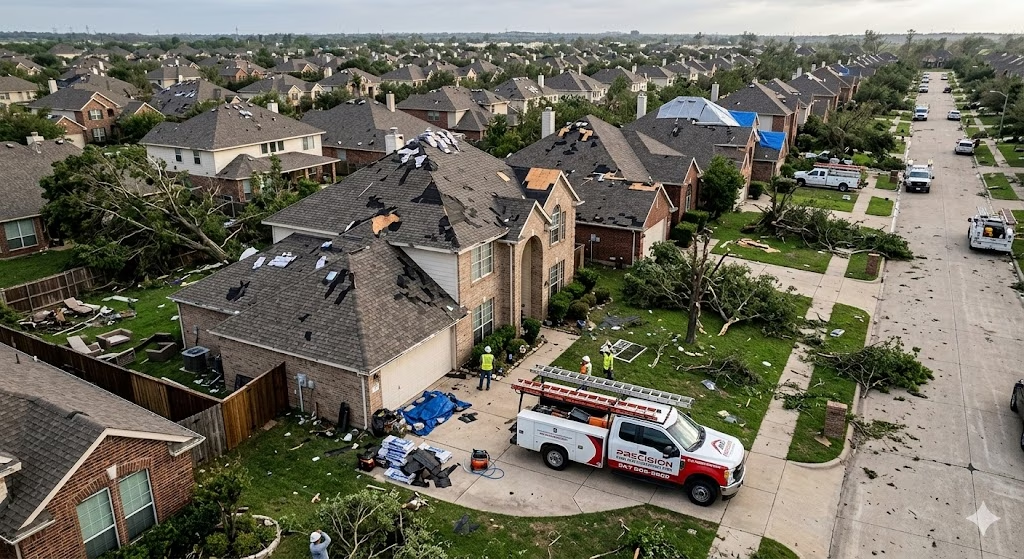
Trigger events are predictable. Hailstorms, high winds, and heavy snow create concentrated clusters of homeowners with immediate roofing needs in specific zip codes. Mailers sent within 48 to 72 hours of a weather event to affected neighborhoods are among the highest-converting campaigns in the roofing industry.
Visual impact. Roofing and construction are visual trades. A well-photographed mailer showing a beautiful before/after transformation communicates quality instantly and in a way that no headline can replicate.
The neighbors effect. When a roofing or construction crew is working in a neighborhood, multiple nearby homeowners notice. A mailer arriving in those same neighbors’ mailboxes within the week of a nearby job reinforces the sighting and creates a “they must be good, they are working right down the street” association.
The 4 Types of Mailer Campaigns That Work for Roofers and Contractors
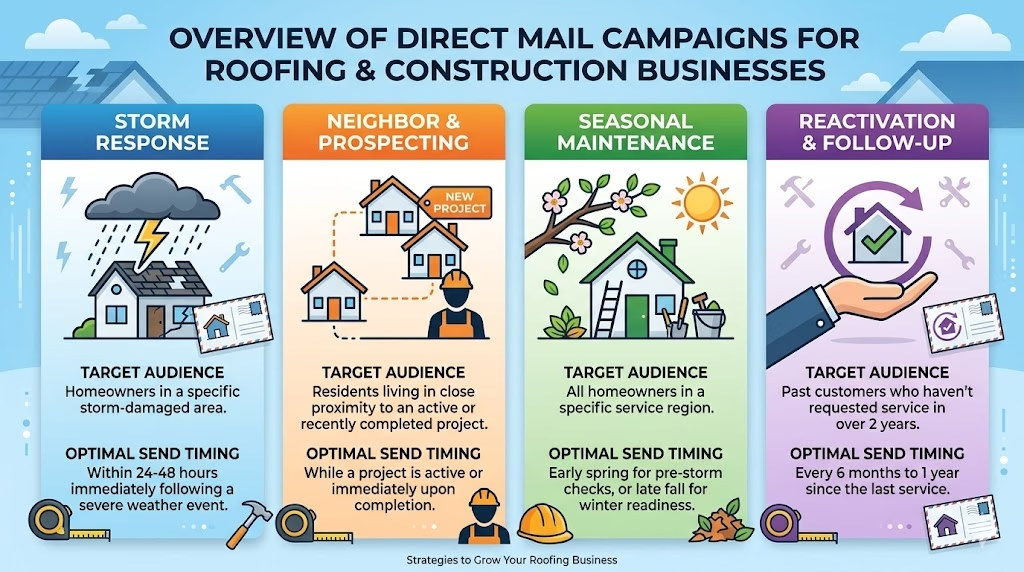
Not all mailers are created equal. The following four campaign types have the strongest track records for home services businesses.
Type 1: The Storm Response Campaign
When: Within 48 to 72 hours of a significant weather event affecting a specific area.
Who to target: Homeowners in the zip codes directly impacted by the storm.
What it says: Lead with empathy first. Acknowledge that damage can be stressful and inspections can feel overwhelming. Position your company as the trusted local expert who handles the entire process, including insurance claim assistance if applicable.
What makes it convert:
- A specific, low-friction offer: “Free storm damage inspection, no obligation”
- A clear deadline or urgency element: “We are scheduling inspections in your area this week”
- Social proof from past storm-response jobs: a brief testimonial and photo from a nearby completed job
- A QR code linking to a simple landing page or a phone number in large print
Key advantage: The timing is everything. Homeowners are thinking about their roofs right now. Your mailer arrives exactly when the need is top of mind.
Type 2: The Neighbor Campaign
When: During or immediately after completing a job in a specific neighborhood.
Who to target: The 50 to 200 homes surrounding your job site.
What it says: Be direct and specific. “We are currently working on [street name]” or “We just completed a project at [nearby address].” This hyperlocal specificity immediately separates your mailer from generic advertising and triggers the neighbor effect described earlier.
What makes it convert:
- A photo of the actual completed project (or a photo of your crew at work in the neighborhood)
- A specific mention of the street or neighborhood by name
- A limited-time offer for neighbors: “Ask us about our neighborhood discount for bookings made this month”
- Easy contact options: phone, QR code, and website
Key advantage: Credibility is instant. You are not a faceless company. You are the crew that did the house on their street.
Type 3: The Seasonal Timing Campaign
When: 4 to 6 weeks before a predictable seasonal need peaks.
Who to target: Homeowners in your service area, segmented by home age and property value if your list allows it.
What it says: Position the mailer as a timely reminder that helps the homeowner avoid a problem, not just a promotion. “Before the freeze hits, here is what your roof needs” is more compelling than “Spring roof sale.”
What makes it convert:
- A specific maintenance tip or checklist that delivers genuine value before making any ask
- A clear, time-sensitive offer: “Book your pre-winter inspection in October and get [specific benefit]”
- Before/after photography showing the type of work relevant to the season
- A simple, direct call to action with a phone number large enough to read without glasses
Optimal seasonal timing by trade:
- Roofers: Late February/early March and late August/early September
- Exterior painters: Late March and early August
- Gutter contractors: Late September and late February
- Concrete and hardscape: Late March before spring ground movement season
Type 4: The Reactivation Campaign
When: Sent to past customers who have not been in contact for 12 to 24 months.
Who to target: Your own past customer list. This is your house list and it will convert at significantly higher rates than any cold prospect list.
What it says: A warm, personal-feeling note that reminds them of the work you did, offers a free inspection or check-in, and lets them know you are still available and still local.
What makes it convert:
- A personal opener referencing the actual job you completed for them
- A genuine check-in rather than a hard promotion
- An easy path to respond: phone, QR code to a simple booking form, or reply address
- A referral ask embedded naturally: “If you know anyone who needs [service], we would love the introduction”
Key advantage: You are not a cold prospect to these homeowners. You are a contractor they trusted. The barrier to re-engagement is far lower than any cold outreach.
Mailer Design: What Gets Read vs. What Gets Recycled
Most contractors who try direct mail and declare it “doesn’t work” made avoidable design mistakes. The physical quality and visual clarity of your mailer determines whether it gets read or immediately recycled.
The Formats That Work Best for Contractors
Oversized postcards (6×9 or 6×11): The most cost-effective format. Large enough to stand out in a stack of mail without requiring the recipient to open anything. Best for storm response and neighbor campaigns where urgency and simplicity matter.
Folded self-mailers (8.5×11 folded to 5.5×8.5): Provides more real estate for before/after photos, testimonials, and detailed service descriptions. Works well for seasonal campaigns where you want to communicate more information.
Letter with envelope: The most personal-feeling format. A real letter in an envelope, especially one that appears hand-addressed, gets opened at high rates because it does not look like advertising. Best for reactivation campaigns targeting past customers.
Design Principles That Drive Response
Lead with a visual, not a headline. A striking before/after photo of an actual project stops the eye before any text does. Let the work speak first.
One primary message per piece. The single most common design mistake is trying to communicate too much. Every additional service you list or offer you include dilutes the impact of your primary message. Pick one thing and say it clearly.
Make the phone number impossible to miss. Large print. High contrast. At least twice on the piece. Many homeowners who respond to a mailer do so by calling, not by scanning a QR code. Do not make them hunt for the number.
Use real photos of real work. Stock photography is immediately identifiable and erodes trust. Photos of your actual jobs, your actual crew, and your actual completed projects convert at measurably higher rates.
Include one clear call to action. “Call for a free inspection” or “Scan to get your estimate” is a call to action. “Call, text, visit our website, follow us on social, or scan the QR code for more information” is confusion. Choose one and commit to it.
Social proof in every piece. Even a single strong testimonial with a first name and neighborhood (“Great work on my roof, very professional” – Mike T., Overland Park) significantly increases response rates by providing third-party validation at the moment of decision.
The List: Who You Mail to Matters More Than What You Mail
A beautiful, well-written mailer sent to the wrong list will fail. A simple, straightforward mailer sent to the right list will convert.
Building and Sourcing Lists for Contractors
Your own past customer list. The highest-value list you have access to. These are warm contacts with established trust. Use this list for reactivation campaigns and seasonal reminders. Keep it clean, updated, and segmented by job type and date.
USPS Every Door Direct Mail (EDDM). A USPS program that allows you to mail to every address on specific carrier routes without purchasing a list. You select routes by neighborhood on the USPS website, and the post office delivers to every door. EDDM rates are lower than standard first-class mail, making it cost-effective for saturation campaigns in specific areas. Best for storm response and neighbor campaigns.
Purchased targeted lists. List brokers can filter homeowners by zip code, home age, home value, length of residence, and other variables. A roofer targeting homes that are 15 to 25 years old in specific zip codes, which is the sweet spot for roof replacement candidates, can build a targeted list with significant precision. List quality varies by vendor, so verify before committing to a large purchase.
Post-storm data services. Several companies specialize in providing homeowner lists for specific areas affected by named storms or hail events, cross-referenced with insurance carrier data. These lists are highly specific and command a premium price, but for roofing companies, the conversion rates can justify the investment significantly.
List Hygiene
Update your in-house list regularly. Remove addresses that have returned mail. When possible, note which customers responded to past mailers and prioritize them for future campaigns. A smaller, cleaner list will outperform a large, stale one every time.
Tracking: How to Know If Your Mailer Is Actually Working
One of the most common reasons contractors abandon direct mail is that they do not track results and therefore cannot prove ROI. Here is how to fix that.
Dedicated phone numbers. Assign a unique phone number to each mailer campaign. Call tracking services like CallRail provide local numbers that forward to your main line and log every call, including recorded conversations if needed. This makes attribution simple and definitive.
QR codes with UTM parameters. Every QR code on a mailer should link to a dedicated landing page or to a URL with tracking parameters so you can see in Google Analytics exactly how many people scanned the code and what they did next.
Ask on the call. Train your team to ask every inbound caller “How did you hear about us?” and log the answer. Simple, free, and remarkably effective.
Unique offer codes. A mailer-specific offer code (“mention SPRING24 for your free inspection”) lets you track conversions even when customers do not mention the mailer directly.
Track by campaign type separately. Do not combine your storm response results with your seasonal campaign results. They are different enough in timing, audience, and offer that blending the data will obscure what is working.
Integrating Direct Mail With Your Digital Presence
Direct mail performs significantly better when it is not running in isolation. The most effective campaigns create a coordinated experience across physical and digital channels.
Mail plus retargeting. Mailers drive recipients to search for you online. If you are running Google or social media retargeting campaigns simultaneously, homeowners who received your mailer and then searched your name will see your ads again, reinforcing the message and increasing the likelihood of conversion.
Mail plus Google Business Profile. When a mailer drives a homeowner to Google your business name, your Google Business Profile is what they see first. Make sure it is fully optimized with current photos, recent reviews, and accurate service information before you launch any mail campaign. A weak profile will undermine even the best mailer.
Mail plus social proof. Some homeowners will search for your reviews after receiving a mailer. A strong review presence on Google and Facebook closes the loop between your physical outreach and the trust-building that converts a curious homeowner into a booking.
A targeted mailer campaign is most effective when it is connected to a broader marketing strategy that includes SEO, review management, and digital advertising working in coordination. Contractors who treat mailers as a standalone tactic get modest results. Those who integrate them into a full system see compounding returns.
The Budget Question: What to Expect and How to Plan
Here is a realistic cost breakdown for a standard contractor mailer campaign so you can plan with accurate expectations.
Cost Per Piece (Approximate 2026 Ranges)
| Component | Estimated Cost |
|---|---|
| Design (professional) | $200 to $600 one-time |
| Printing (per piece, 1,000 units) | $0.25 to $0.75 |
| Postage (EDDM rate) | $0.22 to $0.25 per piece |
| Postage (standard first-class) | $0.68 per piece |
| List purchase (per record) | $0.05 to $0.25 |
| Total per piece (rough average) | $0.60 to $1.80 |
For a 1,000-piece campaign, total cost typically falls between $600 and $1,800 depending on format, postage class, and list source.
Planning for Multiple Drops
A single mailer rarely produces the same results as a sequence. Studies on direct mail consistently show that the second and third touch to the same list outperforms the first. A homeowner who sees your brand three times in a season is far more likely to call than one who saw it once six months ago.
Budget for at least two to three drops to your core target list over a season for meaningful results. The incremental cost of hitting the same list again is lower than the initial campaign because design is already complete and list sourcing is done.
Common Mistakes That Sink Contractor Mailer Campaigns
Mailing once and giving up. One mailer drop is a test. Three to four drops over a season is a campaign. Most contractors quit after one drop and conclude that mail does not work, when in reality they stopped before the channel had a chance to build frequency and familiarity.
Using a generic design. A mailer that looks like it came from any contractor in any city will be ignored. Specificity, including real photos, real project locations, and neighborhood-specific messaging, is what creates relevance.
No tracking. Without a dedicated phone number or QR code, you are mailing blind. You cannot optimize what you cannot measure.
Mailing at the wrong time. Sending a roofing mailer in November in a cold-weather market, when no homeowner wants someone on their roof, is waste. Timing to the season and to trigger events is not optional. It is the difference between a campaign that converts and one that breaks even.
Weak or unclear call to action. “For more information, contact us” is not a call to action. “Call [number] today to schedule your free inspection before our October slots fill up” is a call to action. Be specific about what you want the reader to do and why they should do it now.
How to Get Started With Your First Campaign
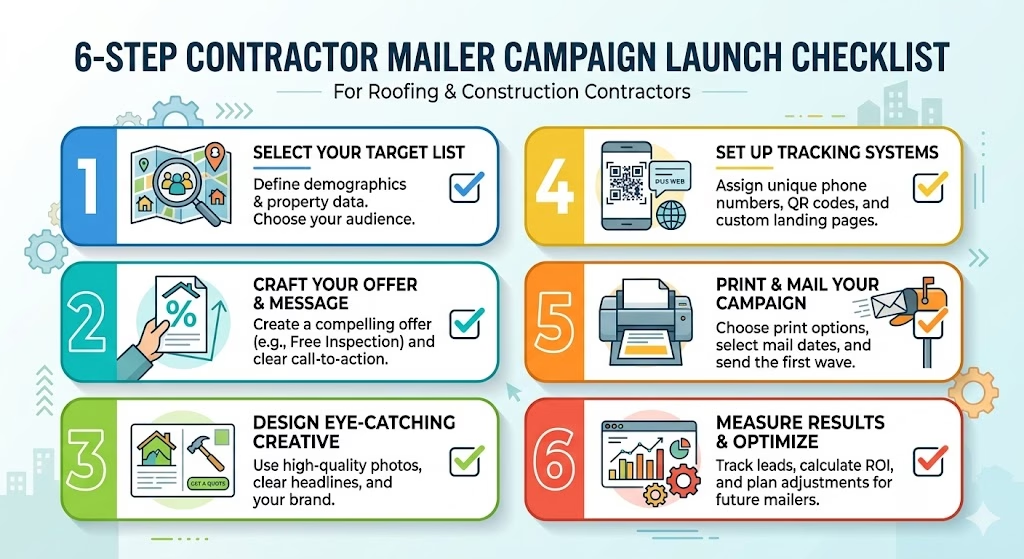
If you have never run a mailer campaign before, here is a simple starting sequence.
Step 1: Define your target. Choose one campaign type to start: storm response, neighbor, seasonal, or reactivation. Pick the one that best matches your current opportunity.
Step 2: Build or source your list. Use EDDM for geographic saturation or your own past customer list for reactivation. Start with a manageable list size of 500 to 1,000 for your first test.
Step 3: Develop your design and copy. Lead with a strong visual. One clear message. One clear call to action. Social proof. Large phone number.
Step 4: Set up tracking. Get a dedicated phone number from a call tracking service before you mail.
Step 5: Mail and monitor. Log every inbound call that references the mailer. Track the QR code in your analytics. Note your response rate.
Step 6: Optimize and repeat. What worked? What did not? Adjust the design, offer, or targeting before the next drop and mail again within 4 to 6 weeks.
A full marketing strategy that integrates mailers with your digital channels removes the guesswork from this process and ensures your campaigns are coordinated, tracked, and continuously improving rather than running as one-off experiments.
If you are not sure where to start or want an outside perspective on your current marketing mix, a free marketing audit will identify the gaps and prioritize the channels most likely to move the needle for your specific business.
The Bottom Line
Direct mail never stopped working. Contractors just stopped using it.
The combination of reduced mailbox competition, high transaction values, predictable trigger events, and the ability to target with geographic precision makes direct mail one of the most undervalued channels available to roofing and construction businesses in 2026.
The contractors who figure this out first in their market gain a significant and durable advantage. The ones who dismiss it as old-fashioned hand that advantage to their competitors for free.
Your next job might already be sitting in a mailbox, waiting for your name to show up.
Why Schedule a Call?
Popular Insights
Storm Season is Coming: How to Market Your Roofing Business Before, During, and After a Major Weather Event
Sep. 18, 2026
Email Marketing for Contractors: The 5 Campaigns That Actually Bring Back Past Customers
Sep. 11, 2026
What a Roofing Website Should Cost in 2026 (And What You Actually Get for the Money)
Sep. 04, 2026
Spring Marketing Surge: How Roofing and Construction Companies Should Prepare Their Ads Before Peak Season
Aug. 28, 2026
The Shed Dealer’s Digital Playbook: How to Get Found Online and Fill Your Lot
Aug. 21, 2026Topics
Pudgy Squirrel Marketing
Mailers Aren’t Dead: Why Direct Mail Still Works for Roofing and Construction (And How to Run One That Converts)
Read More
Pudgy Squirrel Marketing
Storm Season is Coming: How to Market Your Roofing Business Before, During, and After a Major Weather Event
Read More
Pudgy Squirrel Marketing
Email Marketing for Contractors: The 5 Campaigns That Actually Bring Back Past Customers
Read More
Pudgy Squirrel Marketing
What a Roofing Website Should Cost in 2026 (And What You Actually Get for the Money)
Read More
Pudgy Squirrel Marketing
Spring Marketing Surge: How Roofing and Construction Companies Should Prepare Their Ads Before Peak Season
Read More
Pudgy Squirrel Marketing
The Shed Dealer’s Digital Playbook: How to Get Found Online and Fill Your Lot
Read More
Pudgy Squirrel Marketing
The Shed Business Owner’s Blueprint for Getting Found on Google
Read More
Pudgy Squirrel Marketing
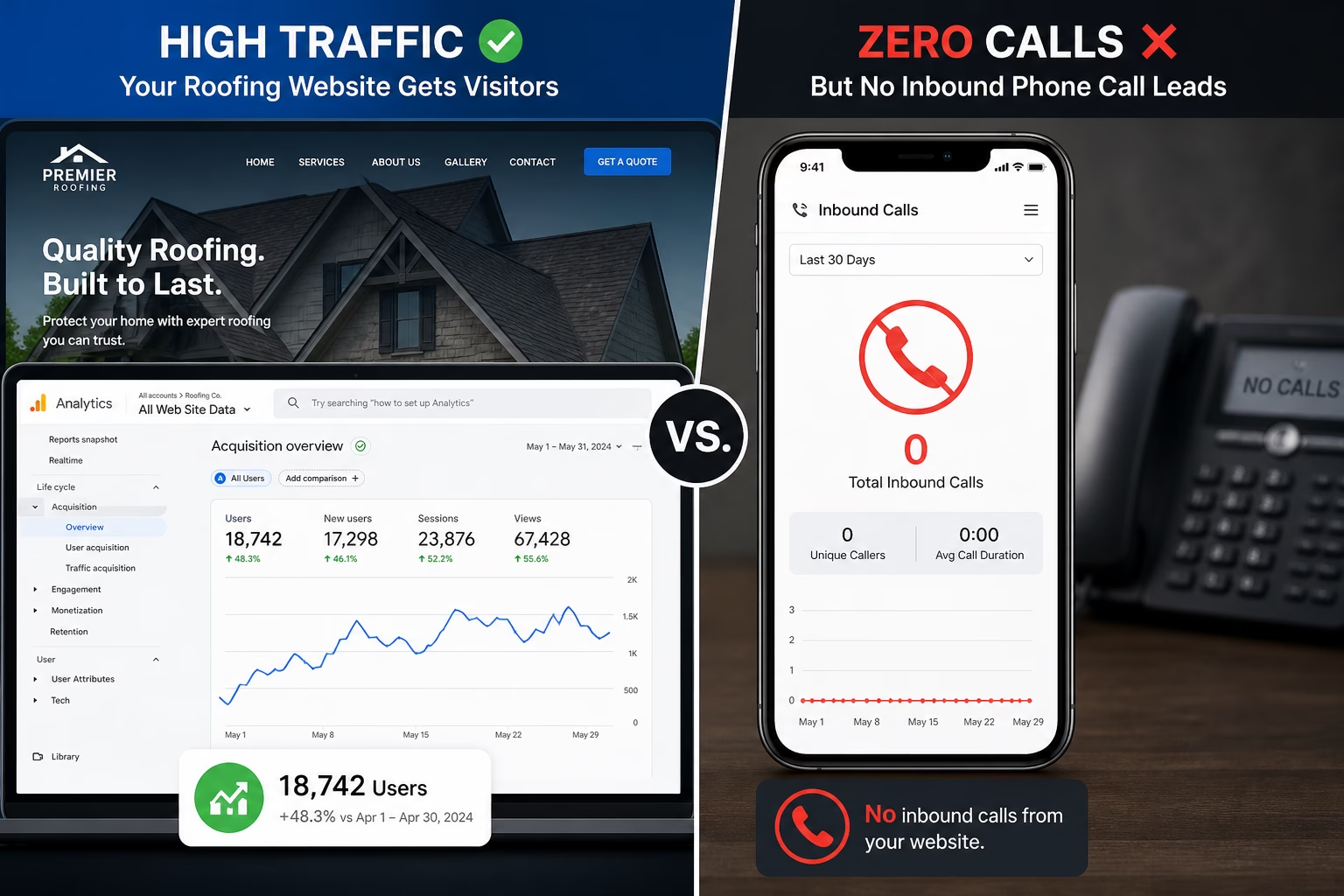
Why Your Roofing Website Gets Traffic But No Phone Calls (And How to Fix It)
Read More