
Get In Touch
Pudgy Squirrel Marketing
How to Build a Referral Program for Your Roofing or Construction Business (Without Spending a Fortune)
By Tony
October 9, 2026
11 mins
Share:
Key Takeaways
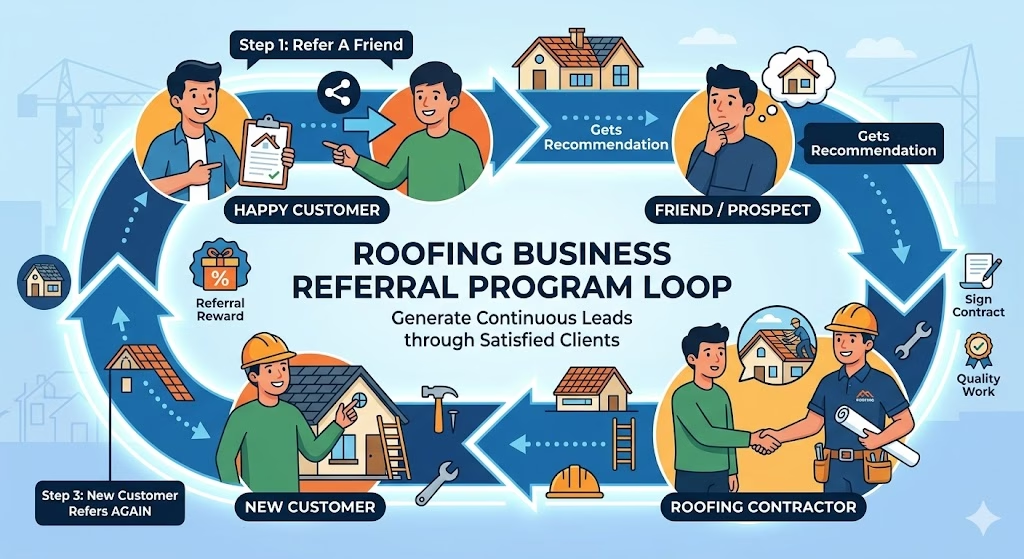
- A referral program is not just a “tell a friend” ask. It is a structured system with clear incentives, consistent follow-up, and trackable results.
- The best time to ask for a referral is immediately after a job completion, when customer satisfaction is at its peak.
- Small, well-timed incentives outperform large, complicated reward structures in the trades industry.
- Your CRM is the backbone of a referral program. Without a follow-up system, most referral opportunities die quietly.
- Referral leads close at a significantly higher rate than cold leads because trust is already established before the first call.
- A referral program works best when combined with a strong online presence, because referred prospects will always Google you before they call.
Why Referrals Are the Highest-Value Leads in the Trades
Ask any roofing or construction business owner where their best customers come from, and the answer is almost always the same: word of mouth.
Referred customers arrive pre-sold. Someone they trust already vouched for you, which means the price conversation is easier, the close rate is higher, and the likelihood of them leaving you a positive review afterward is significantly greater.
The problem is that most contractors treat referrals as a happy accident rather than a system.
They do great work, a satisfied customer mentions them to a neighbor, a lead comes in. But there is no consistency to it. No structure. No way to predict it or scale it.
A referral program changes that. It takes the organic word-of-mouth that is already happening and turns it into a repeatable, trackable lead source that you can actually rely on.
And unlike Google Ads or paid social, once the system is built, the cost to maintain it is minimal.
What Makes Referrals Different from Every Other Lead Source
Before building your program, it helps to understand why referral leads behave differently than leads from ads, yard signs, or SEO.
Higher close rate. Industry data consistently shows that referred leads close at two to four times the rate of cold leads. The trust barrier is already partially removed before you ever pick up the phone.
Lower price sensitivity. A homeowner who found you through a neighbor’s recommendation is not on Google comparing three quotes by price. They already have a preferred answer. They are calling to confirm it.
Higher lifetime value. Referred customers tend to use your business again and refer others themselves. They entered your world through trust, and that relationship tends to carry forward.
Lower cost per acquisition. Even when you offer a referral incentive, your cost to acquire a referred lead is usually a fraction of what you pay for a paid ad lead.
Understanding these differences matters because it shapes how aggressively you should invest in building this channel.
The 5 Components of a Referral Program That Actually Works
Many roofing and construction companies have tried some version of a referral program and given up because it did not produce results. Usually, the failure is not about the concept. It is about missing one or more of these five components.
Component 1: A Clear and Simple Ask
The first reason most referral programs underperform is that the ask is either never made or made poorly.
Customers do not automatically think to refer you, even when they are thrilled with your work. Life is busy. The roof is done, they move on. Unless you give them a direct, simple prompt, most referrals that could happen simply do not.
The ask needs to be:
- Specific. Not “feel free to send people our way” but “if you know anyone with roofing needs in the area, we would love an introduction.”
- Timed correctly. The best moment is immediately after project completion, when satisfaction is highest and the experience is fresh.
- Low friction. Make it easy. Give them a business card to hand off, a shareable link, or a simple text they can forward. The easier you make it, the more often it happens.
A script as simple as this works: “We are really glad you are happy with how everything turned out. Our business grows mostly through referrals from customers like you, so if you know anyone who needs a roof replaced or repaired, we would be grateful if you sent them our way. We will make sure they are well taken care of.”
That is it. No hard sell, no complicated program explanation. Just a direct, human ask at the right moment.
Component 2: A Worthwhile Incentive (That Does Not Overcomplicate Things)
Incentives are what turn a one-time ask into a repeatable behavior. But the most effective incentives in the trades industry are almost never what contractors assume.
What works:
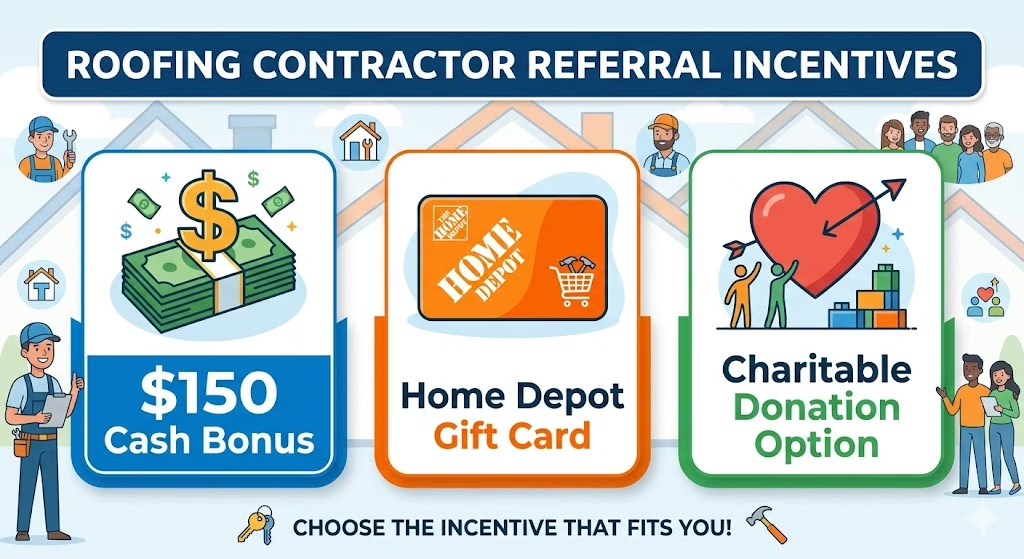
- Cash rewards. A $100 to $250 referral bonus for any referred job that closes is straightforward, memorable, and motivating. Cash is universal.
- Gift cards. Restaurant, home improvement store, or Amazon gift cards work well for residential customers who may be uncomfortable taking cash.
- Service credits. A discount on a future gutter cleaning, roof inspection, or minor repair keeps the customer connected to your business.
- Charitable donations. Some customers, particularly commercial property managers or HOA contacts, cannot accept personal gifts due to policy. Offering to make a donation to a charity of their choice in their name is a meaningful alternative.
What does not work:
- Overly complicated tier systems with points, levels, and redemption windows
- Rewards that are too small to motivate action (a $10 gift card on a $15,000 roofing job signals you do not value the referral)
- Incentives that feel transactional or impersonal
The goal is to make referring you feel rewarding and easy, not like signing up for a loyalty card at a coffee shop.
Component 3: A System for Tracking Who Referred Whom
This is where most informal referral programs collapse.
If you cannot track which customers are generating referrals, you cannot reward them consistently, identify your best referral sources, or measure the ROI of the program.
Tracking does not need to be complicated, but it does need to be consistent. At minimum, your system should capture:
- The name of the referring customer for every new lead
- Whether that lead converted to a job
- What reward was issued and when
- The total value of jobs generated by each referral source
The simplest way to do this is inside a CRM. When a new lead comes in, add a “referred by” field and make it a required step in your intake process. Your office or sales team should ask every new caller: “How did you hear about us?”
Over time, this data becomes extremely valuable. You will be able to see that three customers have each referred five or more jobs and treat them accordingly, with bigger rewards, handwritten thank-you notes, and personal outreach.
Component 4: Consistent Follow-Up with Referral Sources
Most contractors send a reward when a referral converts and then never mention the program again until the next time they see that customer.
That is a missed opportunity.
Your best referral sources should hear from you regularly, not just when there is a transaction involved. Consider:
- A quarterly handwritten note or card to your top five referral sources
- A personal phone call or text from the owner after a referred job closes, thanking them by name
- A small annual gift (a box of cookies, a local restaurant gift card) around the holidays for your most consistent referrers
- An email or text update when the referred job is completed, closing the loop so the referring customer feels part of the outcome
This ongoing relationship maintenance is what separates a referral program that generates 5 leads per year from one that generates 50.
Component 5: A Strong Online Presence for Referred Prospects to Validate
Here is a piece of the referral equation that almost no one talks about: even referred prospects Google you before they call.
A neighbor may have raved about your work at a backyard barbecue. But before that prospect dials your number, they will search your business name. They will look at your Google reviews, scan your website, and check whether you have any obvious red flags.
If your Google Business Profile has 11 outdated reviews and your website looks like it was built in 2014, some of those referrals are going to quietly go to a competitor instead.
Your referral program and your digital presence are not separate strategies. They work together, and a weak online presence actively undermines the referrals you are working hard to generate.
This is exactly why Pudgy Squirrel Marketing focuses on building the full picture for roofing and construction companies. From review generation to website design that converts first-time visitors into booked appointments, the goal is to make sure no referral slips through the cracks once it lands on your digital doorstep.
How to Launch Your Referral Program in 5 Steps
You do not need a marketing agency, a fancy software platform, or a large budget to get this started. Here is a practical launch sequence.
Step 1: Define Your Incentive Structure
Decide on your reward before you say a word to any customer. Ambiguity kills referral programs. Know exactly what you are offering, under what conditions, and how and when it will be paid out.
A simple policy example: “We pay a $150 Visa gift card to any customer who refers a job that results in a signed contract of $3,000 or more.”
Write it down. Make it a real policy, not a vague promise.
Step 2: Build Your Referral Ask Into Every Job Completion
Create a standard closing checklist for every completed job that includes the referral ask as a required step. This could be:
- Verbal ask during the final walkthrough
- A follow-up text sent 48 hours after job completion with a link to your referral form or contact page
- A printed card left behind with the customer explaining the program and your contact information
Make it impossible for your team to forget the ask because it is baked into the process.
Step 3: Set Up a Simple Tracking System
If you already have a CRM, add a “referred by” field to your lead intake form and train your team to fill it in every time. If you do not have a CRM yet, a shared spreadsheet with the following columns is enough to start:
- Lead Name
- Referred By
- Job Value
- Job Status (Estimate / Signed / Completed)
- Reward Issued (Yes / No / Date)
The important thing is consistency. Partial tracking is nearly as useless as no tracking.
Step 4: Create Your Referral Materials
You do not need much. A simple business card with a line on the back that says “Refer a friend and earn $150” is enough to start. Over time, you can build:
- A dedicated referral page on your website
- A one-page PDF that customers can email to friends
- A short referral link you can text directly to customers post-job
Keep materials simple. Complicated collateral gets ignored.
Step 5: Announce the Program to Your Existing Customer Base
Your warmest audience for referrals is your existing customer list. If you have been in business for more than a year, you have a list of past customers who already trust you and may never have thought to refer you simply because no one asked.
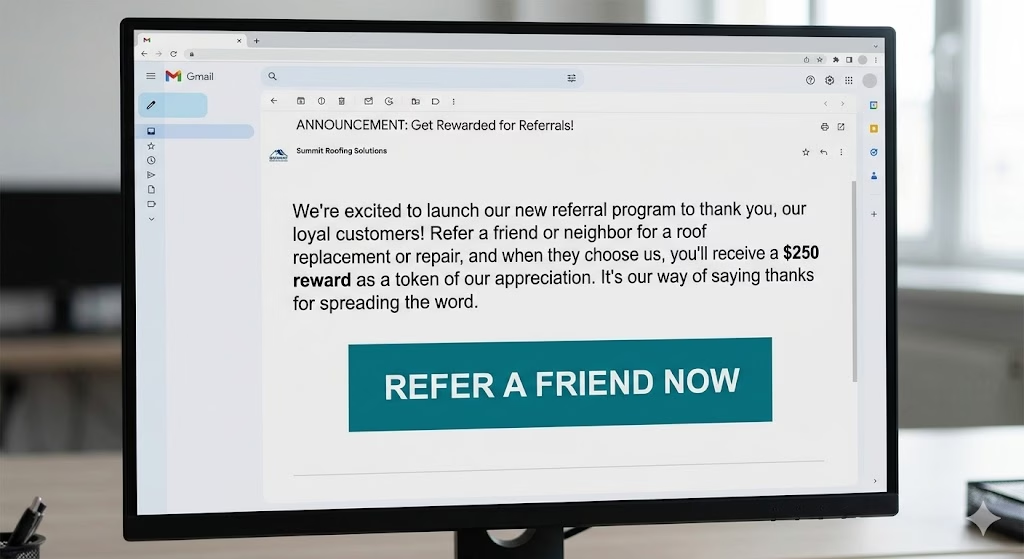
Send a simple email or text to your past customers announcing the referral program. Something like:
“We wanted to let our past customers know about our new referral program. If you know anyone who needs roofing work done, send them our way and we will send you a $150 gift card when their job is complete. Thanks for trusting us with your home.”
This single touchpoint to past customers has generated hundreds of thousands of dollars in new jobs for contractors who have never asked their list for referrals before.
Referral Sources Beyond Homeowners: Expanding Your Network
Most contractors think of referrals as coming from past customers. That is the most obvious source, but it is not the only one.
Some of the highest-volume referral sources for roofing and construction businesses are actually other businesses and professionals.
Real estate agents. Agents regularly need contractors for pre-listing repairs, inspection response work, and new homeowner projects. One productive relationship with a real estate agent can generate 10 to 20 jobs per year.
Insurance adjusters and agents. For storm damage work especially, having a relationship with local insurance professionals can create a consistent pipeline of referred claims work. Be the contractor they feel confident recommending.
Property managers and HOA boards. If you do commercial or multi-family work, a single property manager can refer every maintenance and repair need across an entire portfolio of properties.
Complementary contractors. A siding company does not do roofing. A window company does not do roofing. A gutter company might not do full replacements. These businesses talk to homeowners who need exactly what you do, and a mutual referral relationship benefits everyone.
Mortgage lenders. Lenders frequently work with homeowners who need repairs completed before closing. A relationship with even one active lender can generate a steady flow of urgent, motivated leads.
Building relationships with referral partners in these categories is slower than running ads, but the compounding effect over two to three years is remarkable.
How to Use Your CRM to Automate and Scale Your Referral Program
Once your referral program is running manually and generating results, the next step is automating the follow-up so it runs consistently without depending on anyone to remember.
A properly configured CRM can:
- Automatically send a referral ask text 48 hours after every job is marked complete
- Trigger a follow-up reminder to your team if no referral intake has been logged for a customer within 30 days of job completion
- Send a quarterly “thank you” email to any customer who has referred at least one job in the past year
- Track referral conversion rates so you can measure which incentives and which customer segments produce the most referrals
This is the kind of system that separates businesses generating 10 referrals per year from those generating 100.
Pudgy Squirrel Marketing builds and configures CRM systems specifically for construction and roofing companies. If your follow-up process currently relies on memory and sticky notes, automating your referral ask alone can have a measurable impact on your close rate within the first 90 days.
Measuring the Success of Your Referral Program
A referral program you cannot measure is a referral program you cannot improve. Track these metrics from day one.
Referral rate. What percentage of your completed jobs result in at least one referral? An average contractor might see 10 to 15 percent. A well-run referral program can push that to 30 to 40 percent.
Referral close rate. What percentage of referred leads convert to signed contracts? This should be significantly higher than your overall close rate.
Cost per referred acquisition. Total referral rewards paid out divided by total referred jobs closed. Compare this to your cost per lead and cost per job from paid ads.
Top referral sources. Which customers or partner businesses are generating the most leads? These relationships deserve extra attention and reward.
Revenue from referred jobs. Total contract value of all referred jobs in a given period. This is the number that tells you whether the program is worth continuing and scaling.
Review these numbers quarterly. Adjust your incentives, your ask timing, or your partner outreach based on what the data shows.
Common Mistakes Roofing and Construction Companies Make with Referral Programs
Waiting until the invoice is paid to ask. By that point, the emotional high of a completed project has faded. Ask at project completion, not weeks later.
Making the reward too hard to claim. If a customer has to fill out a form, wait six weeks, and then call to follow up on their gift card, most will not bother. Pay rewards fast and with zero friction.
Only asking the customer once. One ask is a start. A systematic, repeated touchpoint through email, text, and personal outreach is a program.
Ignoring business referral partners. Spending all your energy on past homeowner referrals while ignoring the real estate agents, insurance professionals, and complementary contractors in your market is leaving your highest-volume source untapped.
Not connecting your referral program to your online presence. Every referred lead will check your reviews before calling. If your online reputation does not match the glowing recommendation they heard from a neighbor, you will lose the lead before it ever reaches your phone.
Final Thoughts: Referrals Are a System, Not a Strategy
Word of mouth has always been the most powerful lead source in the trades. But relying on it to happen naturally is not a strategy. It is a hope.
A structured referral program takes that natural trust and channels it into something predictable, trackable, and scalable. It does not require a large budget. It does not require a marketing team. It requires a clear ask, a fair reward, a simple tracking system, and consistent follow-up.
Start with the five steps in this guide. Get your first 10 structured referrals. Measure what works. Then build from there.
And make sure the rest of your marketing is strong enough to support the referrals you generate. If you are not sure where your gaps are, a free marketing audit from Pudgy Squirrel Marketing is the fastest way to find out. You will walk away knowing exactly what your digital presence looks like to a referred prospect who just Googled your name for the first time.
Why Schedule a Call?
Popular Insights
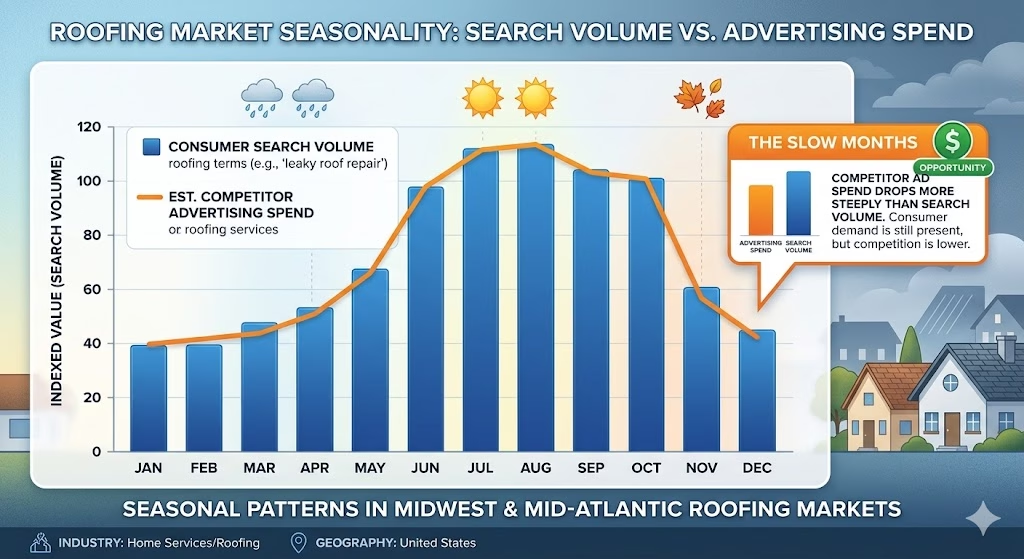
How Roofers Get More Leads in the Off-Season: A Practical Marketing Playbook for Slow Months
Oct. 13, 2026
The Amish and Plain Community Business Owner’s Guide to Online Marketing
Oct. 02, 2026
Mailers Aren’t Dead: Why Direct Mail Still Works for Roofing and Construction (And How to Run One That Converts)
Sep. 22, 2026
Storm Season is Coming: How to Market Your Roofing Business Before, During, and After a Major Weather Event
Sep. 18, 2026
Email Marketing for Contractors: The 5 Campaigns That Actually Bring Back Past Customers
Sep. 11, 2026Topics
Pudgy Squirrel Marketing
How Roofers Get More Leads in the Off-Season: A Practical Marketing Playbook for Slow Months
Read More
Pudgy Squirrel Marketing
How to Build a Referral Program for Your Roofing or Construction Business (Without Spending a Fortune)
Read More
Pudgy Squirrel Marketing
The Amish and Plain Community Business Owner’s Guide to Online Marketing
Read More
Pudgy Squirrel Marketing
Mailers Aren’t Dead: Why Direct Mail Still Works for Roofing and Construction (And How to Run One That Converts)
Read More
Pudgy Squirrel Marketing
Storm Season is Coming: How to Market Your Roofing Business Before, During, and After a Major Weather Event
Read More
Pudgy Squirrel Marketing
Email Marketing for Contractors: The 5 Campaigns That Actually Bring Back Past Customers
Read More
Pudgy Squirrel Marketing
What a Roofing Website Should Cost in 2026 (And What You Actually Get for the Money)
Read More
Pudgy Squirrel Marketing
Spring Marketing Surge: How Roofing and Construction Companies Should Prepare Their Ads Before Peak Season
Read More