
Get In Touch
Pudgy Squirrel Marketing
Storm Season is Coming: How to Market Your Roofing Business Before, During, and After a Major Weather Event
By Tony
September 18, 2026
11 mins
Share:
Key Takeaways
- Most roofing companies market reactively during storm season. The ones that win plan proactively, weeks before a storm arrives.
- Your Google Business Profile and online ads need to be active and optimized before a storm hits, not after.
- During a weather event, speed and trust signals are the two most important conversion factors.
- Post-storm follow-up through CRM automation can double your close rate without adding a single sales call.
- Storm chasers and out-of-town contractors flood markets after major events. Your established local presence is your strongest competitive advantage.
Why Storm Season Is the Highest-Stakes Window in Roofing Marketing
For roofing contractors, storm season is not just busy season. It is the window that can define your entire year.
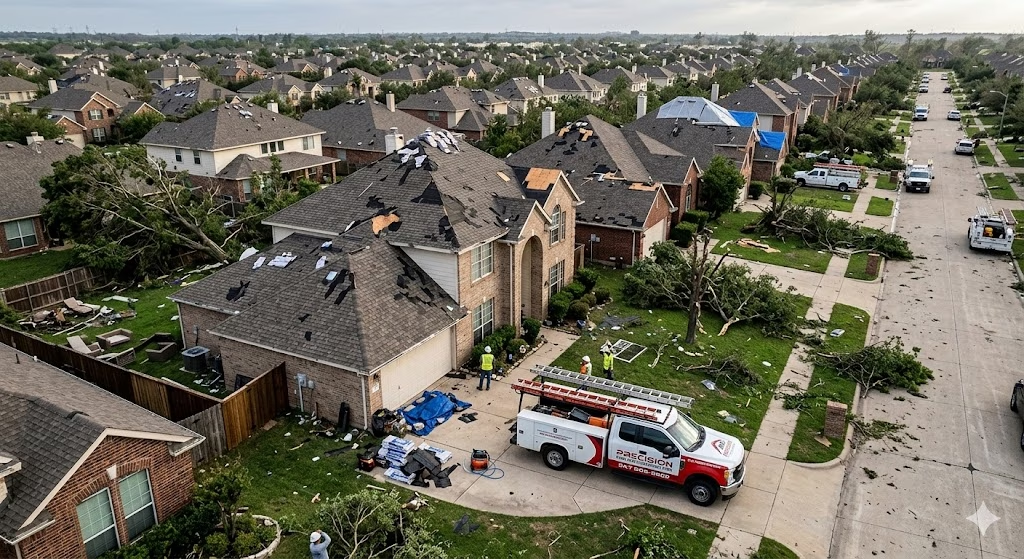
A single hailstorm or major wind event can generate more inbound demand in 72 hours than you typically see in two months of normal marketing. But that same event also brings out every storm chaser, out-of-town crew, and opportunistic competitor within a 200-mile radius.
The roofing companies that capture the most revenue are not necessarily the best roofers in the area. They are the ones that homeowners find first, trust fastest, and can reach most easily.
That comes down to marketing. And marketing done in advance.
This guide breaks down exactly what to do in three phases: before the storm, during the event, and in the weeks that follow.
Phase 1: Before the Storm Hits
Why Preparation Wins More Jobs Than Reaction
Most roofing companies wait for the phone to ring after a storm. The smart ones are already on page one of Google, running ads to warm audiences, and sitting on a library of trust-building content before the first drop of rain falls.
Here is the reality: when a homeowner discovers damage to their roof at 7 AM after a storm, they search immediately. They click the first two or three results, scan for reviews, and call the company that looks most legitimate and most local.
If your Google Business Profile has 11 reviews from 2022, your competitor with 80 reviews updated this month wins that call. Every time.
Pre-storm preparation is not about predicting exactly when a storm will hit. It is about building the infrastructure that converts high-intent searchers into paying customers automatically, regardless of when demand spikes.
Build Your Google Business Profile into a Lead Machine
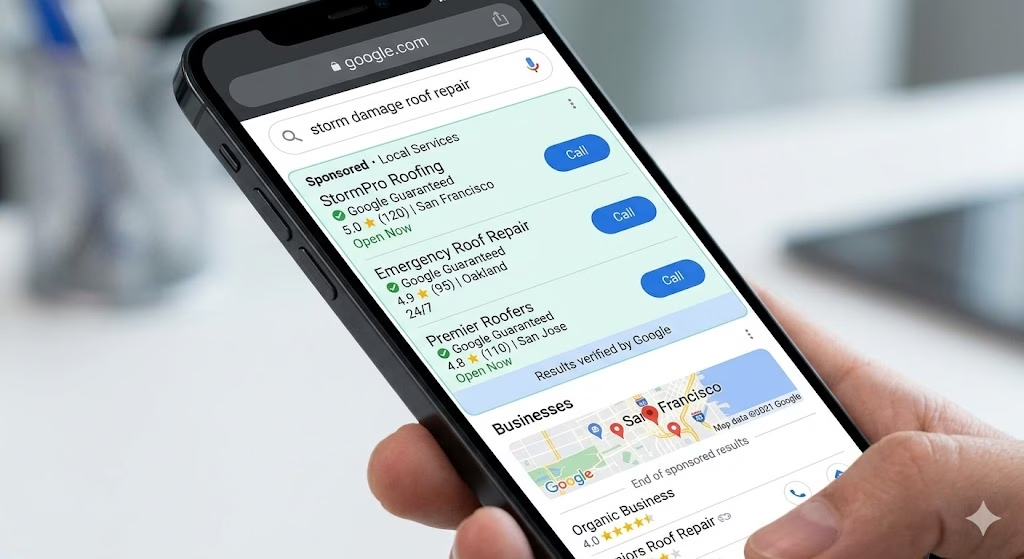
Your Google Business Profile (GBP) is the single most important asset you have for local storm-related lead generation. It directly controls whether your business appears in the Local Pack (the top map results) when someone searches “roofing contractor near me” after a weather event.
Before storm season, make sure your profile includes:
- A minimum of 20 to 30 high-quality photos of completed storm damage repairs, insurance jobs, and your crew working
- A complete and accurate list of services including storm damage repair, hail damage assessment, insurance claim assistance, emergency tarping, and full roof replacement
- Service areas set to every city and county you actually serve, not just your shop address
- Updated business hours and an enabled messaging feature so you can be reached multiple ways
- A consistent stream of recent reviews, ideally one to two new reviews per week leading into storm season
Reviews are especially critical in storm contexts. Homeowners are anxious, the stakes are high, and they are trying to avoid getting scammed. A roofing company with 90 recent reviews and a 4.8 rating looks safe. A company with 12 reviews and no response to negative feedback looks risky.
If you are not actively requesting reviews from every completed job, you are losing that trust gap before you even get a chance to compete.
Launch Google Ads and Local Services Ads Before the Season Opens
Waiting to set up Google Ads until after a storm hits is one of the most expensive mistakes a roofing company can make.
Here is why: Google’s machine learning needs data to optimize your campaigns. New campaigns go through a “learning phase” that can take two to four weeks before the algorithm finds the right audiences and placements. If you launch your campaign the day after a storm, you are paying maximum CPCs during a learning phase while your competitors with established, warmed-up campaigns run circles around you.
Pre-storm Google Ads setup should include:
- A dedicated “Storm Damage Roofing” search campaign targeting keywords like “hail damage roof repair [city],” “storm damage roof inspection,” and “emergency roof repair near me”
- A Local Services Ads profile that is fully verified and displaying your Google Guarantee badge
- Ad extensions including call extensions with your direct line, location extensions, and review snippets
- A geo-targeted radius that covers your realistic response area, not the entire state
- A dedicated storm damage landing page that is live, mobile-optimized, and tracking conversions before any storm occurs
That last point matters more than most contractors realize. Sending storm traffic to your homepage instead of a storm-specific landing page can cut your conversion rate in half. The homeowner clicked an ad about storm damage, they want to see a page about storm damage, with a phone number they can call in 10 seconds.
Create Pre-Storm Educational Content That Ranks
One of the highest-ROI pre-season investments you can make costs nothing but time: publish educational content that ranks for the questions homeowners ask right after a weather event.
Think about the search journey after a storm. A homeowner walks outside, sees something wrong with their roof, and starts asking Google:
- “How do I know if my roof has hail damage?”
- “Does homeowner’s insurance cover storm damage roof repair?”
- “How long do I have to file a roofing insurance claim?”
- “What does wind damage look like on a roof?”
Every one of those questions is a content opportunity. Write clear, genuinely helpful answers to each one as a dedicated blog post or service page. Include photos of real storm damage. Explain what to look for. Walk through the insurance claim process step by step.
This content does two things simultaneously. It ranks in search results and brings in organic traffic when demand spikes. And it positions your company as the trusted local expert before a homeowner ever picks up the phone.
This is the kind of content strategy that separates market leaders from the pack, and it is exactly the approach Pudgy Squirrel Marketing builds through their SEO services for construction and roofing businesses.
Prepare Your Follow-Up System Before You Need It
Here is the scenario most roofing companies are not ready for: the storm hits, 60 leads come in over 72 hours, your team is slammed doing inspections and estimates, and half of those leads never get a proper follow-up.
You did the hard, expensive work of generating the lead. You just failed to close it.
A CRM (Customer Relationship Management) system with automated follow-up sequences solves this problem entirely. Before storm season, set up:
- An automatic text message that goes out within five minutes of any form submission, confirming receipt and setting an expectation for your callback time
- A three to five email follow-up sequence for leads who do not answer the phone, providing your credentials, reviews, and next steps
- A task assignment workflow so every new lead gets a human follow-up scheduled within 24 hours
- A status tracking system so your team knows exactly which leads have been contacted, quoted, and closed
The companies that close the most storm leads are not always the fastest roofers. They are the most responsive companies with the clearest follow-up process.
Phase 2: During the Storm Event
The 48-Hour Window That Determines Your Storm Season Revenue
When a significant weather event hits your market, there is a 48 to 72-hour window of peak search activity. This is when homeowners are most anxious, most motivated to act, and most willing to book an inspection.
Your goal during this window is maximum visibility and maximum trust.
Increase Your Ad Spend Immediately
If you have campaigns running, now is the time to scale budget. During peak storm search volume, even a 50 to 100 percent temporary budget increase can produce a disproportionate return because demand is unusually high and every incremental impression is from a highly motivated searcher.
Specific actions to take within the first 24 hours of a major event:
- Increase daily Google Ads budget by at least 50 percent
- Enable any paused storm-specific ad groups
- Update ad copy headlines to reference the specific event: “Hail Hit [City] Last Night – Free Roof Inspections Available Now”
- Confirm your Local Services Ads are active and your phone is being answered
- Make sure your call tracking is working so you can see exactly which campaigns are driving calls
Post Urgently on Social Media
Social media becomes a community resource during and immediately after a weather event. Neighbors tag neighbors, local groups fill with damage photos, and people ask for contractor recommendations in real time.
This is your moment to show up as the trusted local resource, not as a company running ads.
Post content during and after the event that includes:
- A simple graphic stating you are taking calls for storm damage inspections in [city/county], with your phone number
- A short video from the owner or crew lead acknowledging the storm and explaining your inspection process
- A post educating homeowners on what to do first: document damage with photos, do not attempt repairs themselves, and call their insurance company before signing any contractor agreement
- Real-time posts as your team begins inspections, showing the scale of damage you are seeing in the community
Authenticity and local knowledge matter here. A post that says “We are out on Oak Street and Maple Avenue this morning and the hail damage is significant in that area” will outperform a generic “Call us for storm damage repairs” post every single time.
Make Your Website a Real-Time Response Tool
During an active storm event, first-time visitors to your site are making a decision in seconds. Does this company serve my area? Can I reach them right now? Do I trust them?
Your website needs to answer all three questions immediately.
During storm season, consider adding:
- A site-wide banner at the top of every page: “Serving [City] Storm Damage Calls Now – Tap to Call [Number]”
- A simple “Storm Damage Request” form that captures name, address, and phone number with nothing else required
- A live chat widget or text-based response option so homeowners who cannot make calls (or who prefer texting) can still reach you
- A visible count of inspections scheduled or jobs completed from recent storms, which builds credibility in real time
Speed is everything here. A homeowner who cannot reach you within two to three attempts will call the next company on the list.
Phase 3: After the Storm
The Long Tail of Storm Marketing
Most roofing contractors focus their energy on the first week after a storm and then return to normal marketing. This is a significant mistake.
Storm damage claims and repairs play out over months. Many homeowners do not discover damage until weeks later when rain reveals a leak. Insurance adjusters take time to schedule inspections. Neighbors talk to each other, and referrals trickle in for 60 to 90 days after an event.
Your post-storm marketing should run for a minimum of 60 days following any significant weather event.
Maximize Your Google Business Profile Activity Post-Storm
After the storm, your GBP becomes your most powerful credibility signal. Update it aggressively:
- Add new photos from every storm damage job you complete, with before-and-after shots whenever possible
- Request a review from every single storm-related customer, ideally within 24 hours of job completion when satisfaction is highest
- Post a weekly update about your availability and current timeline for new storm inspections
- Add a short “From the Owner” Q&A post explaining your insurance claim process
A surge of fresh, authentic reviews and photos from recent storm work will push you ahead of competitors in Local Pack rankings and dramatically increase the trust of homeowners who are still on the fence.
Run a Post-Storm Retargeting Campaign
Not every homeowner who visited your site during the storm booked an inspection. Many were comparing options, waiting on their insurance company, or simply not ready to commit.
Retargeting ads allow you to stay in front of those warm visitors as they continue their decision-making process.
Set up a retargeting campaign that:
- Shows ads specifically to people who visited your storm damage page or request form but did not convert
- Uses messaging focused on your credentials, review count, insurance claim experience, and local reputation
- Runs for a minimum of 45 days post-storm
- Includes a direct offer, such as a free inspection with a written damage report
These ads cost significantly less than cold traffic campaigns and reach people who are already familiar with your company. The conversion rate is substantially higher.
A strong online advertising strategy built for exactly these moments is something the team at Pudgy Squirrel Marketing sets up specifically for roofing and construction businesses. Their online advertising and Google Ads management services are built to scale up when demand spikes and retarget when it slows.
Activate Your CRM for Post-Storm Lead Nurturing
Every unclosed lead from the storm event is still a potential job.
Most contractors send one or two follow-up calls and then move on. An automated CRM follow-up sequence keeps your company in front of those leads without requiring your team to make manual calls every day.
A post-storm CRM sequence might look like this:
- Day 1: Automatic text confirming inspection request received and estimating response time
- Day 3: Email sharing a helpful post about how to document storm damage for your insurance adjuster
- Day 7: A personal-feeling email from the owner sharing recent job photos and a review from a storm customer
- Day 14: A direct follow-up email asking if they have heard back from their insurance company and offering to answer questions
- Day 21: A final outreach noting your current availability and a clear call to action to schedule
Done correctly, this sequence closes leads that your competitors gave up on two weeks ago.
Gather Reviews and Build Case Studies While the Work is Fresh
Storm seasons are your best opportunity to build long-term credibility assets for future marketing.
While you are completing jobs, document everything:
- Before-and-after photos with GPS tagging so they show up in local search results
- Short video testimonials from satisfied customers (most homeowners will say yes if you ask politely in person)
- Written case studies describing the damage, the solution, and the insurance outcome for specific jobs
This content serves you for years. A detailed page titled “Hail Damage Roof Replacement in [Neighborhood, City]: Before and After” ranks for local search terms, builds trust for future visitors, and shows Google that your site has real, original, locally relevant content.
How to Separate Yourself from Storm Chasers
After any significant weather event, out-of-town contractors flood local markets. They canvas neighborhoods, offer quick inspections, pressure homeowners into signing agreements, and often disappear before the insurance check clears.
Homeowners are becoming more aware of this pattern, and they are actively looking for signals that a contractor is legitimate and local.
Your marketing should lean into these differentiators hard during and after a storm:
- Years in business and local roots. Mention your city name, how long you have served the community, and any local affiliations or chamber memberships.
- License and insurance prominently displayed. Put your contractor license number, insurance carrier, and coverage amounts on your website and storm landing page.
- Physical address and local phone number. Storm chasers often use call centers with out-of-area numbers. A local number is a subtle but meaningful trust signal.
- Insurance claim experience. If you have helped dozens of homeowners navigate the insurance claim process, say so specifically. Tell people how many claims you have worked, what your average approval rate is, and what your process looks like.
- Review recency and volume. A competitor with 12 reviews does not look as safe as your company with 80 recent reviews, even if your ratings are identical.
Your Storm Season Marketing Checklist
Before the Storm
- Google Business Profile fully optimized with recent photos and 20-plus reviews
- Google Ads campaigns live and warmed up with storm-specific ad groups paused and ready
- Local Services Ads verified and active
- Storm damage landing page live, mobile-optimized, and tracking conversions
- CRM follow-up sequences built and tested
- Retargeting pixel installed on all key pages
- Two to four pieces of educational storm content published and indexed
During the Storm
- Increase Google Ads budget within 24 hours of event
- Activate paused storm ad groups
- Update ad copy to reference current event
- Post on Facebook and community groups with local damage context
- Enable site-wide storm response banner and contact form
- Monitor call tracking and respond to leads within five minutes
After the Storm
- Maintain elevated ad budget for 60 days post-event
- Launch retargeting campaign to unconverted site visitors
- Request a review from every completed storm job
- Activate post-storm CRM lead nurturing sequence
- Add before-and-after photos to Google Business Profile weekly
- Begin building location-specific storm repair case studies
Final Thoughts: Storm Season Rewards the Prepared
The most dangerous thing a roofing company can do is assume that good work is enough to win during a storm event. In a market flooded with options, anxious homeowners default to the contractor they can find the fastest, trust the quickest, and reach the easiest.
That is a marketing problem. And it has a marketing solution.
The companies that dominate storm season are not waiting for the phone to ring. They have built the infrastructure ahead of time: the optimized profile, the live campaigns, the follow-up system, the trust signals. When the storm hits, they activate. When it clears, they follow up. And when the next storm is on the radar, they are already six months ahead of their competition.
If you want to know exactly where your roofing marketing stands before storm season opens, start with a free marketing audit from Pudgy Squirrel Marketing. You will get a clear picture of your visibility, your gaps, and exactly what your local competitors are doing that you are not.
Why Schedule a Call?
Popular Insights

Email Marketing for Contractors: The 5 Campaigns That Actually Bring Back Past Customers
Sep. 11, 2026
What a Roofing Website Should Cost in 2026 (And What You Actually Get for the Money)
Sep. 04, 2026
Spring Marketing Surge: How Roofing and Construction Companies Should Prepare Their Ads Before Peak Season
Aug. 28, 2026
The Shed Dealer’s Digital Playbook: How to Get Found Online and Fill Your Lot
Aug. 21, 2026
The Shed Business Owner’s Blueprint for Getting Found on Google
Aug. 14, 2026Topics
Pudgy Squirrel Marketing
Storm Season is Coming: How to Market Your Roofing Business Before, During, and After a Major Weather Event
Read More
Pudgy Squirrel Marketing
Email Marketing for Contractors: The 5 Campaigns That Actually Bring Back Past Customers
Read More
Pudgy Squirrel Marketing
What a Roofing Website Should Cost in 2026 (And What You Actually Get for the Money)
Read More
Pudgy Squirrel Marketing
Spring Marketing Surge: How Roofing and Construction Companies Should Prepare Their Ads Before Peak Season
Read More
Pudgy Squirrel Marketing
The Shed Dealer’s Digital Playbook: How to Get Found Online and Fill Your Lot
Read More
Pudgy Squirrel Marketing
The Shed Business Owner’s Blueprint for Getting Found on Google
Read More
Pudgy Squirrel Marketing
Why Your Roofing Website Gets Traffic But No Phone Calls (And How to Fix It)
Read More

Pudgy Squirrel Marketing
How to Use Video to Book More Jobs as a Roofer or Builder (Even If You Hate Being on Camera)
Read More