
Get In Touch
Pudgy Squirrel Marketing
The Shed Business Owner’s Blueprint for Getting Found on Google
By Tony
August 14, 2026
10 mins
Share:
Key Takeaways
- Most shed businesses rely entirely on word-of-mouth and miss the majority of buyers who search Google first.
- Google ranks local shed companies based on three things: relevance, distance, and prominence. You can control all three.
- A Google Business Profile, location-specific web pages, and consistent online reviews are the three fastest wins for local visibility.
- Competing against national shed dealers and big-box stores is winnable at the local level if you know where to focus.
- SEO for shed businesses is not complicated, but it does require consistency. This blueprint tells you exactly where to start.
Why Most Shed Businesses Are Invisible on Google
If someone in your county searches “storage sheds for sale near me” right now, does your business show up?
For most independently owned shed companies, the honest answer is no. Or maybe. Or only on page two, which is effectively the same as no.
This is not a reflection of quality. Many of the best shed builders in the country are functionally invisible online while national dealers with inferior products dominate the first page of Google simply because they understand how local search works.
The good news is that Google’s local algorithm is specifically designed to surface nearby, relevant businesses. That is an advantage for small and mid-sized shed companies. You just have to know how to use it.
This blueprint covers exactly that.
How Google Decides Who to Show for Local Searches
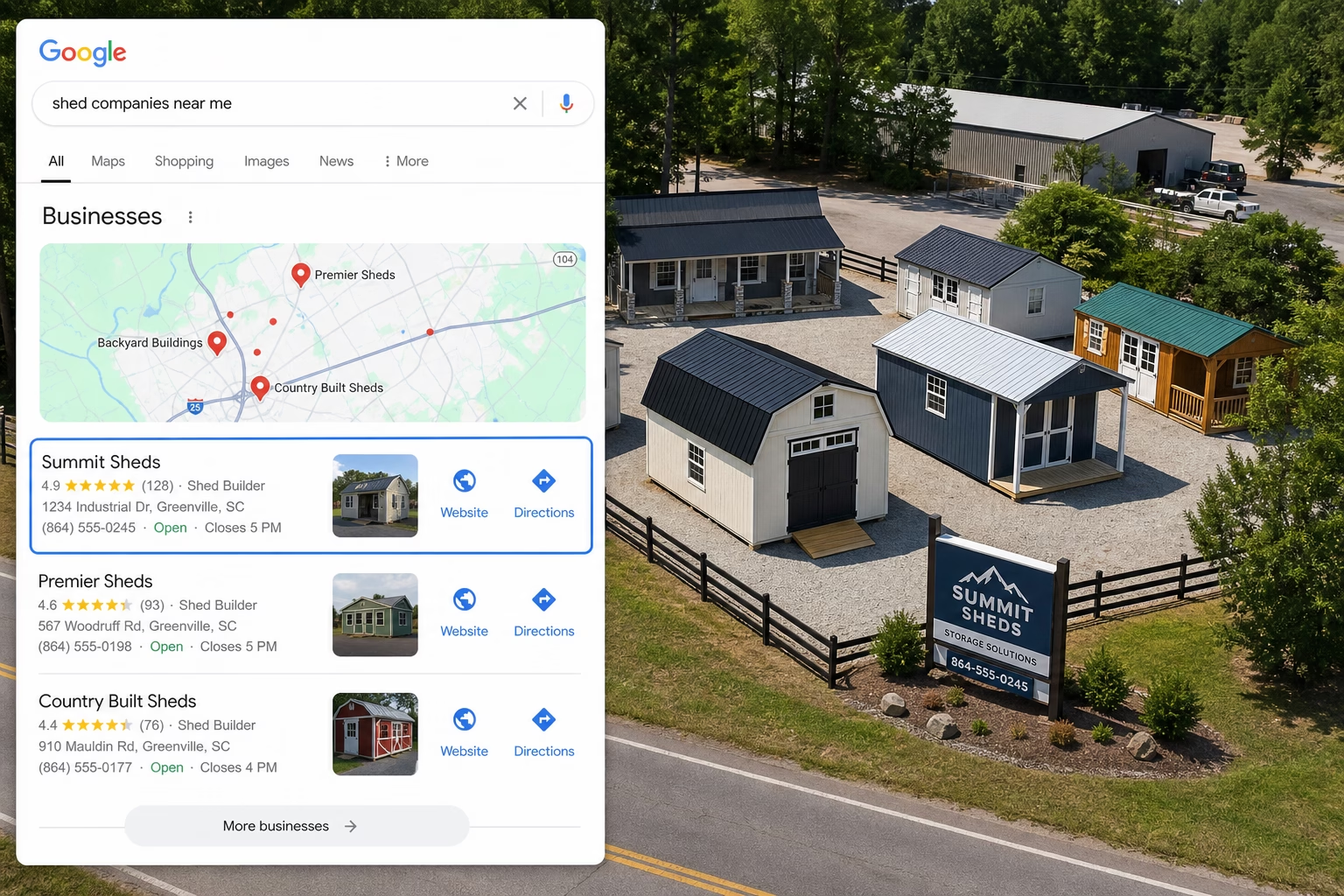
Before fixing anything, it helps to understand what Google is actually optimizing for. When someone searches “shed company near me” or “custom sheds [city name],” Google uses three factors to decide which businesses to show:
Relevance: Does your business actually sell what this person is looking for? Google determines this from your website content, your Google Business Profile categories, and the words used across your online presence.
Distance: How close is your business to the person searching? This is partly geographic but also influenced by whether your business appears to serve a specific area.
Prominence: How well-known and trusted is your business online? This is measured through reviews, backlinks, mentions, and overall online authority.
You have meaningful control over all three. Here is how to work each one.
Step 1: Claim and Fully Optimize Your Google Business Profile
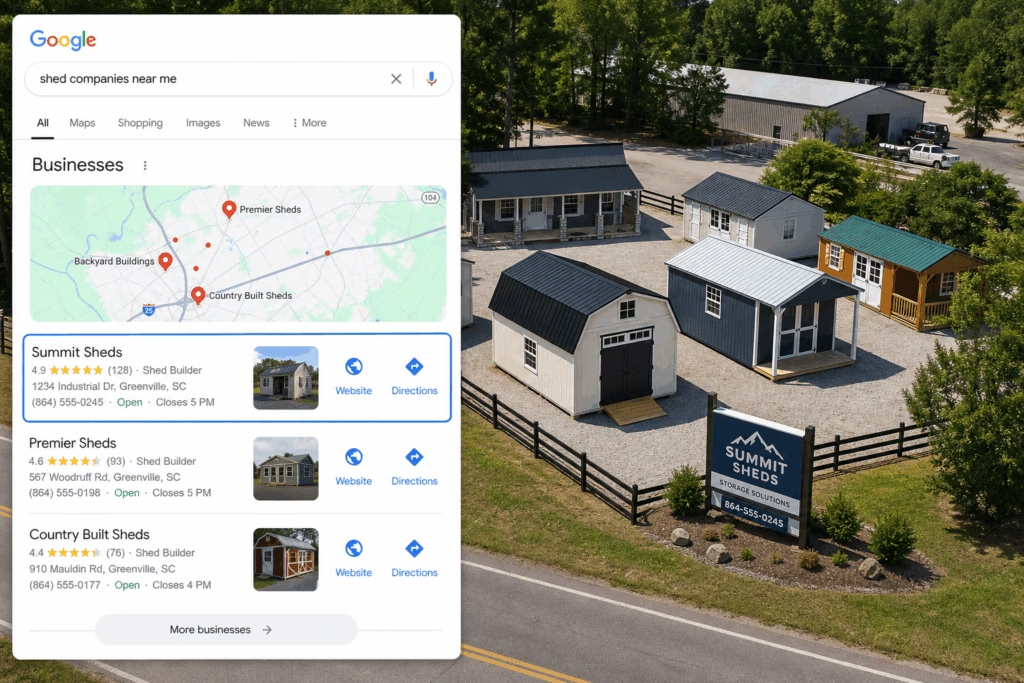
Your Google Business Profile (GBP) is the single most important piece of real estate you have in local search. It is what appears in the map pack at the top of Google results, and it is often the first thing a potential customer sees before they ever visit your website.
If you have not claimed your profile, do it now at business.google.com. If you have claimed it but left it partially filled out, that is almost as bad.
What a Fully Optimized Shed Business Profile Looks Like
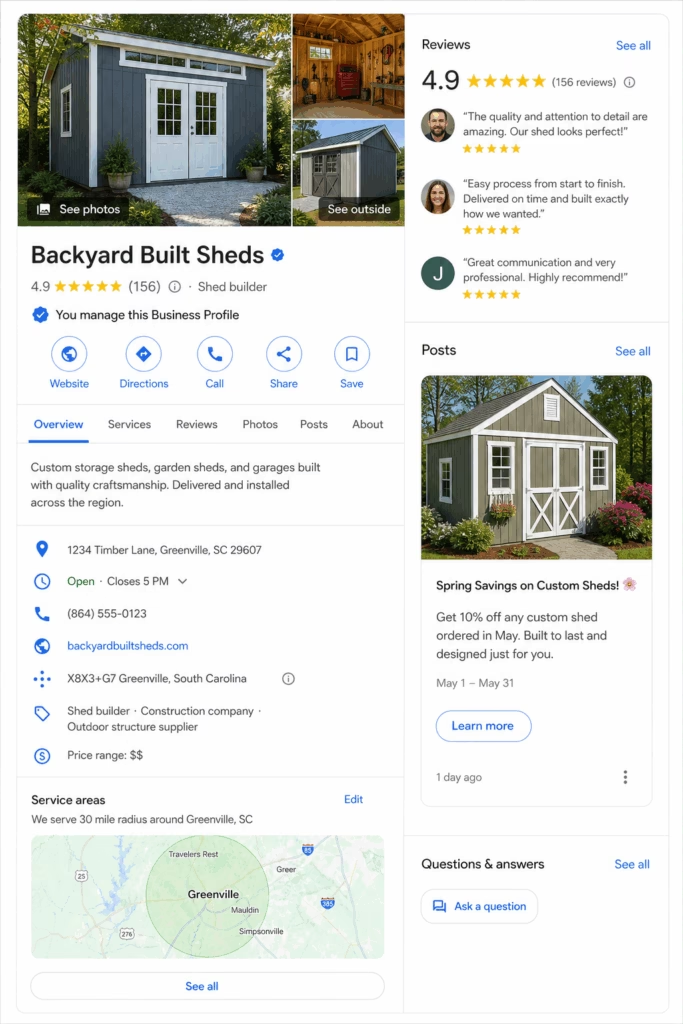
Business name: Use your actual business name. Do not stuff keywords into it. Google penalizes this.
Primary category: Select “Shed Builder” or the closest relevant category. Add secondary categories like “Storage Shed Supplier” or “Prefabricated Buildings” where applicable.
Service area: List every town, county, or zip code you deliver and install in. This directly affects which local searches you appear in.
Business description: Write 200 to 300 words that describe what makes your sheds different, who you serve, and what your process looks like. Include your top location naturally. This is not a keyword-stuffing exercise. Write for the person reading it.
Photos: Upload at least 20 photos of your actual sheds. Include your lot, completed builds on customer properties, interior shots, custom options, and your team at work. Profiles with photos get significantly more clicks than those without.
Products: List individual shed styles as products with prices or price ranges. Many shed buyers are comparison shopping, and this surfaces your offerings directly in Google.
Posts: Use Google Posts (the update feature inside your profile) to share new shed styles, promotions, seasonal offers, or recent builds. Active profiles rank higher than dormant ones.
Step 2: Build Location-Specific Pages on Your Website
Here is where most shed businesses leave significant search traffic on the table.
If your website has one “Service Area” page that lists fifteen counties, Google does not know which county to rank you in for local searches. You are competing against every shed company in all fifteen of those areas with one generic page.
The fix is individual location pages, one for each major town or county you serve.
What a Location Page Needs to Rank
Each page should be built around one geographic target and should include:
- A headline that names the service and the location: “Custom Storage Sheds in Lancaster County, PA”
- A short paragraph describing your connection to that area (how long you have served it, what kind of customers you work with there)
- Your most popular shed styles, with photos
- A brief description of your delivery and installation process for that area
- Two or three customer testimonials from buyers in or near that location
- A clear call to action with your phone number and a form or link to request a quote
- Your full business name, address, and phone number at the bottom (this is called a NAP citation and it matters for local SEO)
A location page does not need to be long. Five hundred to eight hundred words, structured well, beats a sprawling two-thousand word page that tries to cover everything.
If you serve ten towns, you want ten pages. If you serve twenty, you want twenty. This is one of the highest-leverage SEO investments a shed business can make.
Step 3: Get More Reviews (and Respond to All of Them)
Reviews are not just social proof. They are a direct ranking signal in Google’s local algorithm.
Google looks at three things related to reviews: the total number, the average rating, and how recently reviews were left. A business with 12 reviews and a 4.8 star rating will typically outrank a competitor with 3 reviews and a 5.0 rating.
How to Build a Consistent Review Pipeline
The most effective method is also the simplest: ask every satisfied customer for a review, immediately after the shed is delivered or installed.
Most customers who are happy with their experience are genuinely willing to leave a review. They just never think to do it unless asked. Build the ask into your delivery process.
A practical system:
- Deliver and install the shed
- Walk the customer through it and confirm they are happy
- Send a text or email within 24 hours with a direct link to your Google review page
- Keep the ask simple: “We would really appreciate 30 seconds of your time to leave us a Google review. It helps other local families find us.”
Responding to reviews: Respond to every review, positive and negative. For positive reviews, thank the customer and mention a specific detail they raised. For negative reviews, respond professionally and offer to resolve the issue offline. This signals to Google that your business is active and engaged, and it signals to potential customers that you take service seriously.
Step 4: Fix the Basics of Your Website for Local SEO
Your Google Business Profile drives visibility. Your website closes the sale. They need to work together.
Here are the website fundamentals that directly affect your local search rankings:
Page Titles and Meta Descriptions
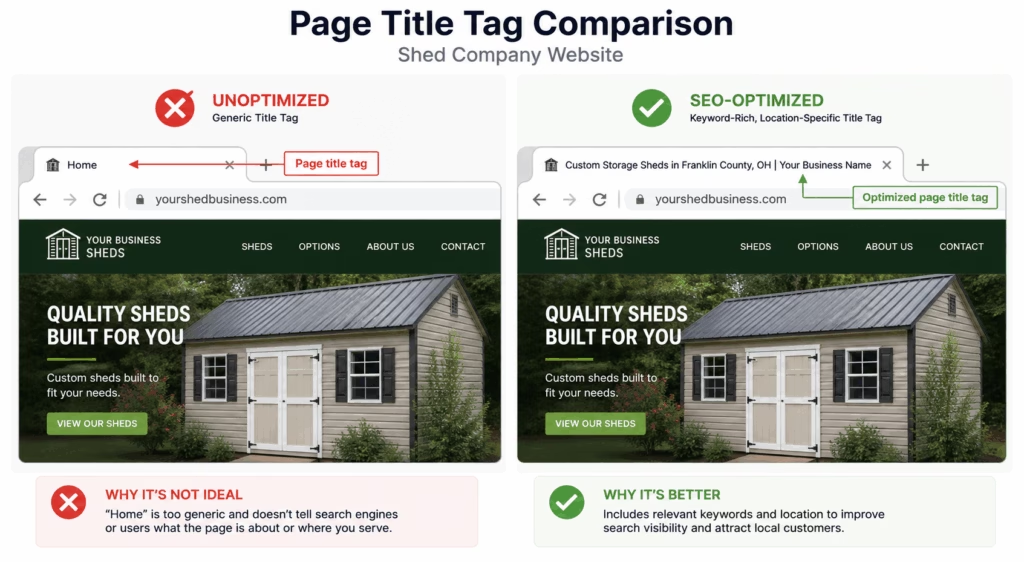
Every page on your site should have a unique title tag that includes your primary keyword and your location. Not “Home” or “About Us.” Something like “Custom Amish Sheds in Holmes County, OH | [Your Business Name].”
Meta descriptions do not directly affect rankings, but they affect click-through rates. Write them to earn the click, not just to describe the page.
Mobile Performance
Over 60 percent of local searches happen on smartphones. If your website loads slowly or displays poorly on mobile, you will lose customers before they see a single photo of your sheds. Run your site through Google’s PageSpeed Insights (free) and fix the top flagged issues.
Schema Markup
Schema is a piece of code that tells Google exactly what type of business you are, where you are located, and what you offer. A “LocalBusiness” schema on your homepage makes it significantly easier for Google to categorize and rank you correctly. Most website platforms allow you to add this without writing code.
Consistent NAP Information
Your business name, address, and phone number must be identical everywhere they appear online: your website, your Google Business Profile, your Facebook page, your Yelp listing, and any directory listings. Even small inconsistencies (abbreviating “Street” as “St.” in one place) can weaken your local authority.
Step 5: Create Content That Answers Buyer Questions
When someone is considering buying a shed, they have questions before they have a budget. They are Googling things like:
- “What size shed do I need for a riding mower?”
- “Do I need a permit for a shed in [county]?”
- “What is the difference between vinyl and wood sheds?”
- “How long does a shed last?”
- “Can I put a shed on a concrete pad?”
Every one of those questions is an opportunity for your business to show up in search before a competitor does. Blog posts and FAQ pages that answer these questions directly bring in buyers earlier in their decision process and position your business as the trusted local expert.
Content That Actually Works for Shed Businesses
Focus on three types:
Buyer guides: “How to Choose the Right Shed Size for Your Property,” “Pressure Treated vs. Vinyl Sheds: Which Is Better for the Midwest Climate”
Local permit and zoning content: “Shed Permit Requirements in [County Name]” is a highly specific, low-competition search term that the right buyer will be searching for. If you serve multiple counties, write one page per county.
Project showcases: Document real customer builds with photos, the customer’s use case, the size and style they chose, and why. These pages attract local search traffic and build massive trust simultaneously.
Consistency matters more than volume. Two well-written posts per month will outperform twelve rushed ones every time.
Step 6: Get Listed in the Right Online Directories
Beyond Google, there are several directories that influence local SEO for shed businesses. Citations from these sites strengthen your overall online authority and help Google verify that your business is legitimate and established.
Priority directories for shed and construction businesses:
- Yelp
- Houzz
- Angi (formerly Angie’s List)
- Better Business Bureau
- Facebook Business
- Nextdoor (especially effective for local residential customers)
- Your local Chamber of Commerce website
When creating or claiming these listings, use exactly the same business name, address, and phone number you use on your Google Business Profile and website. Consistency across all of these sources is what builds local authority over time.
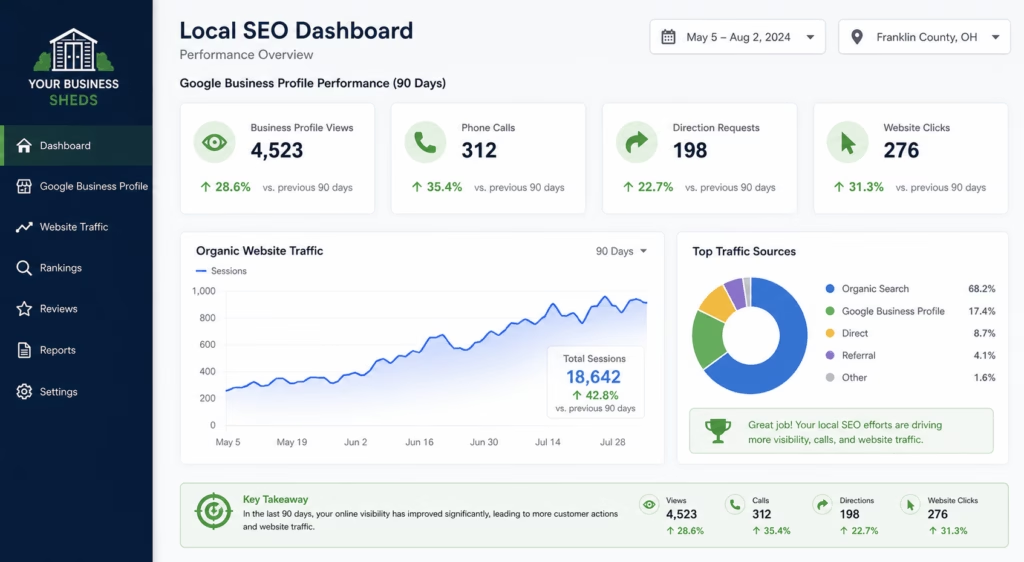
Step 7: Track What Is Actually Working
None of this matters if you cannot tell what is driving results. The most important metrics to track for a shed business doing local SEO are:
- Google Business Profile views: How many people saw your profile in search results each month
- Direction requests and phone calls from GBP: Direct indicators of in-market buyers
- Organic search traffic by page: Which pages on your site are pulling in visitors from Google
- Keyword rankings: Which search terms you appear for and in what position
- Lead source tracking: Asking every new customer how they found you gives you real-world confirmation of what your analytics are showing
You do not need expensive software to start. Google Search Console and Google Analytics are both free, and together they give you a clear picture of your search performance.
How Long Does This Take to Work?
Honest answer: it depends on how competitive your local market is and how far behind your online presence currently is.
Here is a realistic timeline:
Weeks 1 to 4: Google Business Profile optimization and initial review push. You may see movement in GBP visibility within the first few weeks.
Months 1 to 3: Location pages and on-site SEO improvements indexed and beginning to rank for less competitive local terms.
Months 3 to 6: Consistent content and citation building begins to compound. Rankings improve for more competitive searches.
Months 6 to 12: For most local shed markets, a well-executed strategy should produce consistent first-page visibility for your top service area keywords.
The businesses that see the best results are the ones that treat this as an ongoing process, not a one-time project.
Where Shed Businesses Get Stuck
The strategy above is not complicated, but execution is where most business owners stall. Running a shed operation means your days are full: managing inventory, coordinating deliveries, handling customer questions, and keeping up with builds. Marketing is the thing that always gets pushed to next week.
This is where having a team that already knows the shed industry removes an enormous amount of friction. You should not have to explain what a Dutch barn style is, or why permit requirements are a content opportunity, or how delivery radius affects service area page structure.
A general marketing strategy built around your specific business model, your product lines, and your geographic footprint is a very different thing from generic small business marketing advice. It means the work gets done in the right order, focused on the right areas, without you needing to become an expert in something that is not your business.
If you are not sure where your online presence currently stands, a free marketing audit is the fastest way to get clarity. It covers your website, your GBP, your local rankings, and what your competitors are doing that you are not, with no obligation and no sales pressure. Just an honest look at the gap between where you are and where you could be.
The Competitive Reality for Shed Businesses in 2025 and 2026
National shed dealers, rent-to-own companies, and big-box retailers are all investing in local SEO. They are showing up in your market with national budgets and optimized local pages.
The counter to that is not a bigger budget. It is specificity. A national brand cannot match a locally owned shed business for genuine community connection, customer-specific photos, county-level content, and the credibility that comes from 150 five-star Google reviews from real neighbors.
Local SEO levels that playing field. Done consistently, it tilts it in your favor.
The blueprint above gives you the structure. The work is straightforward. The compounding benefits of getting it right reward every shed business that sticks with it.
Frequently Asked Questions
How much does SEO cost for a shed business? It varies significantly by market and scope. Some shed businesses start with DIY efforts (optimizing their GBP and building location pages themselves) and layer in professional help over time. Others engage a marketing partner from the start. The most important thing is not how much you spend, but whether the work is being done in the right order and measured consistently.
Can I rank against national shed companies? Yes, especially in local searches. National brands struggle to compete for hyper-local search terms like “custom sheds in [your town]” because they cannot match the local authority, local reviews, and local content that a well-optimized independent dealer can build.
Do I need a blog to rank on Google? Not immediately. The GBP, location pages, and review strategy will produce the fastest results for most shed businesses. Content marketing compounds over time and is worth building toward, but it is not the place to start.
How do I know if my Google Business Profile is properly set up? Search for your business name on Google. Click on your profile. Check whether your categories, service area, photos, description, and hours are all complete and accurate. If any section is blank or thin, that is your first priority.
What is the fastest single thing I can do to improve local visibility? Send a review request to every customer from the past 12 months who you know was satisfied. A burst of new, recent reviews has one of the fastest and most measurable impacts on local pack rankings of anything you can do without touching your website.
Why Schedule a Call?
Popular Insights
The Shed Dealer’s Digital Playbook: How to Get Found Online and Fill Your Lot
Aug. 21, 2026
Why Your Roofing Website Gets Traffic But No Phone Calls (And How to Fix It)
Aug. 07, 2026How to Use Video to Book More Jobs as a Roofer or Builder (Even If You Hate Being on Camera)
Jul. 31, 2026The Anatomy of a High-Converting Contractor Website: What Customers Actually Look for Before Calling
Jul. 24, 2026
Seasonal Marketing: How Smart Contractors Stay Busy in the Slow Season
Jul. 17, 2026Topics
Pudgy Squirrel Marketing
The Shed Dealer’s Digital Playbook: How to Get Found Online and Fill Your Lot
Read More
Pudgy Squirrel Marketing
The Shed Business Owner’s Blueprint for Getting Found on Google
Read More
Pudgy Squirrel Marketing
Why Your Roofing Website Gets Traffic But No Phone Calls (And How to Fix It)
Read More

Pudgy Squirrel Marketing
How to Use Video to Book More Jobs as a Roofer or Builder (Even If You Hate Being on Camera)
Read More
Pudgy Squirrel Marketing
The Anatomy of a High-Converting Contractor Website: What Customers Actually Look for Before Calling
Read More
Pudgy Squirrel Marketing
Seasonal Marketing: How Smart Contractors Stay Busy in the Slow Season
Read More
Pudgy Squirrel Marketing
What Does a $1,500/Month Marketing Budget Actually Get a Shed or Construction Business?
Read More
Pudgy Squirrel Marketing
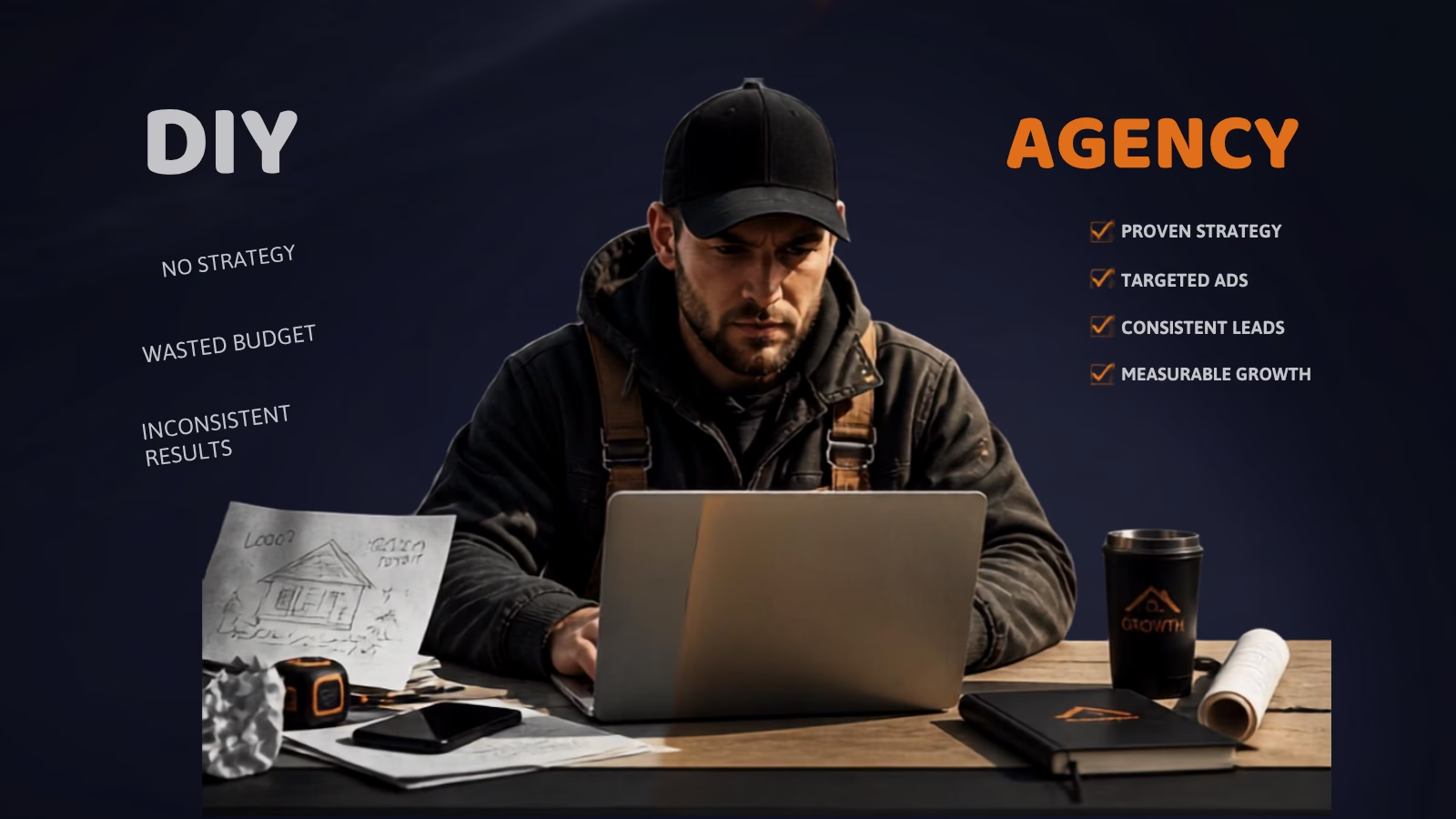
DIY vs. Agency: Should a Roofing Company Handle Their Own Marketing?
Read More