
Get In Touch
Pudgy Squirrel Marketing
Why Your Roofing Website Gets Traffic But No Phone Calls (And How to Fix It)
By Tony
August 7, 2026
9 mins
Share:
Key Takeaways
- Traffic without conversions is a messaging and trust problem, not a visibility problem.
- Most roofing websites lose leads before a visitor ever reaches the contact form.
- The top conversion killers are slow load times, weak calls to action, missing trust signals, and mismatched search intent.
- Fixing your conversion rate delivers more leads from the traffic you are already paying to get.
- A roofing website that actually generates calls is built around what the customer needs to see, not what the contractor wants to show off.
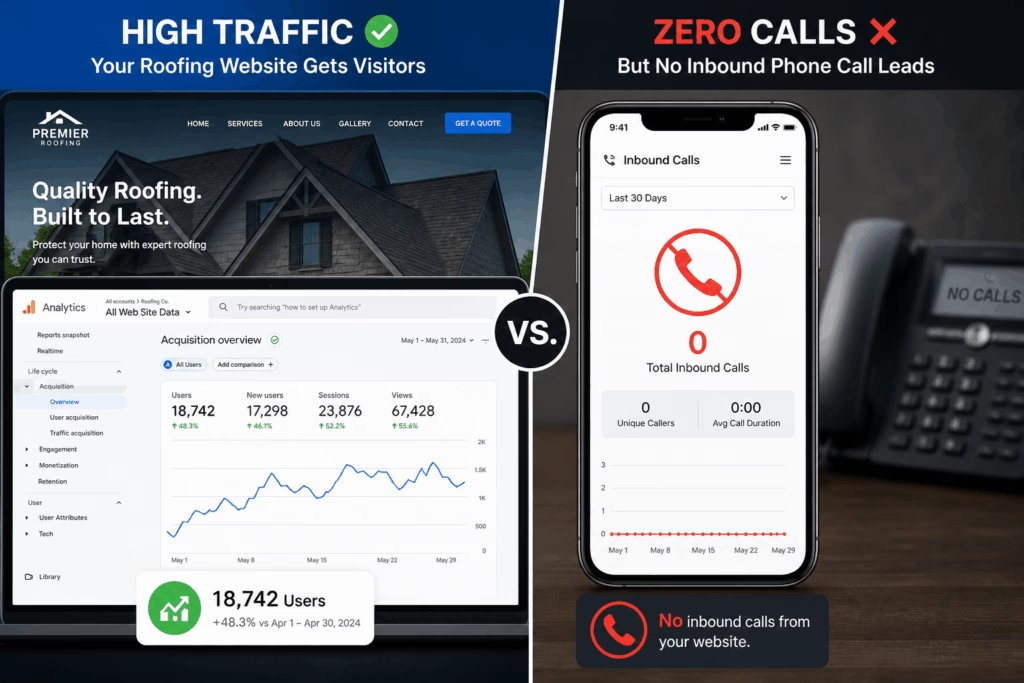
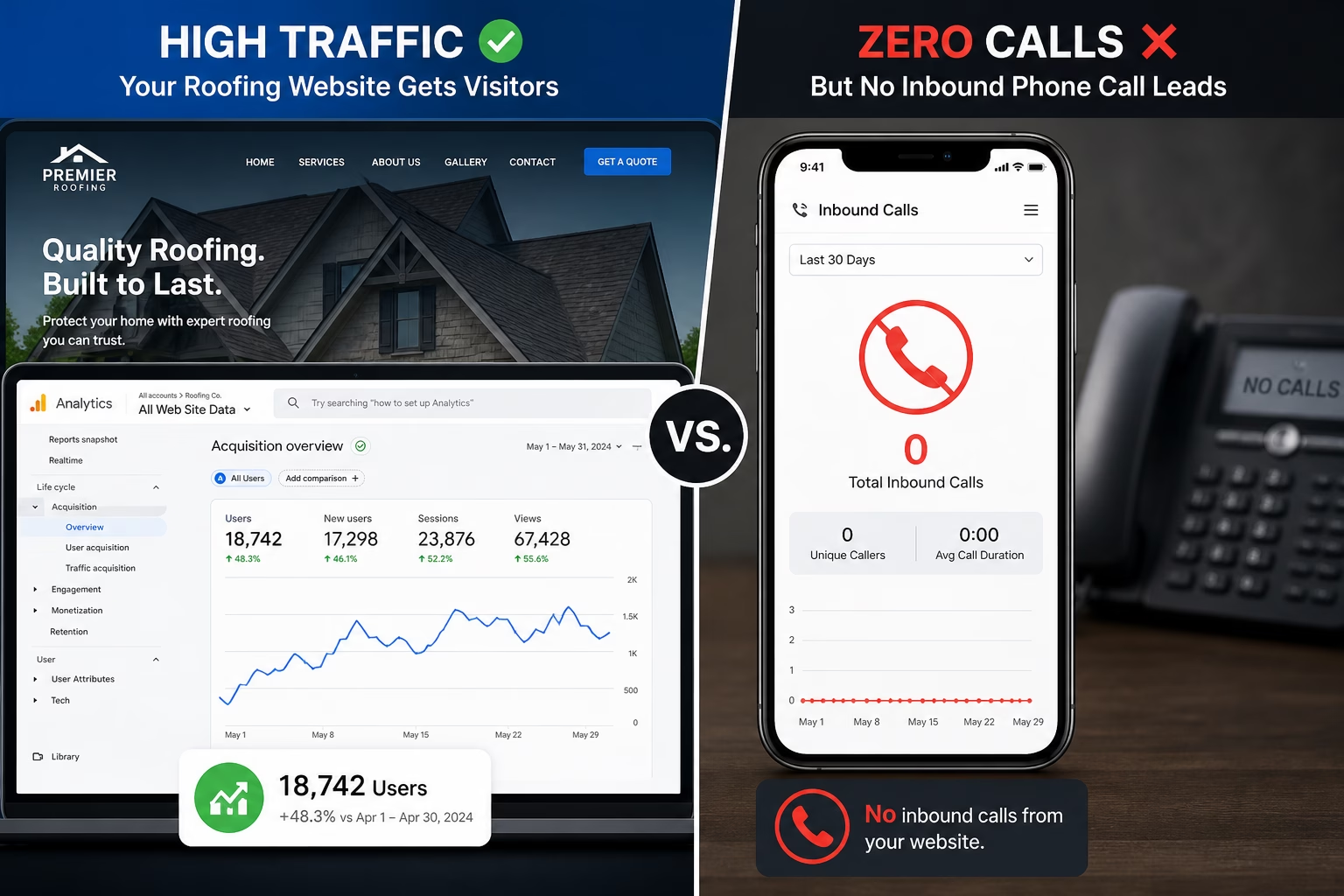
You Are Ranking. Why Is Your Phone Not Ringing?
You did everything right. You hired someone to build a decent website. You are showing up in Google searches. The analytics show people are visiting. And yet the phone sits quiet.
This is one of the most frustrating situations in roofing marketing, and it is far more common than most business owners realize. Traffic is not the goal. Booked jobs are the goal. When those two things are not connected, the problem almost always lives somewhere between the click and the call.
This guide breaks down the seven most common reasons roofing websites bleed leads, and gives you a specific, actionable fix for each one.
The Core Problem: Visits and Conversions Are Two Different Things
Google rewards pages that get clicks. Your bank account rewards calls that turn into estimates. These are not the same thing, and they require different strategies.
Most roofing websites are optimized for one and completely ignore the other. They rank for keywords like “roof replacement near me” or “storm damage roofing contractor,” pull in visitors who genuinely need their services, and then fail to give those visitors a compelling reason to pick up the phone.
A visitor who lands on your site has already done you a favor. They searched for you. The conversion problem is yours to fix, not theirs.
Reason 1: Your Homepage Answers the Wrong Question
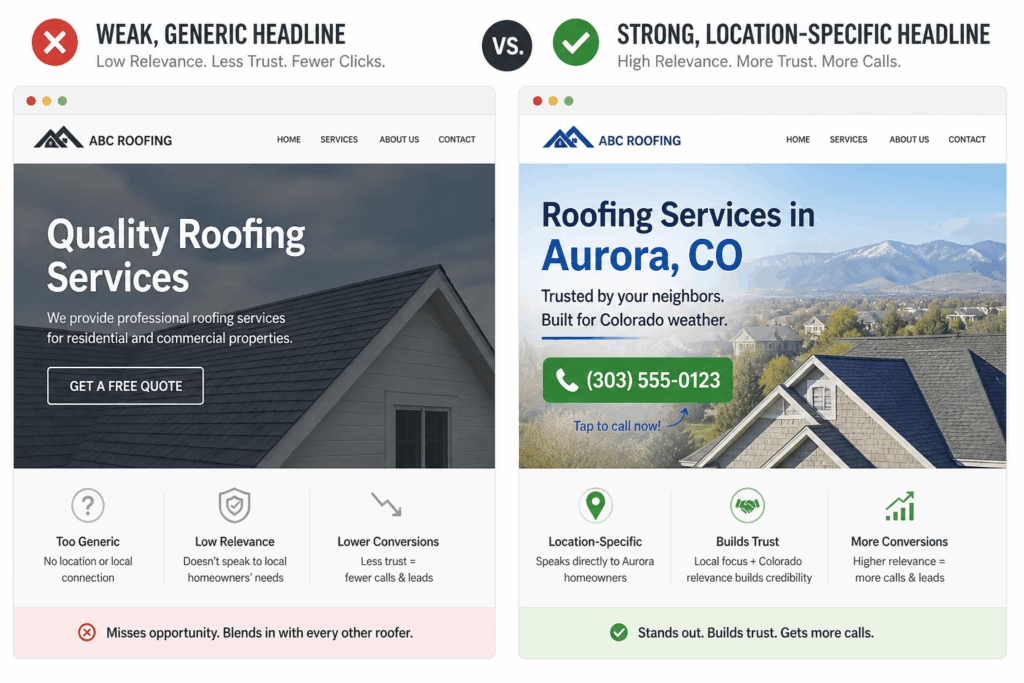
When a homeowner lands on your site, they have one question burning in their mind: “Can I trust this company to fix my roof?”
Most roofing homepages answer a different question entirely: “What is this company good at?” They lead with mission statements, company history, and service lists. They make the visitor work to find the information they actually need.
A homepage that converts leads with:
- A clear headline that names the service and the location within the first few seconds
- A visible phone number in the top right corner on every page, not just the footer
- Immediate evidence of credibility (years in business, number of roofs completed, license and insurance confirmation)
- A single, obvious next step that removes all friction
The Fix: Rewrite your above-the-fold section (the part visible before a visitor scrolls) so it answers three questions in ten seconds: Who are you? What do you do? Where do you do it? Everything else is secondary.
Reason 2: Your Website Loads Too Slowly on Mobile
Over 65 percent of local service searches in 2025 happen on a smartphone. If your roofing website takes more than three seconds to load on mobile, you are losing a significant portion of your visitors before they ever see your services.
Google’s own research confirms that the probability of a bounce increases by 32 percent when page load time goes from one second to three seconds. After five seconds, that number climbs above 90 percent. You are paying to get that traffic through SEO or ads, and it is disappearing before you have a chance to make a case.
Common causes of slow mobile load times on roofing sites:
- Uncompressed images (particularly large before-and-after photos)
- Cheap or overcrowded shared hosting
- Too many third-party plugins loaded on WordPress
- No caching layer configured on the server
The Fix: Run your site through Google PageSpeed Insights (it is free). Address the top three flagged issues. Compress every image. If your site consistently scores below 60 on mobile, a rebuild may be more efficient than patching an aging foundation. A properly built website for a roofing contractor should load in under two seconds on a 4G connection.
Reason 3: Your Calls to Action Are Passive
Scan your website right now. Count how many times it says something like “Contact Us,” “Learn More,” or “Get in Touch.”
Now count how many times it gives a visitor a specific reason to call you today.
Passive calls to action generate passive results. The homeowner with a leaking roof is not in a browsing mood. They are in a problem-solving mood. Your call to action needs to match that urgency and answer the question they are actually asking: “Why should I call you instead of the next guy on the list?”
Weak calls to action:
- “Contact us today”
- “Request a quote”
- “Learn more about our services”
Stronger calls to action for roofing:
- “Call now for a free same-day inspection”
- “Get your roof inspected before your next rain event”
- “Claim your free estimate. Most assessments completed within 24 hours”
The Fix: Replace every generic CTA on your site with one that includes a benefit and a time frame. Put a click-to-call button at the top of the page, in the middle of long service pages, and at the bottom of every post. Never make a visitor hunt for how to reach you.
Reason 4: You Have No Social Proof Where It Counts
Homeowners buying roofing services are making a significant financial decision. They are trusting a stranger on their roof. That level of commitment requires trust signals, and trust signals need to be placed at the exact moments when a visitor is deciding whether to stay or leave.
Most roofing websites make one of two mistakes:
- They have no reviews or testimonials at all
- They bury them at the bottom of a page no one scrolls to
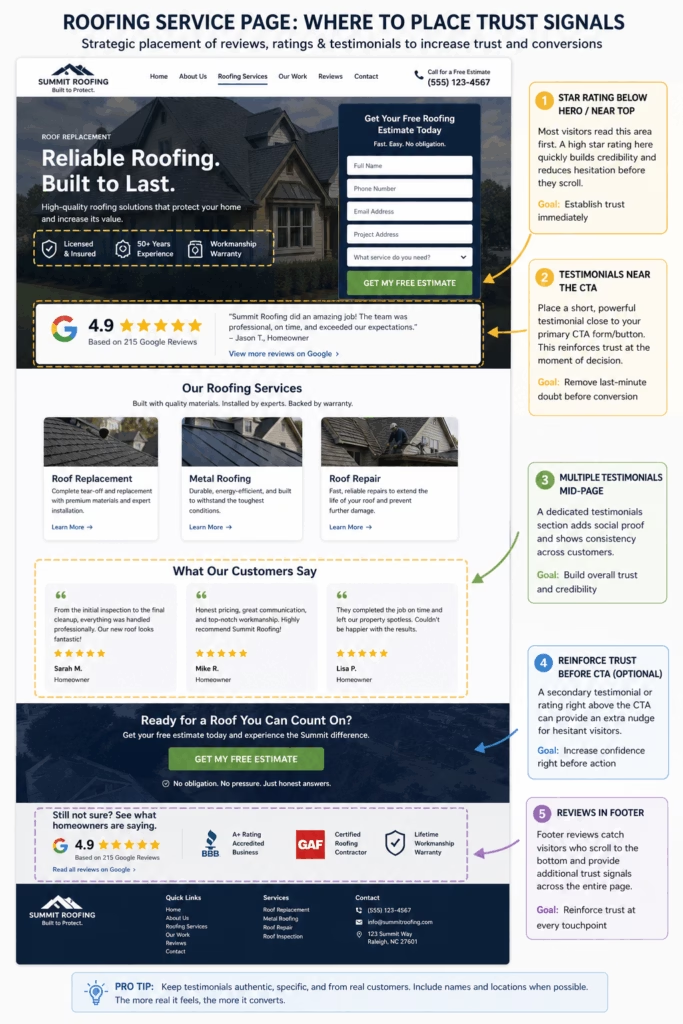
The Fix: Place trust signals at each of these high-stakes moments on your site:
- Above the fold on the homepage: Show your Google rating and review count (a widget or a screenshot both work)
- Service pages: Embed one or two short testimonials specific to that service, right next to your call to action
- Contact page: A testimonial next to the form dramatically improves form submissions
- Blog posts: A brief credibility line at the end reminding readers who you are and what others say about you
Also, if you are licensed and insured, your certificate numbers should be visible somewhere on your site. Many homeowners look for this before calling.
Reason 5: Your Traffic Does Not Match Your Services
This is a technical SEO problem with a very practical consequence. If your site ranks for general roofing keywords but you only serve a specific geographic area, you are pulling in visitors who will never call you because they are outside your service territory.
Equally damaging: if your top-traffic pages are informational blog posts (“How much does a roof replacement cost?”) but your site has no mechanism to capture those readers as leads, you are feeding Google’s engagement metrics without feeding your pipeline.
Intent mismatch happens when the keyword a visitor used to find you does not match what they actually find on your page. A homeowner searching “emergency roof repair Auburn NY” who lands on a generic “Our Services” page will almost always bounce.
The Fix: Audit your top ten pages in Google Search Console. Look at the actual queries driving traffic to each one. Ask whether the page content matches what someone using that query actually wants. Then make sure each page with significant traffic has a clear, relevant call to action for a visitor at that stage of decision-making.
For local roofing businesses, this also means building individual location-specific service pages for each town or county you serve. A page titled “Roof Replacement in [City Name], NY” will consistently outperform a generic “Roof Replacement” page for local searches.
Reason 6: Your Contact Form Is Doing More Harm Than Good
The average roofing website contact form asks for:
- Full name
- Email address
- Phone number
- Service type
- Description of the problem
- Preferred contact time
That is six fields. Every additional field in a form reduces the submission rate. For a high-intent visitor who just wants someone to look at their roof, that friction is enough to make them close the tab and call a competitor who made it easier.
Beyond the form itself, most roofing sites have no lead follow-up automation. A visitor submits a form at 8 p.m. on a Tuesday. If they do not hear back until Wednesday afternoon, there is a reasonable chance they have already called someone else and booked an appointment.
The Fix: Reduce your main contact form to three fields maximum: name, phone number, and one short question about the project. For every submission, trigger an immediate automated text or email confirmation that tells the homeowner when to expect a call back. Pair this with a CRM that notifies you the moment a form is submitted, so hot leads do not cool off overnight.
This is exactly the kind of gap a well-configured CRM solution closes. When your follow-up is automated and immediate, your lead-to-call conversion rate climbs significantly without any additional traffic.
Reason 7: Your Website Was Built to Look Good, Not to Perform
There is a real difference between a website that wins design awards and a website that books jobs. Many roofing contractors get sold on visual polish without asking the harder questions:
- Does this site load fast on a five-year-old Android phone on a rural connection?
- Is it clear within five seconds what this company does and where?
- Can someone on this site call me with one tap?
- Does Google understand what city and services this site is about?
A roofing website built around conversion has specific, measurable characteristics. It has a click-to-call number in the header. It loads in under two seconds. It has schema markup that tells Google it is a local roofing contractor. It has service pages for each major offering. It has a Google Business Profile linked and consistent with the site’s name, address, and phone number.
Pretty does not pay. Performance does.
The Fix: When evaluating your current website or considering a new one, measure it against conversion benchmarks, not visual preferences. If your site is not generating leads at a rate you can track, that is the problem to solve first.
For roofing contractors who have never had a high-performing digital presence, starting with a professional website design built specifically for lead generation is often the fastest path to measurable results. The architecture of the site, the placement of CTAs, the page load speed, and the local SEO structure all need to work together from the foundation up.
How to Diagnose Your Own Conversion Problem
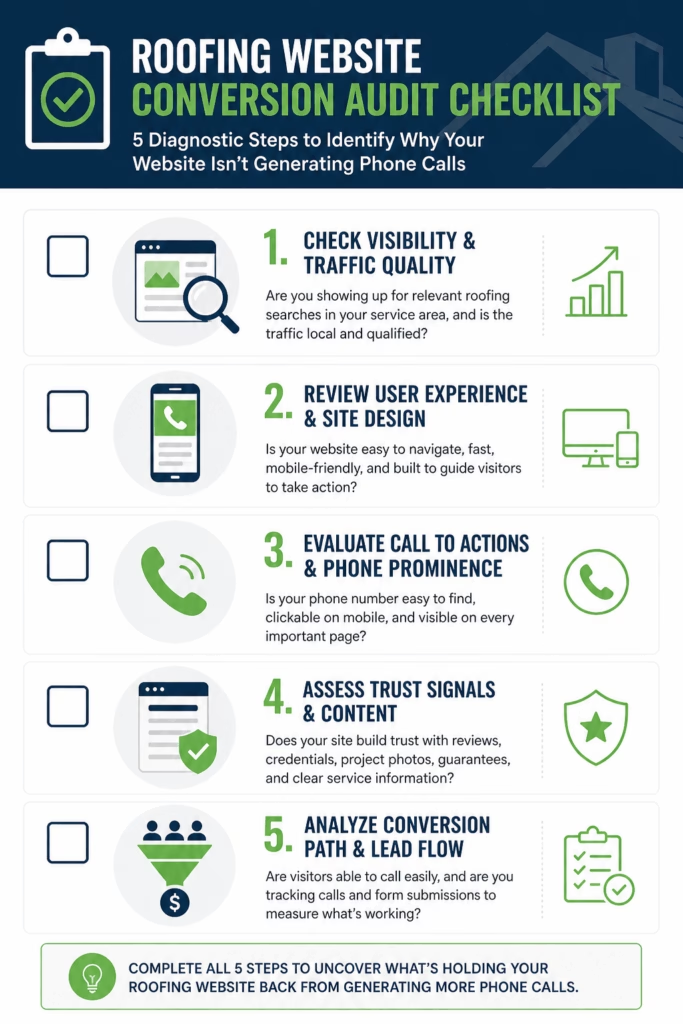
Before spending another dollar on ads or SEO, spend thirty minutes doing this audit on your own site:
Step 1: Check your bounce rate. Log into Google Analytics and look at your homepage bounce rate. Anything above 70 percent is a warning sign. It means visitors are landing and immediately leaving.
Step 2: Test your mobile speed. Open your site on your own phone, not on your work computer with a fiber connection. Time how long it takes to load. If it takes more than three seconds, that is a priority fix.
Step 3: Count your CTAs. Read every page of your site and identify how many times you ask someone to call you, and whether each ask includes a specific reason to act now.
Step 4: Search for yourself. Google the exact phrases your ideal customers would type. Click your own listing. Does the page they land on answer the question they were asking when they searched?
Step 5: Submit a test lead. Fill out your own contact form. Note how long it takes to hear back. That time gap is exactly what your competitors are using to steal your leads.
The Traffic-to-Leads Gap Is Fixable
Getting traffic is genuinely hard work. Ranking in local search for competitive roofing terms takes time, consistency, and a real SEO strategy. If you have done that work and your site is not converting, the good news is that the conversion problem is usually faster and less expensive to fix than the traffic problem.
The changes that move the needle most are almost never glamorous. They are structural. A phone number that is visible. A form that is simple. A headline that speaks directly to the homeowner’s problem. Testimonials placed at the moment of decision. Page speed that does not punish mobile users.
None of these require a complete rebuild. But together, they can double or triple the number of calls you get from the traffic you are already receiving.
If you are not sure where to start, a free marketing audit is the fastest way to see exactly what is working, what is not, and what would have the biggest impact on your lead volume. The audit covers your website, your SEO, your ads, and your social strategy, and gives you a clear picture of what your competitors are doing that you might not be.
Frequently Asked Questions
How do I know if my roofing website has a conversion problem or a traffic problem? If you are getting more than 200 monthly visitors and generating fewer than five to ten leads per month, you almost certainly have a conversion problem. If you are getting fewer than 200 visitors, traffic is the issue to solve first.
What is a good conversion rate for a roofing website? A well-optimized local service website should convert between 3 and 8 percent of visitors into leads (form submissions or phone calls). Most roofing sites convert at under 1 percent.
Should I rebuild my website or just make changes to the existing one? If your site is more than four years old, not mobile-responsive, or built on a platform that your team cannot easily update, a rebuild is often more cost-effective than ongoing patches. If the site is structurally sound but underperforming, targeted changes to CTAs, trust signals, and page speed often produce fast results.
Does adding more blog content help with conversions? Blog content helps with traffic, not directly with conversions. It pulls in visitors at the top of the funnel. The key is making sure those pages have calls to action and lead capture mechanisms built in, so informational readers have a path to becoming paying customers.
How quickly can I expect to see results from conversion optimization? Changes to CTAs, phone number placement, and trust signals can show impact within two to four weeks as data accumulates. Page speed improvements can affect both rankings and bounce rate within days. The full picture becomes clear over a 60 to 90 day window.
Why Schedule a Call?
Popular Insights
How to Use Video to Book More Jobs as a Roofer or Builder (Even If You Hate Being on Camera)
Jul. 31, 2026The Anatomy of a High-Converting Contractor Website: What Customers Actually Look for Before Calling
Jul. 24, 2026
Seasonal Marketing: How Smart Contractors Stay Busy in the Slow Season
Jul. 17, 2026
What Does a $1,500/Month Marketing Budget Actually Get a Shed or Construction Business?
Jul. 10, 2026
DIY vs. Agency: Should a Roofing Company Handle Their Own Marketing?
Jul. 03, 2026Topics
Pudgy Squirrel Marketing
Why Your Roofing Website Gets Traffic But No Phone Calls (And How to Fix It)
Read More

Pudgy Squirrel Marketing
How to Use Video to Book More Jobs as a Roofer or Builder (Even If You Hate Being on Camera)
Read More
Pudgy Squirrel Marketing
The Anatomy of a High-Converting Contractor Website: What Customers Actually Look for Before Calling
Read More
Pudgy Squirrel Marketing
Seasonal Marketing: How Smart Contractors Stay Busy in the Slow Season
Read More
Pudgy Squirrel Marketing
What Does a $1,500/Month Marketing Budget Actually Get a Shed or Construction Business?
Read More
Pudgy Squirrel Marketing
DIY vs. Agency: Should a Roofing Company Handle Their Own Marketing?
Read More

Pudgy Squirrel Marketing
7 Signs Your Construction Company’s Website Is Losing You Jobs (And How to Fix It)
Read More
Pudgy Squirrel Marketing
Google Business Profile vs. Google Ads: Which One Should a Contractor Invest in First?
Read More