
Get In Touch
Pudgy Squirrel Marketing
Google Ads for Contractors: How Much Should You Actually Spend to Get a Consistent Flow of Leads?
By Tony
November 24, 2026
10 mins
Share:

Why This Question Is Harder to Answer Than It Looks
“How much should I spend on Google Ads?” is one of the most common questions contractors ask when they start thinking about paid search. It sounds like it should have a simple answer. It does not, and anyone who gives you a confident number without asking follow-up questions first is guessing.
The right Google Ads budget for a roofing company in a mid-size Midwestern market is a completely different number from the right budget for a general contractor competing in a dense coastal metro. The service type, average job value, seasonality, level of local competition, and the quality of your website all interact to produce a budget that either generates profitable leads or quietly burns through your money.
What this guide will do is give you a framework to calculate a number that actually makes sense for your business, along with the benchmarks and reasoning behind it. That is more useful than a number pulled from a generic chart.
Start With the Math, Not the Budget
The most common mistake contractors make with Google Ads is starting with a budget number and working backward. They decide they can afford $1,000 a month and then wonder why they are not getting enough leads. The right approach is to start with your revenue goals and work forward.
Here is the framework:
Step 1: What is your average job value?
This is the average revenue per completed job, not the highest or lowest, but a realistic average across all the work you do. For a residential roofer, this might be $9,000 to $14,000. For a remodeling contractor, it might be $25,000 to $60,000. For a fence or gutter company, it might be $2,500 to $5,000.
Step 2: What is your close rate on new inbound leads?
Be honest here. If you get 20 leads in a month and book 5 jobs, your close rate is 25 percent. Most contractors who have not built a strong follow-up system are closer to 15 to 20 percent on cold inbound leads.
Step 3: What is your target cost per acquired customer?
Most contractors are comfortable spending 5 to 10 percent of a job’s value to acquire it. On a $10,000 roofing job, that is $500 to $1,000 in total marketing cost per booked job. On a $40,000 remodel, it might be $1,500 to $2,500.
Step 4: Work backward to your maximum cost per lead.
If your close rate is 25 percent and your maximum cost per acquisition is $800, then your maximum cost per lead is $200. (Every four leads produces one job, so each lead can cost up to $200 before acquisition cost exceeds $800.)
Step 5: Estimate monthly lead volume needed.
If you want 8 new jobs per month and your close rate is 25 percent, you need 32 leads. At a maximum cost per lead of $200, your maximum monthly budget is $6,400.
This is your ceiling. Your actual budget should be set below it and adjusted as you gather real data.
Realistic Cost-Per-Lead Benchmarks by Contractor Trade
The following ranges reflect current Google Ads market conditions for residential and light commercial work in mid-size to large U.S. markets. Highly competitive metros like major coastal cities will run higher. Smaller rural markets will often run lower.
These are cost-per-lead figures, meaning what you pay for each person who calls or fills out a form, not cost per click.
Roofing (replacement and repair): $60 to $200 per lead Roofing is one of the most competitive contractor categories on Google Ads. Cost per click for high-intent keywords like “roof replacement [city]” frequently exceeds $15 to $30 in populated markets. Budget accordingly.
General Contracting and Remodeling: $80 to $250 per lead Kitchen and bathroom remodels attract high-quality leads but also significant competition from national lead aggregators bidding on the same keywords. The higher job values make the cost per lead more tolerable.
HVAC, Plumbing, and Electrical: $50 to $180 per lead Emergency service searches (broken furnace, burst pipe) convert at very high rates and command premium CPCs. Maintenance and installation keywords are more competitive but often produce longer-term customers.
Fencing: $30 to $90 per lead Lower average job values mean you need a lower cost per lead to remain profitable. This trade is less saturated on Google Ads in many markets, which creates opportunity.
Gutters and Gutter Guards: $25 to $75 per lead Often run as an add-on campaign for roofing companies. Gutter guard keywords can attract high-intent buyers willing to spend significantly on premium products.
Siding: $50 to $150 per lead Similar competitive dynamics to roofing in most markets. Often most effective when paired with roofing campaigns targeting storm damage keywords.
Commercial Construction: $100 to $300 per lead Fewer searches but dramatically higher job values. A single closed commercial lead can justify an entire month of ad spend. Targeting is more precise and quality matters more than volume.
The Minimum Viable Budget: Why Underspending Is a Real Problem
Many contractors set their first Google Ads budget too low because they want to “test the waters” before committing. This is understandable but counterproductive.
Google Ads is a machine learning platform. Its automated bidding strategies, which are now the default and generally the most effective approach, require data to optimize. Specifically, Google’s Smart Bidding algorithms need a minimum of 30 to 50 conversion events per month to stabilize and perform well. Below that threshold, the system is essentially making random decisions.
If your market averages $25 per click and you budget $500 per month, you are buying 20 clicks. That is not a campaign. That is noise.
The Minimum Budget by Trade
As a general guideline, the minimum monthly budget to generate meaningful results and enough data to optimize:
- Roofing in a competitive market: $2,000 to $3,500 per month
- Roofing in a smaller market: $1,200 to $2,000 per month
- Remodeling and general contracting: $1,500 to $3,000 per month
- Fencing or gutters: $800 to $1,500 per month
- Commercial construction: $1,500 to $2,500 per month (lower volume, higher intent)
Below these ranges, you are unlikely to generate the volume needed to draw meaningful conclusions or allow Google’s algorithm to learn. You may get a lead here and there, but consistent flow requires consistent volume.
What Happens to Your Budget If These 4 Things Are Wrong
A contractor can set the perfect budget, run a well-structured campaign, and still see poor results. Here are the four most common reasons ad spend produces little return, and what to do about each.
1. Your Landing Page Is Not Built to Convert
Google charges you for the click the moment someone lands on your site. What happens next is entirely up to your website.
If a homeowner clicks your ad about hail damage roof repair and lands on your generic homepage, a large percentage will leave without contacting you. That click still costs you $18 to $30.
Every Google Ads campaign should drive traffic to a dedicated landing page built for that specific service and that specific type of visitor. The page should have one job: get the visitor to call or fill out a form.
A landing page built for roofing lead generation and one built for remodeling leads are different pages. They speak to different problems, different objections, and different decision triggers.
This is directly connected to why your construction website’s design and conversion structure matters so much when running paid traffic. A page that converts at 8 percent instead of 3 percent does not just improve your leads. It effectively cuts your cost per lead by more than half, making your entire ad budget go further.
2. You Are Bidding on the Wrong Keywords
Not all roofing keywords are equal. Consider the difference between:
- “roofing” (someone could be looking for anything, including DIY information or roofing jobs to apply to)
- “roofing contractor near me” (high intent, commercial query, likely to convert)
- “how to fix a shingle” (informational query, almost never converts to a service call)
- “emergency roof repair [city name]” (extremely high intent, ready to hire today)
Bidding on broad, generic terms wastes budget on unqualified traffic. Bidding on high-intent, specific keywords with local modifiers produces leads.
The most valuable keyword structure for most contractors combines:
- Service + location: “roof replacement [city],” “roofing contractor [city name]”
- Problem + location: “hail damage roof [city],” “leaking roof repair [city]”
- Urgency keywords: “emergency roofing,” “roof damage after storm”
- Competitor protection: Your own brand name, to prevent competitors from capturing your branded search traffic
Equally important: use negative keywords aggressively. Add terms like “DIY,” “jobs,” “careers,” “how to,” “free,” and “YouTube” as negatives to prevent your ads from showing for irrelevant searches. Failing to manage negative keywords is one of the most common ways construction ad budgets get wasted.
3. You Are Not Tracking Conversions Properly
If you do not know which keywords and ads are generating actual leads (not just clicks), you cannot make intelligent decisions about where to invest more and where to cut back.
Proper conversion tracking means:
- Phone calls from your ads are tracked as conversions (Google can do this natively with call tracking)
- Form submissions are tracked as conversions and attributed to the specific keyword that drove them
- Your CRM is connected to your ad reporting so you can see not just leads, but which leads turned into booked jobs
Without this data, you are running your campaign blind. You may be spending 60 percent of your budget on keywords that generate clicks but no calls, and have no way to know it.
4. Your Follow-Up Is Too Slow
This has nothing to do with your ads and everything to do with what happens after someone clicks them.
A paid lead is more impatient than an organic lead. They searched, they clicked your ad, they filled out your form. They are ready to talk to someone right now. If they do not hear back within minutes, many of them will click the next ad in the results page and call that company.
An automated instant response system connected to your CRM built for construction businesses eliminates this leak. The moment a lead submits your form, an automatic text message confirms receipt and sets an expectation for your callback. By the time you call, they have already heard from you. That simple sequence meaningfully improves the conversion rate of your paid traffic.
How to Scale Your Budget Intelligently Over Time
The right approach to Google Ads budget for most contractors is not to set a number and leave it forever. It is to start at the minimum viable level, gather data, and scale up based on what the numbers show.
Month 1 to Month 2: Establish Baseline Data
Start at or slightly above the minimum viable budget for your trade. Focus on tightly targeted, high-intent keywords with proper negative keyword lists. Do not try to cover every service you offer. Pick your highest-value service and build one tight campaign around it.
Track everything: clicks, cost per click, leads generated, cost per lead, and close rate on those leads.
Month 3 to Month 4: Optimize Before Scaling
Review the data. Which keywords are generating leads at or below your target cost per lead? Which are consuming budget without producing calls?
Pause or reduce bids on underperforming keywords. Increase bids on high-converting terms. Test two or three different ad headlines and pause the lowest-performing version. Update your landing page if your click-to-lead conversion rate is below 5 percent.
Only after your cost per lead is consistently hitting your target should you consider increasing the budget.
Month 5 and Beyond: Controlled Scaling
Once the campaign is dialed in, you can increase your monthly budget in 20 to 30 percent increments, pausing to assess results after each increase. Google’s algorithm typically needs two to three weeks to adjust after a significant budget change, so resist the urge to make rapid adjustments.
Also consider expanding your campaign at this stage. If your roofing campaign is performing well, add a second campaign for a complementary service (siding, gutters, storm damage restoration). Each campaign follows the same build-out process: tight keyword targeting, a dedicated landing page, proper conversion tracking.
Google Ads vs. Local Service Ads: Which Should Contractors Run?
A question that comes up frequently is whether contractors should run traditional Google Search Ads, Google Local Service Ads (LSAs), or both.
Here is a practical breakdown:
Google Local Service Ads (LSAs):
- Appear above traditional search ads in results
- You pay per lead, not per click (Google charges you only when someone calls or messages through the ad)
- Require Google’s background check and license verification to run
- Display a “Google Guaranteed” or “Google Screened” badge that builds trust
- Limited control over targeting and messaging
- Best for: contractors who want a simple, low-management paid lead source with built-in credibility
Google Search Ads (traditional PPC):
- Full control over keywords, ad copy, bidding, and landing pages
- Pay per click, not per lead (conversion rate of your landing page determines your cost per lead)
- Can be highly customized for specific services, seasons, and locations
- Require more active management to perform well
- Best for: contractors who want maximum control, scalability, and the ability to target specific high-value services
The honest recommendation: Run both if your budget allows it.
LSAs are a relatively easy way to capture high-intent local searches with built-in trust signals. Search Ads give you the control and targeting precision to go after specific services, specific geographies, and specific customer types.
If budget is limited, prioritize whichever format your direct competitors are not yet using well in your market. In some markets, LSAs are saturated. In others, very few local contractors have qualified for them yet. That gap is an opportunity.
The Role of Google Ads in a Complete Contractor Marketing System
Google Ads is the fastest way to put your business in front of someone who is actively searching for your service right now. No other marketing channel offers that combination of speed and intent.
But it is not a standalone strategy.
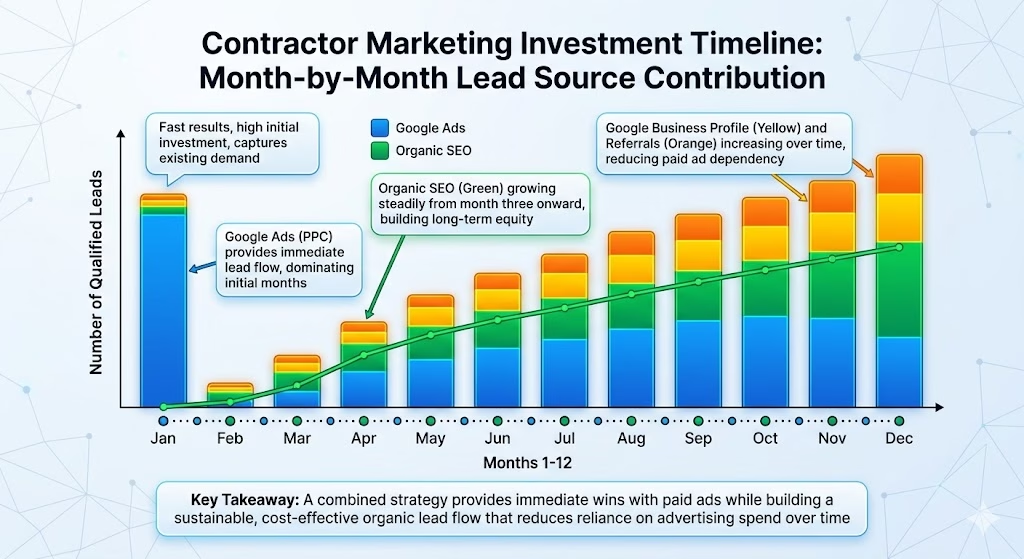
Ads drive traffic. Your website converts that traffic into leads. Your CRM follows up with those leads before they go cold. Your Google Business Profile reinforces your credibility when a homeowner searches your name after seeing your ad. Your local SEO strategy builds the organic rankings that generate leads at zero cost per click over time, reducing your dependence on paid traffic as your business grows.
A contractor who runs Google Ads without a strong website and follow-up system is paying full price for leads and converting half of what they should. A contractor who builds the full system pays for ads in the short term while building organic, referral, and review-driven lead flow that compounds month over month.
That is the difference between a marketing expense and a marketing investment.
Google Ads Budget Planning Worksheet
Use this to calculate a starting budget tailored to your business.
Your numbers:
- Average job value: $__________
- Target marketing cost as a percentage of job value (5 to 10 percent is typical): __________%
- Maximum cost per acquired customer: $__________ (job value x percentage above)
- Estimated close rate on cold inbound leads: __________%
- Maximum cost per lead: $__________ (cost per acquisition x close rate)
- Number of new jobs wanted per month: __________
- Leads needed per month: __________ (jobs wanted divided by close rate)
- Maximum monthly ad budget: $__________ (leads needed x maximum cost per lead)
Sanity check:
Compare your maximum monthly budget against the minimum viable budget for your trade listed earlier in this guide. Your starting budget should be at or above the minimum viable threshold, even if that means adjusting your lead volume expectations in month one.
Final Word
There is no magic number that works for every contractor in every market. But there is a right number for your business, and it is calculated from your job value, your close rate, and your honest assessment of what acquiring a new customer is worth to you.
The contractors who get the best return from Google Ads are not necessarily the ones spending the most. They are the ones who understand their numbers, build campaigns with proper structure, send traffic to pages designed to convert, and follow up with leads faster than anyone else in their market.
If you want help calculating the right budget for your trade and market, building a campaign structure that actually converts, or connecting your paid traffic to a full lead generation system, Pudgy Squirrel Marketing works exclusively with construction and roofing businesses. We do not sell generic marketing packages. We build systems calibrated to your numbers and your goals.
Why Schedule a Call?
Popular Insights
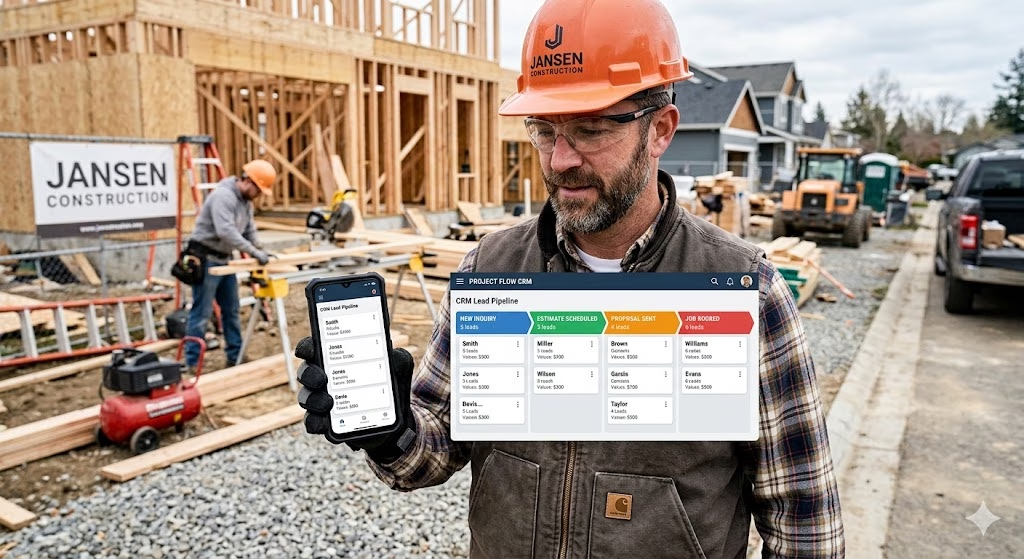
How Contractors Can Use CRM Software to Follow Up With Leads and Stop Losing Jobs to Competitors
Nov. 18, 2026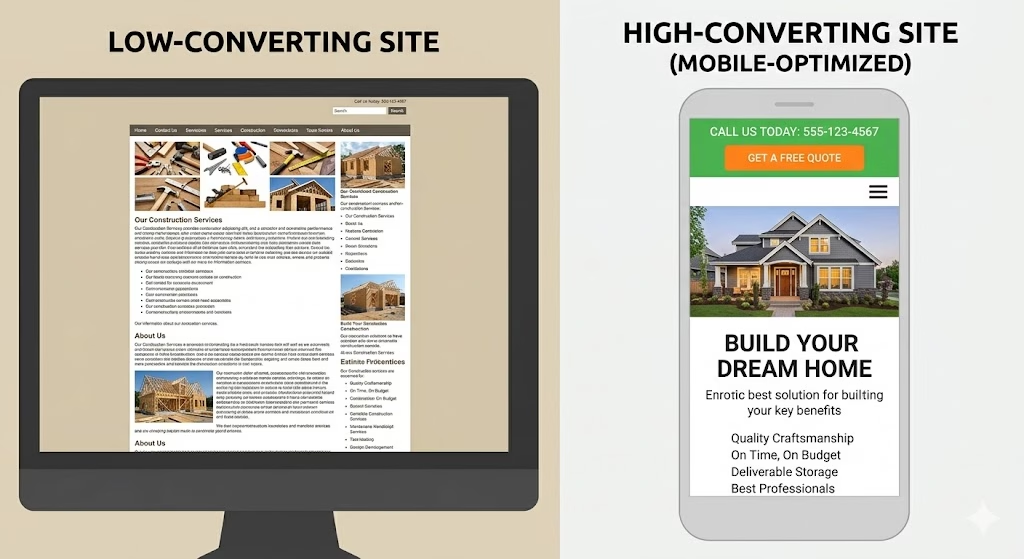
Why Most Construction Company Websites Don’t Generate Leads and Exactly How to Fix Yours
Nov. 11, 2026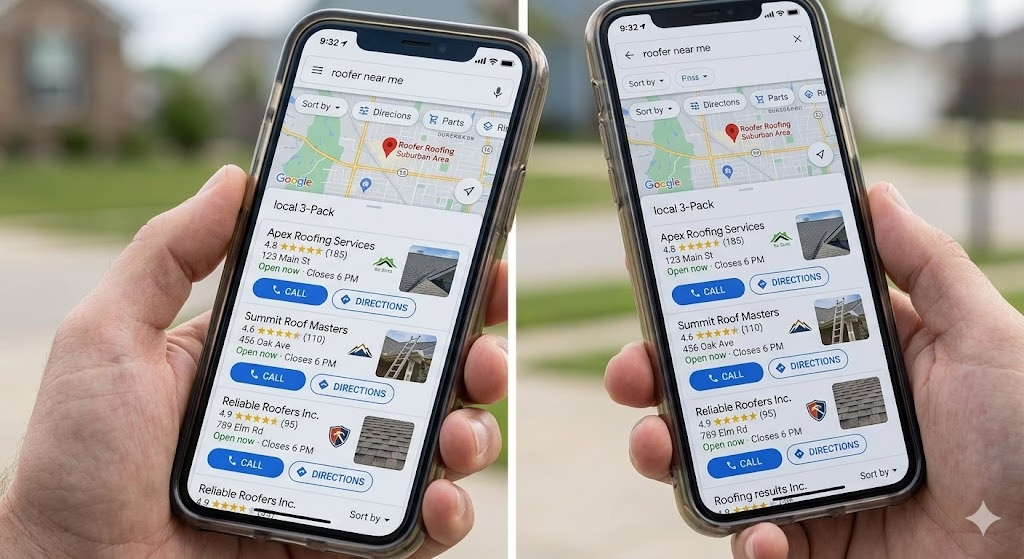
Google Business Profile for Roofers: The Complete Setup and Optimization Guide to Dominate Local Search
Nov. 03, 2026
Storm Season Marketing for Roofers: How to Get More Calls in the 72 Hours After a Major Hail Event
Oct. 27, 2026
What a Roofing Company’s Website Needs to Convert Visitors Into Booked Estimates (With Examples)
Oct. 20, 2026Topics
Pudgy Squirrel Marketing
Google Ads for Contractors: How Much Should You Actually Spend to Get a Consistent Flow of Leads?
Read More
Pudgy Squirrel Marketing
How Contractors Can Use CRM Software to Follow Up With Leads and Stop Losing Jobs to Competitors
Read More
Pudgy Squirrel Marketing
Why Most Construction Company Websites Don’t Generate Leads and Exactly How to Fix Yours
Read More
Pudgy Squirrel Marketing
Google Business Profile for Roofers: The Complete Setup and Optimization Guide to Dominate Local Search
Read More
Pudgy Squirrel Marketing
Storm Season Marketing for Roofers: How to Get More Calls in the 72 Hours After a Major Hail Event
Read More
Pudgy Squirrel Marketing
What a Roofing Company’s Website Needs to Convert Visitors Into Booked Estimates (With Examples)
Read More
Pudgy Squirrel Marketing
How Roofers Get More Leads in the Off-Season: A Practical Marketing Playbook for Slow Months
Read More
Pudgy Squirrel Marketing
How to Build a Referral Program for Your Roofing or Construction Business (Without Spending a Fortune)
Read More