
Get In Touch
Pudgy Squirrel Marketing
Roofing Website Cost in 2026: Pricing, Features, and ROI
By Tony
September 4, 2026
9 mins
Share:
Key Takeaways
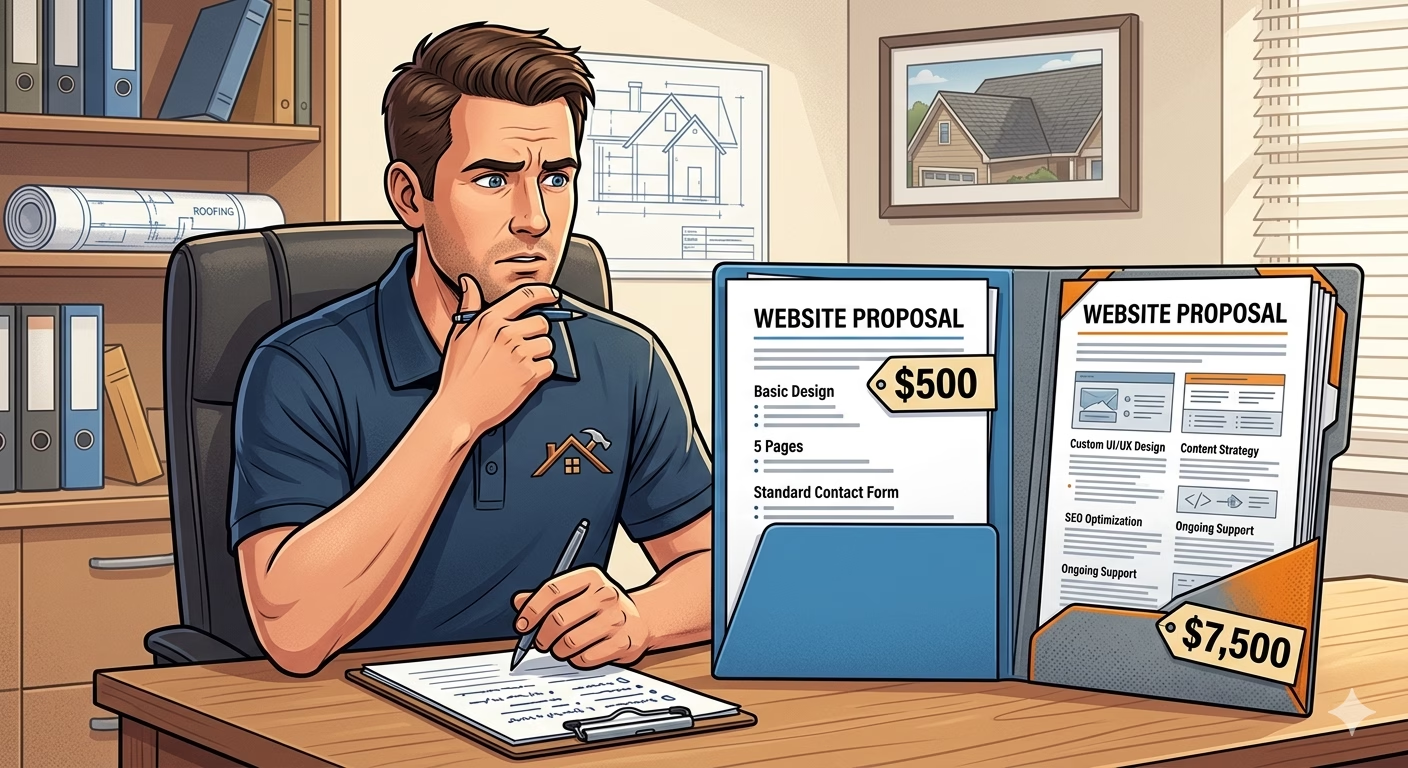
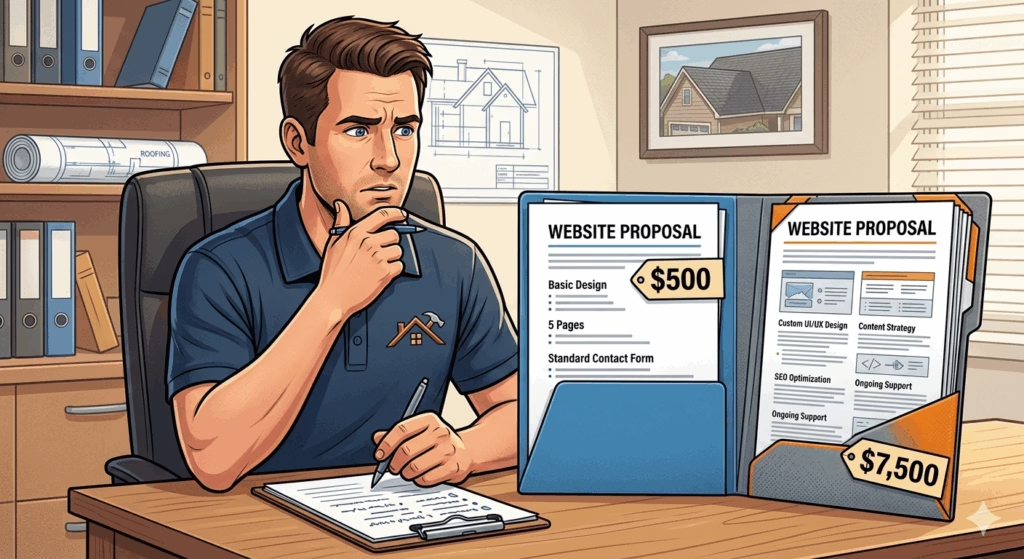
- Roofing websites range from $500 to $15,000+ depending on who builds them and what is included.
- Price does not automatically equal quality. Many cheap sites outperform expensive ones, and vice versa.
- The right website investment depends on your market size, competition level, and growth goals.
- There are five specific features that separate a roofing website that generates leads from one that just exists.
- Ongoing costs (hosting, maintenance, SEO) matter as much as the build cost. Most contractors underestimate these.
- A website that does not convert visitors into calls is not an asset. It is an expense.
Introduction: Most Roofers Are Overpaying or Underpaying (and Either Way, They Are Losing)
When a roofing contractor asks “what should a website cost?”, there is rarely a simple answer. But there is almost always a wrong answer being sold to them.
Some roofers get quoted $800 from a freelancer on a gig platform and end up with a template site that looks fine but ranks nowhere and converts nobody. Others get sold a $12,000 package by a large agency and receive a beautiful website attached to a generic SEO strategy that was copy-pasted from their last roofing client.
Neither outcome is acceptable when your website is supposed to be your top-performing salesperson.
This guide is for roofing contractors who want to make a smart, informed decision about their web presence in 2026. We will break down every price tier, explain what you actually get at each level, flag the red flags to watch for, and help you figure out what your business actually needs.
First: Why Roofing Websites Are Not “Just Websites”
A general small business website and a roofing contractor website have very different jobs to do.
A roofing website needs to:
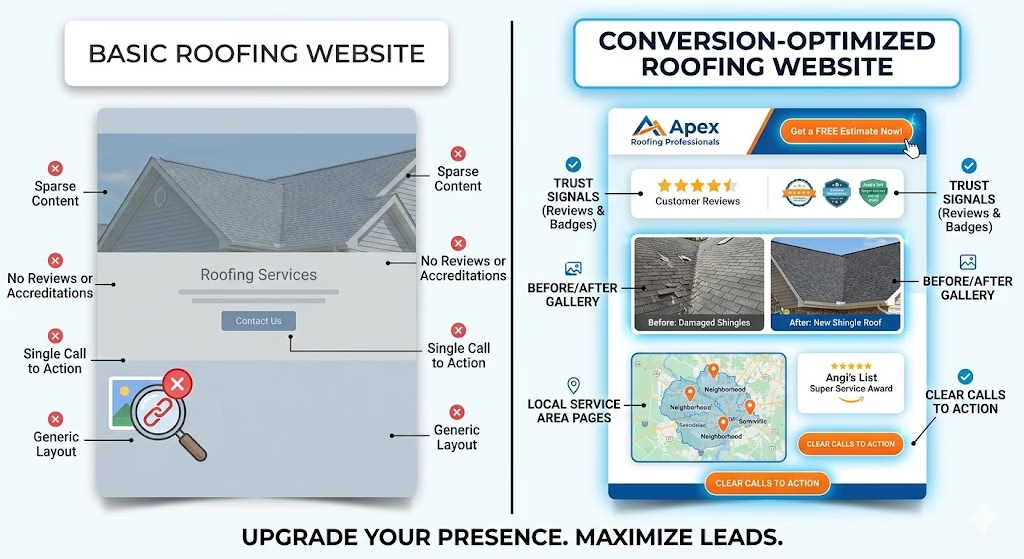
- Rank in hyper-competitive local search results where 10 to 15 other roofers are fighting for the same keywords
- Earn trust from a homeowner who just had storm damage and is stressed, skeptical, and making a fast decision
- Generate phone calls and form submissions, not just page views
- Handle before/after project galleries without destroying page speed
- Support local SEO strategies including location-specific landing pages
- Integrate with CRM tools, review platforms, and sometimes financing calculators
That complexity is why roofing websites cost more than a restaurant website or a local boutique’s site. When you understand what the website is actually doing, the price range starts to make more sense.
The 2026 Roofing Website Price Tiers: What You Actually Get
Tier 1: $500 to $1,500 (DIY or Budget Freelancer)
At this price point, you are looking at one of two scenarios: you are building it yourself with a platform like Wix or Squarespace, or you are hiring a low-cost freelancer who works from a pre-built template.
What you typically get:
- A basic 4 to 6 page site (Home, About, Services, Contact)
- A template design with your logo and colors swapped in
- Basic contact form
- Mobile-responsive layout (most templates are this by default now)
What you typically do not get:
- Any real keyword research or on-page SEO
- Location-specific pages for the cities or counties you serve
- Fast load times (template bloat is a real problem)
- A site built to rank or convert, just one built to exist
Who this works for: Roofers who are just starting out, have no website at all, and need something live quickly while they save budget for a proper build. A placeholder is better than nothing, but treat it as temporary.
Red flag at this tier: Any freelancer promising “full SEO” for under $1,500 is misrepresenting what SEO actually involves.
Tier 2: $1,500 to $4,000 (Mid-Range Freelancer or Small Agency)
This is where a lot of roofing contractors land, and it is the most inconsistent tier in terms of quality. You can find genuinely good work here, or you can find Tier 1 work dressed up at a Tier 2 price.
What you typically get:
- A custom or semi-custom design
- 8 to 15 pages including basic service pages
- Some keyword integration in page titles and headings
- Google Analytics setup
- Basic contact forms and click-to-call buttons
What separates the good from the bad at this tier:
- Does the builder conduct actual keyword research before writing content, or do they write first and optimize later?
- Are service pages written specifically for a roofing audience, or are they generic templates with your name swapped in?
- Does the deliverable include a Google Business Profile review as part of the project?
Who this works for: Established roofing contractors in small to mid-size markets who are not in a fierce competitive environment and who plan to layer in SEO separately after the site is live.
Tier 3: $4,000 to $8,000 (Specialist Web Agency or Industry-Focused Firm)
This is where you start to see genuinely strategic work. At this level, a good agency is not just building pages. They are building a conversion architecture designed specifically for how roofing customers behave online.
What you typically get:
- Custom design built around your brand, not a template
- 15 to 30 pages including individual service pages (residential roofing, commercial roofing, storm damage, metal roofing, etc.) and location landing pages for your key service areas
- Content written by someone who understands roofing terminology and buyer psychology
- On-page SEO integrated from the start, not bolted on afterward
- Page speed optimization
- Schema markup for local business, reviews, and services
- Integration with your CRM or lead tracking system
- Google Business Profile audit and alignment
The key question to ask: Who is writing the content? At this tier, some agencies still use generic writers. If the content does not reflect genuine knowledge of the roofing industry, the SEO value is significantly diminished in 2026’s search environment.
Who this works for: Roofing contractors in mid to large markets, companies running crews, or any roofer who wants their website to actively generate leads rather than passively exist.
Tier 4: $8,000 to $15,000+ (Full-Service Build with Marketing Integration)
At this level, you are not buying a website. You are buying a complete digital marketing foundation. The website is built as one component of a broader strategy that includes SEO, paid advertising infrastructure, conversion tracking, and ongoing optimization.
What you typically get:
- Everything in Tier 3
- Deep competitive analysis of the top-ranking roofing websites in your specific market
- Paid ad landing pages built and tested before campaigns launch
- Full analytics setup including call tracking, form tracking, and heatmaps
- Integration with your CRM so leads flow directly into your pipeline
- Monthly reporting tied to actual business outcomes, not just traffic metrics
- A team that includes a strategist, designer, developer, and content specialist
Who this works for: Roofing companies that are scaling aggressively, operating in highly competitive metro markets, or running significant advertising budgets where conversion rate improvements directly multiply revenue.
Important note: Several marketing agencies charge Tier 4 prices and deliver Tier 2 work. This is unfortunately common in the home services space. Before signing at this investment level, ask to see specific case studies from roofing clients in competitive markets. Ask what their average client’s cost-per-lead was before and after working with them.
The Hidden Costs Most Roofing Contractors Do Not Budget For
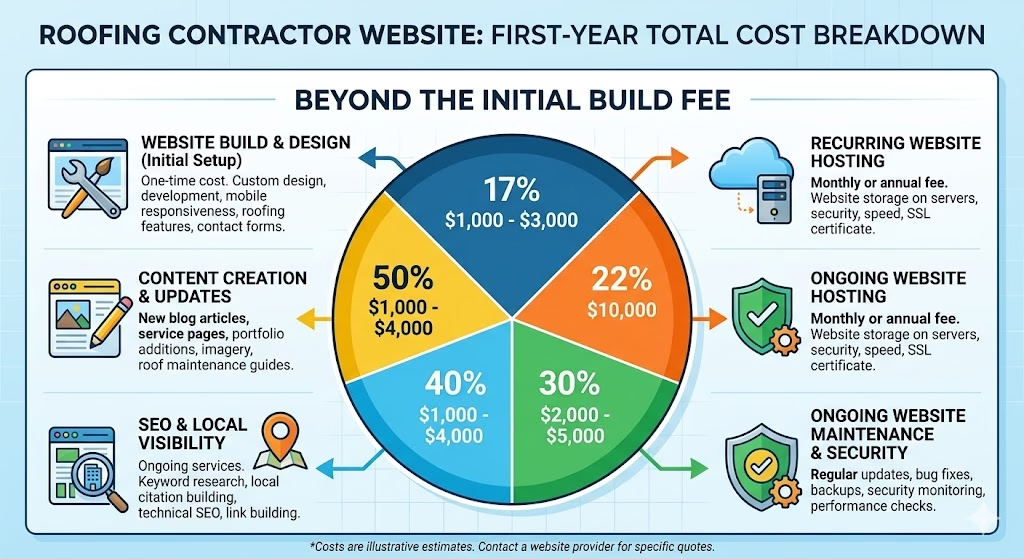
The build cost is only part of the picture. Here is what you need to account for beyond the initial investment.
Hosting
Low-quality shared hosting is one of the most common reasons roofing websites are slow. Slow sites rank lower and convert worse. Budget $30 to $100 per month for managed WordPress hosting or comparable quality. This is not the place to cut corners.
SSL Certificate
Non-negotiable in 2026. Most quality hosts include this. If your current site still shows “Not Secure” in the browser, fix it today.
Website Maintenance
Plugins get outdated. Security vulnerabilities appear. Content needs updating. Budget $50 to $200 per month for maintenance, or factor this into a retainer with your marketing partner.
Ongoing SEO
A website launch without SEO is a car sitting in a parking lot. It looks nice, but it is not going anywhere. A dedicated SEO strategy for your roofing business typically runs $500 to $2,500 per month depending on market competitiveness and scope. The ROI from a single large commercial roofing job can pay for months of SEO investment.
Photography and Video
Stock photos of roofing work are immediately recognizable to homeowners and they erode trust. Budget for a professional to shoot your actual jobs, your crew, and your completed projects. Real photos consistently outperform stock images in conversion testing.
The 5 Features That Separate a Lead-Generating Roofing Website from a Digital Brochure
Regardless of what you spend, these five elements determine whether your website actually produces business.
1. Above-the-Fold Clarity
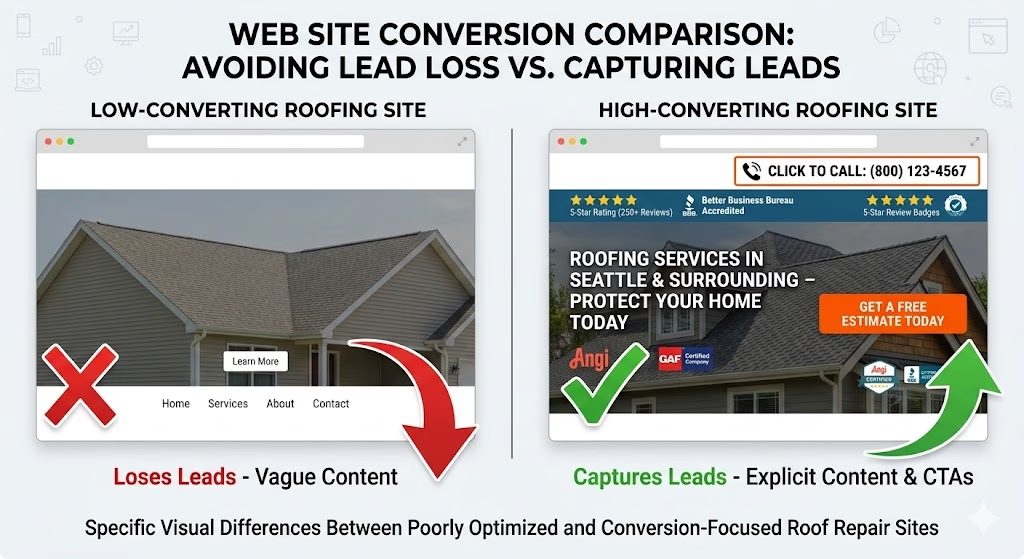
Within 3 seconds of landing on your homepage, a visitor should know exactly what you do, where you do it, and how to contact you. Your primary headline should not say “Welcome to [Company Name].” It should say something like “Expert Roof Replacement and Storm Damage Repair Serving [City] and Surrounding Areas.”
2. A Dominant, Frictionless Call to Action
Your phone number should be visible on every page. A prominent “Get a Free Estimate” button should appear at least twice on your homepage and at the bottom of every service page. Reducing friction between a visitor and a contact action is the single highest-leverage conversion optimization available.
3. Social Proof Integrated Into the Page
Do not hide your reviews on a separate testimonials page. Pull in Google review scores, display star ratings, and embed customer quotes directly on your homepage and service pages. Homeowners making a $10,000 to $30,000 roofing decision want abundant evidence of your track record before they reach out.
4. Location-Specific Service Pages
One generic “Service Areas” page does not rank. Individual pages targeting “Roof Replacement in [City]” and “Storm Damage Repair in [County]” each have their own ranking potential. A roofing company serving 10 different cities should have at least 10 location-specific pages, each with unique content.
5. Speed and Core Web Vitals
Google’s page experience signals are a real ranking factor. A roofing website should load in under 2.5 seconds on mobile. If yours does not, you are likely ranking lower than your content quality deserves. Speed issues are almost always fixable, but they require a developer who knows what to look for.
What to Ask Before You Hire Anyone to Build Your Roofing Website
These questions will immediately separate capable partners from ones who will waste your money.
“Can you show me roofing websites you have built that rank on page one in their market?” Anyone can show you a pretty website. Ask for proof of rankings.
“Who writes the content, and what is their background?” If the answer is “we use a content team” without further detail, press harder. Generic content written by someone with no roofing industry knowledge will not perform in 2026’s AI-influenced search environment.
“How do you measure success after launch?” The answer should involve specific metrics: phone calls generated, form submissions, cost per lead, and ranking improvements in target keywords. If the answer is “traffic” or “impressions,” they are not focused on your business outcomes.
“What does ongoing support look like?” A website launch without a plan for ongoing SEO, content, and maintenance is a one-time transaction dressed up as a partnership.
“Do you have experience with Google Business Profile optimization?” Your website and your GBP work together as a local search system. An agency that treats them as separate tools is leaving significant ranking potential on the table.
The Real ROI Question: What Is One Roofing Lead Worth to You?
Before deciding how much to invest in your website, answer this question: what is the average revenue of a roofing job you close?
For most residential roofers, that number is $8,000 to $20,000. For commercial roofers, it can be $50,000 to $500,000+.
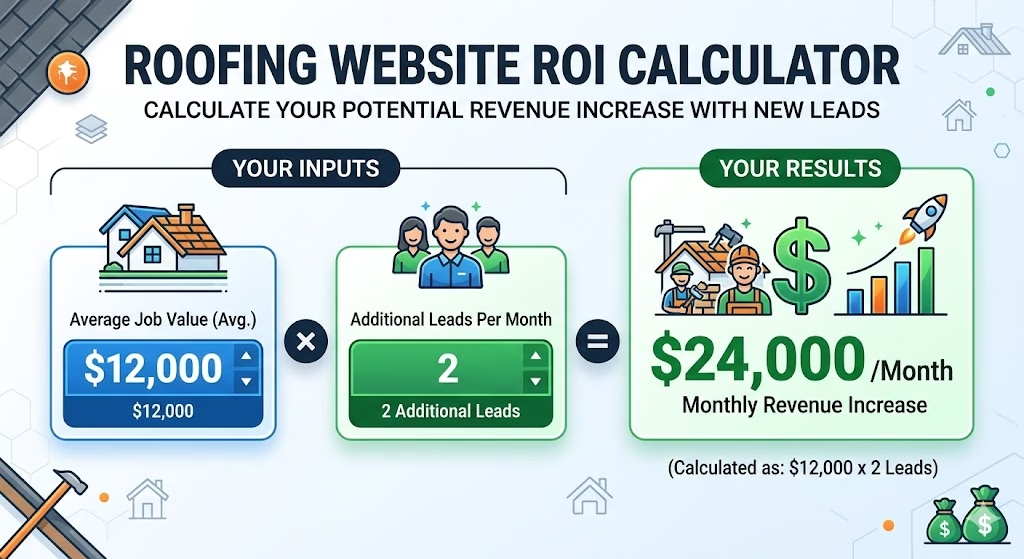
If a properly built and optimized website generates just two additional qualified leads per month that you close at your current rate, and your average job is $12,000, that is $24,000 in additional monthly revenue.
Viewed through that lens, the difference between spending $3,000 and $8,000 on a website build is not a $5,000 cost. It is the question of whether your website generates two more jobs per month or sits there looking decent.
The math almost always favors the higher investment when it is made with the right partner.
What a Good Marketing Partnership Looks Like for Roofers
The best roofing websites are not one-time builds. They are living assets managed as part of a broader marketing strategy.
That strategy typically includes a strong website foundation, consistent lead generation that keeps your pipeline full, active management of your Google Business Profile, and a follow-up system that ensures no inquiry goes unanswered.
A full marketing strategy built around your roofing business ties all of these pieces together. Rather than hiring a web designer here, an SEO freelancer there, and running ads yourself, a coordinated approach ensures every dollar you spend works in support of every other dollar.
Roofers who treat their marketing as a system rather than a collection of individual expenses consistently outperform competitors who are just checking boxes.
Summary: What You Should Actually Do Next
Here is a straightforward action plan based on where you are right now.
If you have no website or a site older than 4 years: Budget for a Tier 3 build from a partner who has demonstrable roofing industry experience. Do not launch without on-page SEO and at least 5 to 8 location pages.
If you have a decent website but it is not generating leads: Before rebuilding, get an audit. Many underperforming sites need targeted improvements, not a full rebuild. A proper audit will tell you whether the issue is technical, content-based, or conversion-related.
If you are about to scale with paid advertising: Make sure your website can actually convert paid traffic before spending on Google Ads. Sending ad spend to a weak website is like pouring water into a bucket with holes.
If you are unsure where your site stands: Claim a free marketing audit that covers your website, SEO posture, and competitive landscape. Understanding the specific gaps is the fastest way to make a smart investment decision.
The Bottom Line
A roofing website in 2026 is not a business card. It is a revenue engine, or it should be.
What you pay for it matters less than what it actually does. A $6,000 website that generates $80,000 in new work every quarter is an extraordinary investment. A $10,000 website that ranks nowhere and converts nobody is an expensive mistake.
Know what you are buying. Ask the right questions. And make sure the team building your site understands not just web design, but the roofing business.
Why Schedule a Call?
Popular Insights
What a Roofing Company’s Website Needs to Convert Visitors Into Booked Estimates (With Examples)
Oct. 20, 2026
How Roofers Get More Leads in the Off-Season: A Practical Marketing Playbook for Slow Months
Oct. 13, 2026
How to Build a Referral Program for Your Roofing or Construction Business (Without Spending a Fortune)
Oct. 09, 2026
The Amish and Plain Community Business Owner’s Guide to Online Marketing
Oct. 02, 2026
Mailers Aren’t Dead: Why Direct Mail Still Works for Roofing and Construction (And How to Run One That Converts)
Sep. 22, 2026Topics
Pudgy Squirrel Marketing
What a Roofing Company’s Website Needs to Convert Visitors Into Booked Estimates (With Examples)
Read More
Pudgy Squirrel Marketing
How Roofers Get More Leads in the Off-Season: A Practical Marketing Playbook for Slow Months
Read More
Pudgy Squirrel Marketing
How to Build a Referral Program for Your Roofing or Construction Business (Without Spending a Fortune)
Read More
Pudgy Squirrel Marketing
The Amish and Plain Community Business Owner’s Guide to Online Marketing
Read More
Pudgy Squirrel Marketing
Mailers Aren’t Dead: Why Direct Mail Still Works for Roofing and Construction (And How to Run One That Converts)
Read More
Pudgy Squirrel Marketing
Storm Season is Coming: How to Market Your Roofing Business Before, During, and After a Major Weather Event
Read More

Pudgy Squirrel Marketing
Email Marketing for Contractors: The 5 Campaigns That Actually Bring Back Past Customers
Read More
Pudgy Squirrel Marketing
What a Roofing Website Should Cost in 2026 (And What You Actually Get for the Money)
Read More