Get In Touch
Pudgy Squirrel Marketing
Spring Advertising for Roofing Companies: Prepare Early
By Tony
August 28, 2026
8 mins
Share:
Key Takeaways
- Spring ad costs rise fast. Set up campaigns in late winter to lock in lower CPCs before competitors flood the market.
- Google Ads and Local Services Ads (LSA) are the highest-ROI channels for roofing and construction in spring.
- Your Google Business Profile needs to be optimized before April. It directly impacts your Local Pack rankings.
- Retargeting and CRM follow-up are the most overlooked tactics in seasonal construction marketing.
- A pre-season marketing audit can surface quick wins your competitors have already missed.
Why Spring Is the Make-or-Break Season for Roofing and Construction Ads
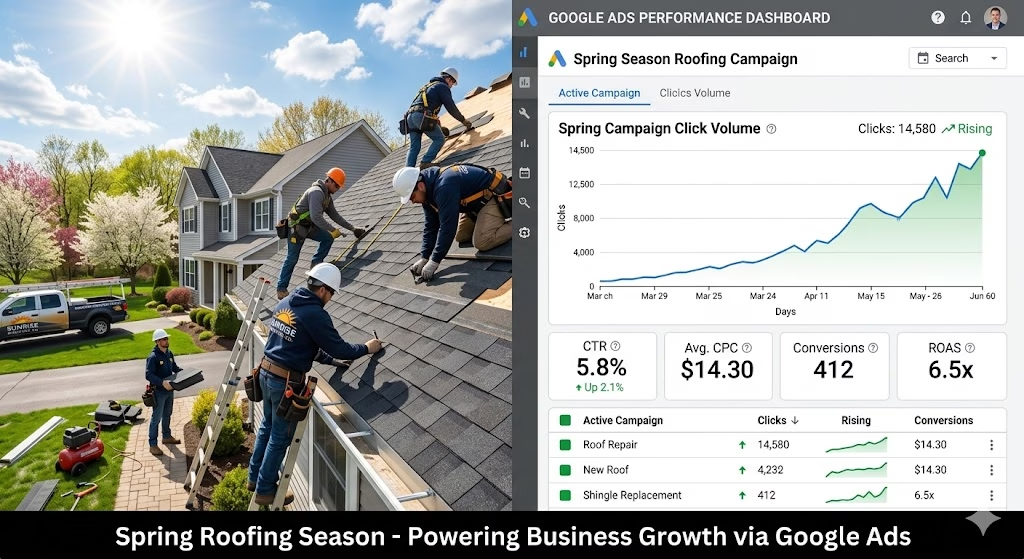
The construction and roofing industry does not operate on a flat calendar. It runs in waves, and the spring surge is the biggest wave of the year.
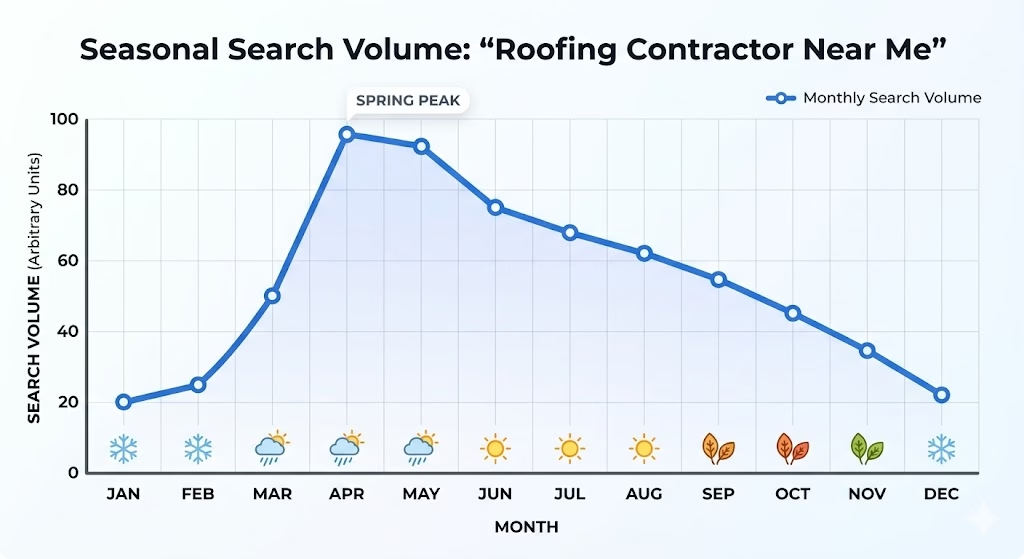
Starting in late March and peaking through June, homeowners begin searching for roofing repairs, additions, decks, siding, and structural work at a rate that dwarfs every other quarter. According to industry data, search volume for terms like “roofing contractor near me” and “roof replacement cost” can increase by 40 to 60 percent between February and May.
The problem? Most roofing and construction companies are still scrambling to set up campaigns when that wave is already cresting.
By the time you build your landing page, fund your ad account, and let Google’s machine learning warm up your campaigns, three competitors have already scooped the leads you should have had.
This guide exists to change that.
The Seasonal Demand Curve: What the Data Actually Shows
Understanding when to spend is just as important as knowing how to spend.
Here is a simplified breakdown of search demand across the year for roofing and general construction:
- January to February: Low demand, low competition, low cost-per-click (CPC). This is your prep window.
- March to April: Demand starts climbing. CPCs begin to rise as competitors wake up.
- May to July: Peak season. High demand, high competition, highest CPCs of the year.
- August to September: Steady demand, slight pullback in competition.
- October to November: Storm season spikes in certain regions. A secondary opportunity.
- December: Slowdown. Your planning season begins again.
The strategic insight here is simple: companies that launch campaigns in January and February get two to three months of data, lower average CPCs, and algorithm-optimized campaigns before the expensive months arrive.
Companies that wait until May are paying premium prices for leads while their competitors are already converting them.
Step 1: Audit Your Current Marketing Foundation Before Spending a Dollar
Before you increase your ad budget, you need to know whether the foundation underneath it can handle the traffic.
Sending paid traffic to a slow, outdated, or confusing website is like pouring water into a bucket with holes in it. You will spend money and have nothing to show for it.
A pre-season marketing audit should cover:
Website performance:
- Does your site load in under 3 seconds on mobile?
- Is your phone number clickable on mobile devices?
- Does your homepage clearly state what you do, where you serve, and what a visitor should do next?
Google Business Profile:
- Is your profile fully filled out with updated photos, service areas, and business hours?
- Are you actively requesting and responding to reviews?
- Have you posted an update or offer in the last 30 days?
Tracking:
- Is Google Analytics 4 (GA4) installed and recording conversions?
- Are your phone calls being tracked as conversions in Google Ads?
If any of these are broken, fixing them before you run ads will directly improve your cost per lead.
Not sure where your gaps are? Pudgy Squirrel Marketing offers a free digital marketing audit that covers your website, ads, SEO, and social strategy with no cost and no obligation.
Step 2: Set Up Google Ads the Right Way for Spring
Google Ads is the single highest-intent advertising channel available to roofing and construction companies. When someone searches “roof replacement [city name]” or “general contractor near me,” they are not browsing. They are ready to hire someone.
Here is how to structure your spring campaign correctly.
Choose the Right Campaign Type
For most roofing and construction companies, the priority order should be:
- Local Services Ads (LSA): These appear above traditional Google Ads and display your rating, license status, and a direct call button. Google guarantees the leads, meaning you only pay for valid contacts. This is often the best starting point for local contractors.
- Search Campaigns: Target high-intent keywords like “roofing contractor [city],” “metal roof installation near me,” and “storm damage roof repair.” Use exact and phrase match to avoid wasted spend.
- Performance Max Campaigns: A useful secondary layer once your search campaigns are producing data, but not a replacement for direct search targeting.
Keyword Strategy for Spring
Avoid broad, expensive keywords like “roofing” or “construction company.” These drain budgets fast without producing quality leads.
Instead, focus on:
- Service-specific terms: “shingle roof replacement,” “flat roof repair,” “new home construction estimate”
- Problem-aware terms: “roof leaking after rain,” “missing shingles repair”
- Location-specific terms: “[city] roofing contractor,” “roofing company near [neighborhood]”
Add negative keywords aggressively. Terms like “DIY,” “how to,” “roofing jobs,” and “roofing supplies” attract people who have no intention of hiring you.
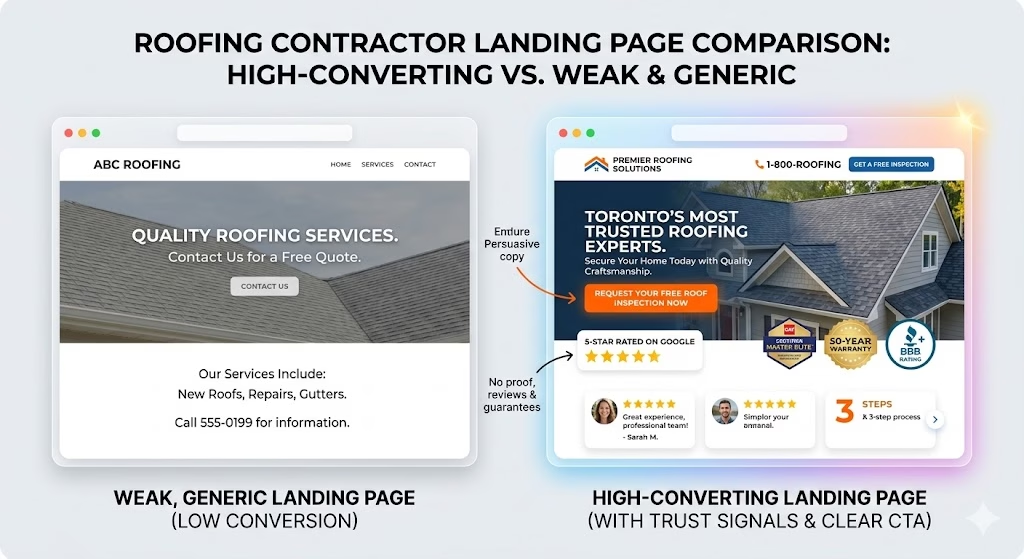
Landing Pages That Convert
Do not send ad traffic to your homepage. Build a dedicated landing page for each major service that includes:
- A clear headline matching the ad they clicked
- A short description of your service and service area
- Three to five trust signals (license number, insurance badge, years in business, review stars)
- A single, prominent call to action: call now or fill out the form
- Your phone number visible without scrolling
Step 3: Optimize Your Local SEO Before Spring Hits
Paid ads are powerful, but they stop working the moment you stop paying. Local SEO compounds over time and costs you nothing per click.
The Local Pack (the map results that appear at the top of local searches) drives an enormous share of contractor leads, and it is heavily influenced by three factors: Google Business Profile completeness, review volume and recency, and local website relevance.
Google Business Profile Optimization Checklist
- Add a minimum of 10 high-quality photos including completed jobs, your team, and your equipment
- List every service you offer individually (roof repair, gutter installation, siding, etc.)
- Set accurate service area cities, not just your business address
- Enable messaging and respond to every review within 24 hours
- Post at least twice per month using the Posts feature
On-Site Local SEO for Spring
Your website should have dedicated service pages for your top three to five services, each targeting a specific geographic area. For example:
- “Metal Roof Installation in [City, State]”
- “Storm Damage Roof Repair in [County] Area”
Each page should include local landmarks, reference local weather conditions, and use natural language that a homeowner in your area would actually search.
A strong SEO foundation paired with well-managed online advertising campaigns creates a two-channel presence in search results, dramatically increasing your visibility during peak season.
Step 4: Set Up Retargeting and CRM Follow-Up Before the Rush
Here is a truth that most contractors never talk about: the majority of people who visit your website do not call you the first time.
They compare three to five contractors, get distracted, check their budget, and then circle back. The company that stays in front of them during that consideration window is the one that gets the job.
Retargeting ads on Google and Meta allow you to show ads specifically to people who have already visited your website. These ads are significantly cheaper than cold traffic ads and convert at a higher rate because you are reaching warm audiences.
Set up retargeting before spring so the pixel has time to build an audience.
CRM follow-up is equally critical. When a lead fills out a form or calls and does not immediately book, what happens next?
If the answer is “we call them once and hope,” you are leaving enormous revenue on the table. An automated CRM system can:
- Send an immediate text confirmation after a form fill
- Follow up with an email sequence over 7 to 14 days
- Alert your sales team when a lead reopens an email or revisits the website
- Assign follow-up tasks so no lead slips through the cracks
Pudgy Squirrel Marketing offers CRM and marketing automation services built specifically for construction and roofing businesses. If your follow-up system is manual, spring is the wrong time to find out how much that is costing you.
Step 5: Plan Your Social Media Content for Spring Before It Starts
Social media does not generate the same direct, ready-to-hire leads that Google does. But it does something equally valuable: it builds trust before someone is ready to hire and keeps you top of mind when they are.
Spring is visually rich for construction and roofing. Document your work. Post the before and after. Show the crew. Tag the neighborhood.
Here is a simple spring content calendar framework:
March: Behind-the-scenes posts showing your team gearing up for season. “What to look for after winter” educational content. First job of the season showcase.
April: Storm preparedness content. Customer testimonial features. Spring promotion announcement.
May: High-volume posting of completed jobs with before-and-after photos. FAQ-style posts answering common spring roofing questions. Video walkthroughs of a completed project.
June: Mid-season social proof push. Highlight your review count and ratings. Begin teasing fall availability if you are booking out.
Consistency matters more than perfection. Post three to four times per week on the platforms where your target homeowners spend time, primarily Facebook and Instagram for residential contractors, and LinkedIn for commercial construction.
Step 6: Set and Manage Your Ad Budget for Maximum ROI
One of the most common mistakes contractors make is treating their ad budget like a set-and-forget expense. Spring requires active budget management.
Starting Budget Benchmarks
These are general starting points and vary significantly by market size and competition:
- Small local market: $1,000 to $1,500 per month for Google Ads
- Mid-size metro: $2,500 to $5,000 per month
- Competitive metro: $5,000 to $10,000 per month
The key metric is not what you spend. It is your cost per acquired customer relative to your average job value. A roofing company with a $12,000 average job can afford a much higher cost per lead than one averaging $2,500.
Where Contractors Waste Budget
- Running ads 24/7 when most calls happen between 7 AM and 7 PM
- Targeting too broad a geographic radius
- Not pausing underperforming keywords
- Sending all traffic to the homepage instead of a service-specific landing page
- Never testing ad copy variations
Budget management is an ongoing activity, not a one-time setup. If you are not reviewing your campaigns weekly during peak season, you are almost certainly overpaying for leads.
The Pre-Season Checklist: What to Complete Before April 1st
Use this checklist to confirm you are ready for the spring surge:
Ads and Paid Media
- Google Ads account created and funded
- Local Services Ads verified and active
- Campaign keywords researched and structured
- Negative keyword list built
- Dedicated landing pages live and tested
- Conversion tracking confirmed working
Local SEO
- Google Business Profile updated with current photos and services
- Reviews requested from recent customers
- Service area pages updated on website
Follow-Up and CRM
- CRM set up to capture all inbound leads
- Automated text and email follow-up sequences active
- Retargeting pixel installed on website
Foundation
- Website speed tested and optimized
- Mobile phone number is click-to-call
- Marketing audit completed
Common Mistakes to Avoid This Spring
Starting too late. If you are reading this in May, start now anyway. Late is better than never. But commit to starting earlier next year.
Chasing vanity metrics. Impressions and clicks are not leads. Measure cost per lead and cost per booked job.
Running one ad forever. Ad fatigue is real. Rotate two to three ad variations and replace underperformers every four to six weeks.
Ignoring your Google Business Profile. A neglected profile with no photos and three reviews from 2021 will lose to a competitor with 50 current reviews every time.
Not following up fast enough. Speed to lead is one of the most important variables in conversion rate. Studies show that responding within five minutes dramatically increases close rates versus waiting even an hour.
Final Thoughts: Spring Rewards the Prepared
The roofing and construction companies that win in spring are not always the biggest or the cheapest. They are the ones that prepared in winter.
They ran their audit. They built their campaigns early. They set up their follow-up systems. And when the phones started ringing in March and April, they were ready to answer them.
Whether you manage your marketing in-house or work with a partner, the tactics in this guide will give you a measurable edge this season. The question is whether you act on them before your competitors do.
If you want a clear picture of where your marketing stands today, request your free marketing audit from Pudgy Squirrel Marketing. No cost. No sales pressure. Just straight answers about what is working, what is not, and what your competitors are doing that you are not.
Why Schedule a Call?
Popular Insights
What a Roofing Company’s Website Needs to Convert Visitors Into Booked Estimates (With Examples)
Oct. 20, 2026
How Roofers Get More Leads in the Off-Season: A Practical Marketing Playbook for Slow Months
Oct. 13, 2026
How to Build a Referral Program for Your Roofing or Construction Business (Without Spending a Fortune)
Oct. 09, 2026
The Amish and Plain Community Business Owner’s Guide to Online Marketing
Oct. 02, 2026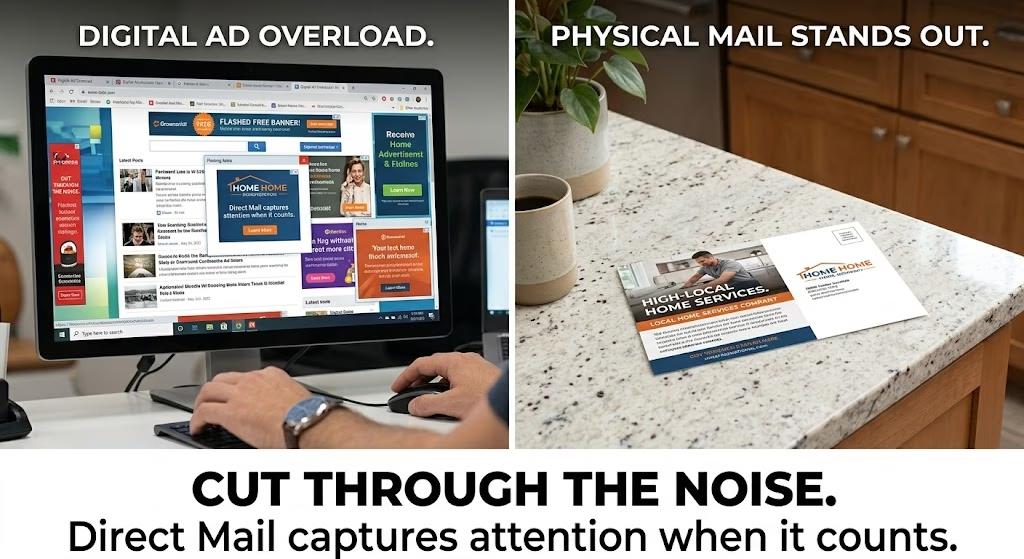
Mailers Aren’t Dead: Why Direct Mail Still Works for Roofing and Construction (And How to Run One That Converts)
Sep. 22, 2026Topics
Pudgy Squirrel Marketing
What a Roofing Company’s Website Needs to Convert Visitors Into Booked Estimates (With Examples)
Read More
Pudgy Squirrel Marketing
How Roofers Get More Leads in the Off-Season: A Practical Marketing Playbook for Slow Months
Read More
Pudgy Squirrel Marketing
How to Build a Referral Program for Your Roofing or Construction Business (Without Spending a Fortune)
Read More
Pudgy Squirrel Marketing
The Amish and Plain Community Business Owner’s Guide to Online Marketing
Read More
Pudgy Squirrel Marketing
Mailers Aren’t Dead: Why Direct Mail Still Works for Roofing and Construction (And How to Run One That Converts)
Read More

Pudgy Squirrel Marketing
Storm Season is Coming: How to Market Your Roofing Business Before, During, and After a Major Weather Event
Read More

Pudgy Squirrel Marketing
Email Marketing for Contractors: The 5 Campaigns That Actually Bring Back Past Customers
Read More
Pudgy Squirrel Marketing
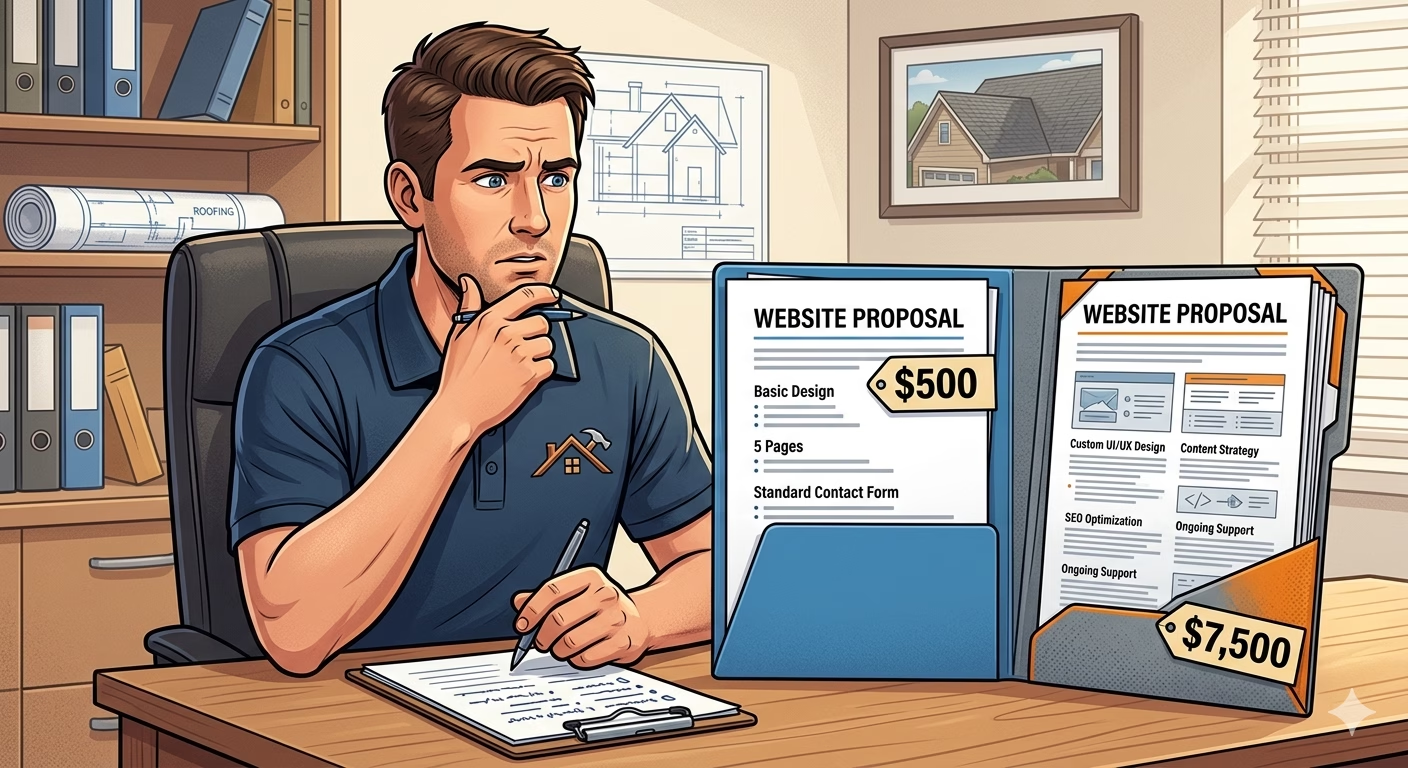
What a Roofing Website Should Cost in 2026 (And What You Actually Get for the Money)
Read More