
Get In Touch
Roofing Leads vs. Roofing Customers: Why Most Contractors Are Targeting the Wrong Thing
By Tony
May 29, 2026 11 mins
Share this post

Digital Marketing Solutions Tailored for Construction, Roofing, and Shed Businesses
Digital Marketing Solutions Tailored for Construction, Roofing, and Shed Businesses
Digital Marketing Solutions Tailored for Construction, Roofing, and Shed Businesses
Key Takeaways
- A lead is a name and a phone number. A customer is revenue, a referral network, and a repeat relationship. Most roofing marketing only optimizes for the first one.
- High lead volume with low conversion rates is a sign of a marketing and systems problem not a sign that you need to buy more leads.
- The average roofing customer has a lifetime value far beyond their first job neighbors, family members, and future repairs represent compounding revenue that most contractors never account for in their marketing math.
- Lead quality almost always matters more than lead quantity. Fifty relevant, high-intent leads will outperform five hundred low-quality shared leads every time.
- The roofing companies growing fastest in 2025–2026 are the ones who have shifted their mindset from “generate more leads” to “build better systems that convert the leads we already have.”
- Your marketing strategy, your website, your follow-up, and your customer experience all need to be aligned around creating customers not just generating contacts.
The Metric That’s Misleading Most Roofing Companies
Ask most roofing contractors what they want from their marketing and you’ll get the same answer: more leads.
It’s the most requested outcome in the industry. More leads from Google. More leads from Facebook. More leads from the lead generation service they’re paying $1,500 a month for. More, more, more.
And yet many of the same contractors paying for high lead volume are struggling to grow profitably. Their phones are ringing. Their inboxes are filling up. And somehow, they’re not booking enough work to justify what they’re spending to generate all that activity.
The problem isn’t leads. It’s that leads have become the goal instead of the metric.
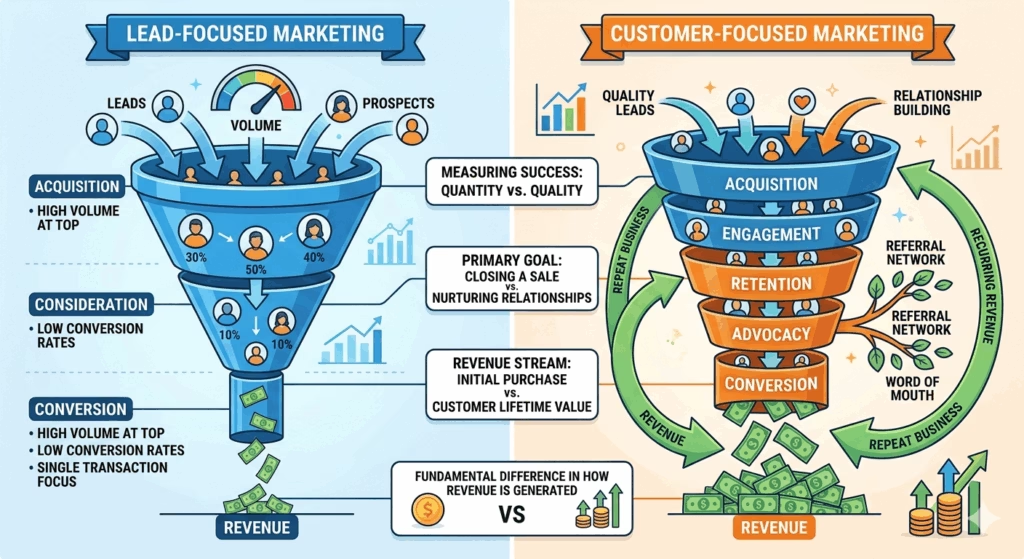
A lead is an unqualified expression of potential interest. That’s all. It has no revenue attached to it. It has no loyalty. It requires significant time, effort, and skill to convert into something that actually pays the bills.
A customer is different. A customer is a booked job, a completed relationship, a Google review, a referral source, and if the experience was positive a repeat buyer down the road. Customers build businesses. Leads just fill spreadsheets.
The roofing companies winning right now have made a subtle but profound shift in how they think about marketing: they’ve stopped optimizing for the top of the funnel and started optimizing for the entire funnel from first click to signed contract to five-star review to the referral that comes six months later.
This post is about how to make that shift.
The Hidden Cost of Cheap, High-Volume Leads
Not all leads are created equal and the math on most shared lead services is far worse than it first appears.
Here’s what high-volume, low-quality lead generation actually costs:
The Shared Lead Problem
Most third-party lead generation platforms sell the same lead to three, four, or five roofing contractors simultaneously. The moment that lead submits their information, their phone starts ringing from multiple companies.
In that environment, speed becomes the only differentiator. Not your craftsmanship. Not your warranty. Not your twenty years of experience. Just who called first.
And even then even if you’re the first to call you’re now competing on price with four other contractors who have the same lead and the same pressure to close. Margins compress. You work harder for less.
The Volume Trap
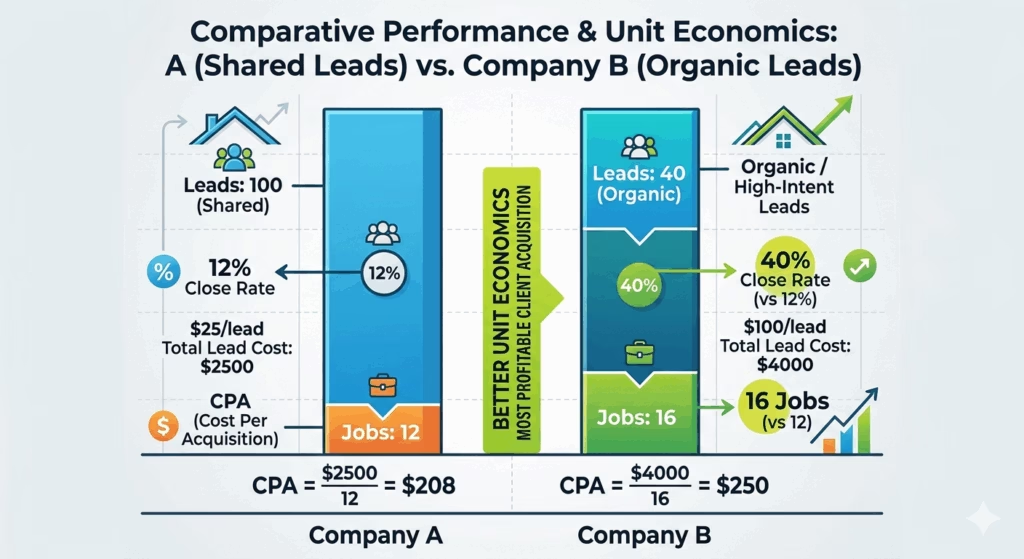
High lead volume creates the illusion of growth. The pipeline looks full. Activity is high. But if your close rate on those leads is 10–15% which is common for shared or low-intent leads you’re spending enormous energy and money on opportunities that were never likely to convert.
Compare that to a contractor running a well-optimized local SEO strategy that generates 40 leads a month from people who searched for a specific roofing service in their city. Those leads arrived with intent. They chose to click. They read about your company before they submitted their information. Close rates on these leads routinely run 30–50%.
Forty high-intent leads at 40% conversion equals 16 booked jobs.
One hundred shared leads at 12% conversion equals 12 booked jobs for more than twice the spend and effort.
Volume is not the goal. Conversion is the goal.
What “Roofing Customer” Actually Means And Why It Changes Your Marketing Math
To understand why customer-focused marketing outperforms lead-focused marketing over time, you have to understand what a roofing customer is actually worth.
The Lifetime Value Calculation
Most roofing contractors think about a customer as a single transaction. A homeowner needs a new roof. You install it. You collect payment. Done.
That’s the transaction value. It’s not the customer value.
The full customer value includes:
Direct revenue:
- The initial roofing job
- Any additional work (gutters, siding, ventilation, skylights) done during or after the primary project
- Future repair calls
- Eventual re-roof in 15–25 years if they’re still in the home
Indirect revenue:
- Referrals to neighbors, family members, and coworkers typically 1–3 referrals from a happy customer over the following 12 months
- Google reviews that improve your local ranking and convert future website visitors
- Word-of-mouth reputation in the neighborhood that generates unprompted inbound inquiries
When you run this math even conservatively a single satisfied roofing customer often represents $15,000–$40,000 in lifetime value when referrals and future work are included.
A lead, by contrast, represents a cost. You spent money and time to get a name. Everything from there is uncertain.
This reframe changes how you should think about your marketing budget. Spending $500 to acquire a customer with a $20,000 lifetime value is a completely different investment than spending $500 to acquire a lead with a 15% chance of converting into a $8,000 job.
The Referral Multiplier
Here’s the most underappreciated dynamic in roofing marketing: satisfied customers market for you at zero cost.
A homeowner who had a great experience clean job site, responsive communication, quality installation, professional crew will mention your company to anyone in their network who brings up roofing. Not once. For years.
In a neighborhood where you’ve done five houses with standout results, you become the default recommendation for the next decade. That kind of embedded reputation cannot be purchased with a marketing budget. It can only be earned by delivering exceptional customer experiences, repeatedly.
This is why customer acquisition cost (CAC) is the wrong primary metric for roofing companies to optimize. The right metric is customer lifetime value to acquisition cost ratio (LTV:CAC) which accounts for the full downstream revenue a customer relationship generates.
A contractor who understands this math invests differently. More in website quality and conversion optimization. More in CRM and follow-up to ensure no lead goes cold. More in the customer experience that generates reviews and referrals. Less in raw lead volume from low-quality sources.
The Four Marketing Investments That Build Customers (Not Just Leads)
Investment 1: A Website Built to Convert, Not Just Attract
Most roofing company websites are designed to look good and fail to convert.
They generate traffic. Maybe decent traffic. But the traffic lands on a homepage that doesn’t clearly answer the visitor’s most urgent questions, doesn’t build trust quickly, and doesn’t make it obvious what to do next.
The result: a visitor who was interested enough to click becomes a bounce statistic.
A customer-focused roofing website is built around the buyer’s decision-making process:
- Above the fold: Who you are, what you do, where you serve, and one clear next step (call, estimate request, or chat)
- Trust signals front and center: Star rating and review count, years in business, licensing and insurance, manufacturer certifications
- Service-specific pages: Individual pages for each roofing service you offer, written for the homeowner asking about that specific service not a generic services list
- Social proof woven throughout: Real project photos, real testimonials with names and locations, real before-and-afters
- Frictionless contact options: A phone number in the header on every page, a simple estimate form that asks no more than five questions, and a callback option for visitors who don’t want to fill out forms
When your website is built around converting visitors into customers rather than just displaying your company every marketing dollar you spend generating traffic to it becomes more valuable.
Investment 2: SEO That Attracts Buyers, Not Just Browsers
There’s a significant difference between the homeowner who searches “how long does a roof last” and the homeowner who searches “roof replacement cost [city].”
The first person is gathering information. They’re months, maybe years, from a purchasing decision.
The second person has a problem. They’re comparing options. They’re ready to get estimates this week.
A customer-focused SEO strategy prioritizes the second type of search high-intent, commercial keywords that signal a buyer who’s close to making a decision. This means building and optimizing pages around terms like:
- “[service] + [city name]”
- “roofing contractor near me”
- “roof replacement cost [city]”
- “emergency roof repair [city]”
- “[roofing material] installation [city]”
These searches convert at dramatically higher rates than informational queries. They also tend to have higher competition — which is exactly why a consistent, long-term SEO strategy built specifically for roofing businesses is worth investing in rather than chasing quick-fix tactics that produce short-lived results.
The goal isn’t traffic for its own sake. It’s traffic from people who are ready to become customers.
Investment 3: A Follow-Up System That Converts Interest Into Appointments
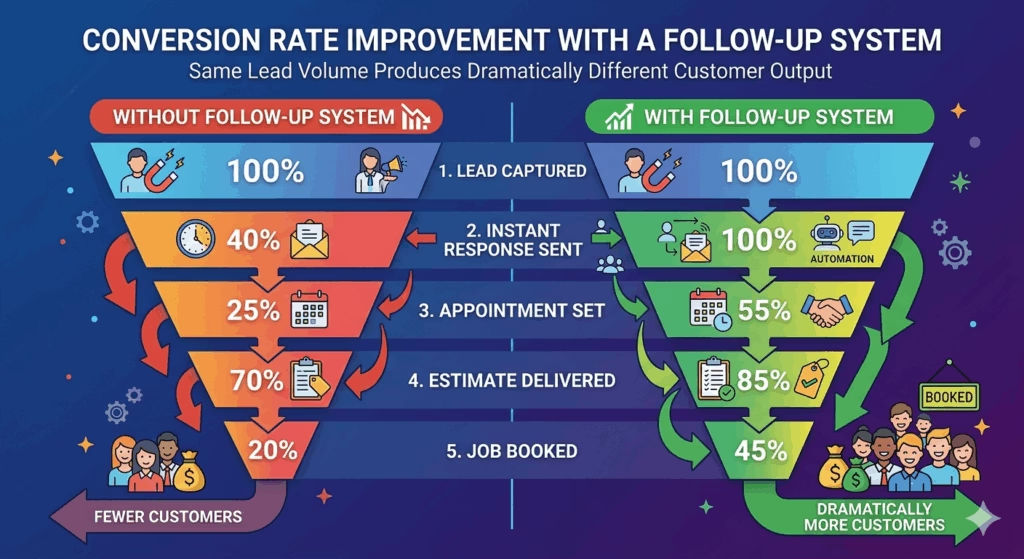
Here’s one of the most common patterns in roofing marketing: a contractor runs decent ads, generates a reasonable volume of inquiries, and then loses half of them to slow or nonexistent follow-up.
The lead came in. Nobody called for six hours. The homeowner already booked an estimate with someone else.
This is a conversion problem, not a lead generation problem. And the solution isn’t more leads — it’s a system that responds instantly, follows up consistently, and keeps your company top-of-mind through the decision window.
A customer-focused follow-up system includes:
- An automatic response within minutes of every inquiry, from every channel
- A personal phone call within the first hour
- A multi-touch follow-up sequence over the following two weeks for non-responders
- A quote follow-up sequence for every estimate sent
- A reactivation message for leads that went quiet after 30–60 days
This kind of system — running automatically through a CRM built for roofing and construction companies — is what turns a 15% lead-to-job conversion rate into a 35–40% one. Without changing your ad spend. Without changing your targeting. Simply by closing the gap between interest and appointment.
Investment 4: Customer Experience as a Marketing Channel
Most contractors think marketing ends when the contract is signed. The fastest-growing roofing companies know it starts there.
Every touchpoint after the sale is a marketing activity:
- The pre-job communication: Does the customer know exactly when the crew is arriving, what to expect, and who to call if they have questions? Or are they anxiously wondering?
- The job site experience: Is the site left clean each day? Are materials stored neatly? Is the crew professional in appearance and conduct?
- The completion walkthrough: Does someone walk the customer through the finished project, explain what was done and why, and answer their questions before leaving?
- The post-job follow-up: Does anyone check in 30 days later to make sure everything is performing as expected? Does anyone ask for a Google review?
Each of these touchpoints either increases or decreases the likelihood of a referral, a positive review, and a returning customer. None of them require a marketing budget. All of them require intention and consistency.
The roofing companies with 150+ Google reviews at 4.8 stars didn’t get there by accident. They built a customer experience that made people want to say something positive and then made it easy to do so.
The Lead Quality Audit: How to Diagnose Your Real Problem
If you’re generating leads but struggling to grow, the issue is almost always one of three things:
Problem 1: Lead Quality Your leads are coming from sources with low purchase intent shared lead platforms, broad social media campaigns without targeting, or generic informational keywords that attract researchers rather than buyers.
Diagnosis: What percentage of your leads are ready to schedule an estimate within the week? If it’s below 30%, your source quality needs attention.
Problem 2: Conversion Rate Your leads are reasonable quality but your close rate is low below 25%. This points to a follow-up timing problem, a quote presentation problem, or a trust gap that the customer experience isn’t closing.
Diagnosis: Where exactly are leads dropping off? Before the estimate? After the estimate? Tracking this by stage in a CRM shows you exactly where to intervene.
Problem 3: Retention and Referral Rate You’re closing jobs but not generating reviews or referrals at scale. This means the customer experience isn’t creating the kind of emotional response that motivates someone to recommend you.
Diagnosis: What’s your average review count per month relative to your completed job count? If less than 20% of completed customers leave a Google review, your post-job experience has room to improve.
Identify which problem you actually have before investing in more lead generation. More leads won’t fix a conversion problem. More leads won’t fix a retention problem. They’ll just give you more volume at the same underwhelming conversion rates.
Why the “Just Buy More Leads” Trap Is So Expensive
Lead generation services sell a seductive promise: pay us, get leads, grow your business. No website needed. No SEO strategy. No follow-up system. Just leads, on demand.
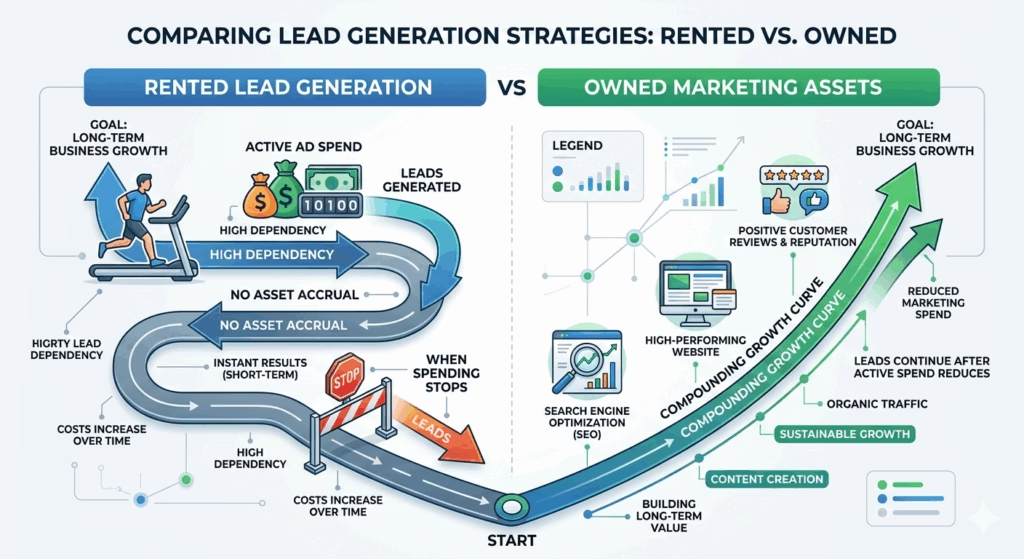
The math sounds simple. In practice, it’s a treadmill.
Here’s the pattern:
- You buy leads. Some convert. Business picks up.
- You need more leads to maintain growth. You spend more.
- Lead quality declines as the platform scales. Conversion rates drop.
- You spend even more to compensate for the declining conversion rate.
- Margins compress. The business is busier but not more profitable.
- You stop the service. Leads stop. Business drops immediately.
The fundamental problem with rented lead generation is that you own nothing. The moment you stop paying, the pipeline dries up. There’s no compounding benefit. No asset being built. No reputation accruing to your business specifically.
Contrast that with a company that invested the same budget over 18 months into a strong website, consistent SEO, and a Google Business Profile with 80+ reviews. When they stop actively spending, leads continue to arrive. The asset keeps producing.
That’s the difference between building a business and renting one.
A complete digital marketing strategy for a roofing company is not about choosing between leads today or customers tomorrow. It’s about building infrastructure that generates high-quality leads consistently, converts them efficiently, and turns them into customers who become your most effective long-term marketing channel.
The Roofing Company Growth Model That Actually Works
Bringing all of this together, here’s what the full customer-focused growth model looks like for a roofing company:
Layer 1 — Attract the Right People High-intent SEO, a conversion-optimized Google Business Profile, and targeted Google Ads that reach homeowners with an active roofing need in your service area. Not broad awareness. Specific, purchase-ready traffic.
Layer 2 — Convert Them Quickly A website that builds trust and makes the next step obvious. A follow-up system that responds instantly and stays in touch professionally. An estimate process that’s professional, clear, and fast.
Layer 3 — Deliver an Experience Worth Talking About Proactive communication, a clean job site, a thorough completion walkthrough, and a post-job check-in that no competitor is doing. This layer costs almost nothing and creates your most durable competitive advantage.
Layer 4 — Capture and Amplify the Result A systematic review generation process that turns happy customers into public social proof. A referral program that gives customers an easy way to send business your way. A Google Business Profile that showcases your growing track record.
Layer 5 — Reactivate and Retain A CRM that flags past customers for seasonal outreach storm season reminders, annual inspection offers, gutter cleaning recommendations. Customers who hear from you once a year stay customers. Customers who never hear from you after the job become someone else’s customer next time.
Each layer feeds the next. Traffic converts into customers. Customers generate reviews and referrals. Reviews generate more traffic. Referrals generate new customers with zero acquisition cost. The flywheel accelerates over time.
This is the model that separates roofing companies growing profitably from the ones running hard and staying flat.
A Note on Budget Allocation
The typical roofing marketing budget flows almost entirely into lead generation ads, lead services, sometimes SEO. Almost nothing goes into conversion optimization, customer experience systems, or review generation.
A customer-focused reallocation might look like this:
| Investment Area | Lead-Focused Budget | Customer-Focused Budget |
|---|---|---|
| Paid Lead Generation | 70% | 35% |
| Website & Landing Pages | 5% | 20% |
| SEO (long-term organic) | 10% | 25% |
| CRM & Follow-Up Automation | 5% | 10% |
| Customer Experience & Reviews | 5% | 10% |
| Social Media & Reputation | 5% | 10% |
The total spend can be identical. The return on that spend measured in booked jobs, profit margins, and compounding referral volume is fundamentally different.
The Bottom Line
More leads is not a strategy. It’s a hope.
A strategy is a system that reliably turns strangers into customers, customers into advocates, and advocates into a self-sustaining pipeline that reduces your dependency on paid lead generation over time.
The roofing companies that will be the strongest in their markets three years from now are not the ones buying the most leads today. They’re the ones building the best systems, delivering the best customer experiences, and earning the kind of digital reputation that makes their phone ring without a paid ad in sight.
That shift starts with a single question: are you marketing to get leads or are you building a business that creates customers?
Everything else flows from the answer.
Recent Post
What Does a $1,500/Month Marketing Budget Actually Get a Shed or Construction Business?
DIY vs. Agency: Should a Roofing Company Handle Their Own Marketing?
7 Signs Your Construction Company’s Website Is Losing You Jobs (And How to Fix It)
Google Business Profile vs. Google Ads: Which One Should a Contractor Invest in First?
How Much Should a Roofing or Construction Company Spend on Marketing? (A No-BS Breakdown)
Categories
You Might Also Like
Explore additional articles based on your interests.
View All

Pudgy Squirrel Marketing
Seasonal Marketing: How Smart Contractors Stay Busy in the Slow Season
Read More
Pudgy Squirrel Marketing
What Does a $1,500/Month Marketing Budget Actually Get a Shed or Construction Business?
Read More
Pudgy Squirrel Marketing
DIY vs. Agency: Should a Roofing Company Handle Their Own Marketing?
Read More

Pudgy Squirrel Marketing
7 Signs Your Construction Company’s Website Is Losing You Jobs (And How to Fix It)
Read More
Pudgy Squirrel Marketing
Google Business Profile vs. Google Ads: Which One Should a Contractor Invest in First?
Read More
Pudgy Squirrel Marketing
How Much Should a Roofing or Construction Company Spend on Marketing? (A No-BS Breakdown)
Read More

Pudgy Squirrel Marketing
The Before-and-After Effect: Why Project Photos Are Your Best Marketing Asset as a Builder
Read More
Pudgy Squirrel Marketing
Roofing Leads vs. Roofing Customers: Why Most Contractors Are Targeting the Wrong Thing
Read More