
Get In Touch
How to Set Up a Follow-Up System That Books More Jobs Without Hiring Another Employee
By Tony
May 22, 2026 12 mins
Share this post


Digital Marketing Solutions Tailored for Construction, Roofing, and Shed Businesses
Digital Marketing Solutions Tailored for Construction, Roofing, and Shed Businesses
Digital Marketing Solutions Tailored for Construction, Roofing, and Shed Businesses
Key Takeaways
- Most contractors lose 50–80% of their leads not because the leads weren’t interested, but because follow-up was inconsistent, late, or never happened at all.
- Speed-to-response is the single biggest variable in lead conversion contractors who respond within five minutes are dramatically more likely to book the job than those who respond hours later.
- A follow-up system is not a salesperson. It’s a structured sequence of touchpoints that keeps your business top-of-mind until the prospect is ready to commit.
- The most effective contractor follow-up combines automated messages with a clear handoff to a human conversation automation handles the volume, you handle the close.
- A CRM (Customer Relationship Management) system is the infrastructure that makes consistent follow-up possible without relying on memory, sticky notes, or whoever happens to check the inbox.
- Built correctly, a follow-up system functions like a 24/7 employee that never forgets to send a message, never gets tired, and never lets a warm lead go cold.
The Lead Graveyard: Where Contractor Revenue Goes to Die
Every contractor knows the feeling. You’re on the roof, in the crawlspace, or running a crew and your phone buzzes. A new quote request came in from your website. Or a Facebook message from someone who wants an estimate on a deck.
You make a mental note to call them back this afternoon.
Afternoon comes. You’re dealing with a material delivery. Then a crew issue. By the time you’re back in the truck, it’s 6 PM and feels too late to call. You’ll do it tomorrow.
Tomorrow, three more inquiries came in, and the one from yesterday got buried.
That lead? Gone. They already hired someone who called them back the same day.
This is not a discipline problem. This is a systems problem. And it’s costing contractors on average more revenue than any single marketing campaign they’re running.
The solution isn’t a new hire. It’s a system that does the first 80% of follow-up automatically, so the only conversations you’re walking into are the ones ready to become paying jobs.
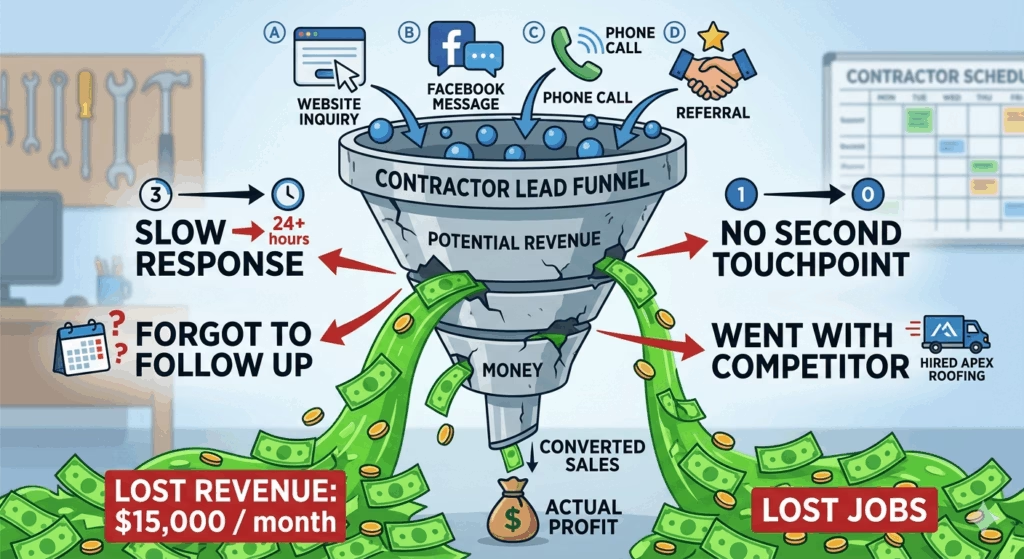
Why Contractors Lose Leads They Should Be Closing
Before building the system, it helps to understand exactly where and why leads are slipping away. Most contractors are losing the same jobs at the same three stages:
Stage 1: The First 5 Minutes
Research consistently shows that the odds of successfully contacting a lead drop by over 80% if you wait longer than five minutes to respond.
That feels extreme and for complex purchases, the exact window is debatable. But the direction is unambiguous: the faster you respond, the better your chance of booking the job. A homeowner who submits a quote request is actively shopping. If you don’t respond first, your competitor will.
Most contractors don’t respond for hours. Some don’t respond until the next day. By then, the buyer has often already made a decision and it wasn’t you.
Stage 2: The Follow-Up That Never Happens
A lead gets a callback. No answer. The contractor leaves a voicemail and assumes the ball is in the customer’s court.
It’s not. Studies show it takes an average of eight touchpoints to convert a new lead into a customer. Most contractors give up after one or two, assuming lack of response means lack of interest.
Often, the buyer is still interested. They’re just busy, distracted, or comparison shopping. The contractor who keeps showing up professionally, helpfully, without being pushy is usually the one who books the job.
Stage 3: The Quote That Gets No Answer
You send a quote. You hear nothing back. You interpret the silence as a “no” and move on.
Sometimes it is a no. More often, the prospect got the quote, got busy, and forgot to respond. A single follow-up message “Hey, just wanted to make sure you received the quote I sent over. Happy to answer any questions” has an extraordinarily high conversion rate. Most contractors never send it.
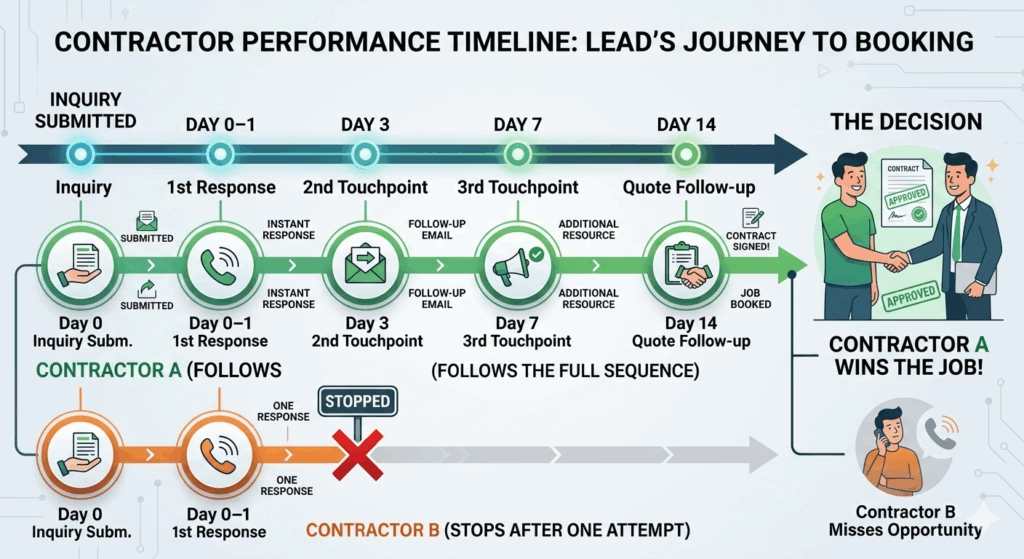
What a Contractor Follow-Up System Actually Looks Like
A follow-up system isn’t a script. It’s a sequence a series of messages delivered at predetermined times through predetermined channels, automatically, without anyone having to remember to send them.
Here’s the architecture of a follow-up system built specifically for contracting businesses:
Phase 1: The Instant Response (Minutes 0–5)
The moment a new lead comes in from your website form, a Facebook ad, a Google Ads click, or any other source an automated message goes out immediately.
This doesn’t close the sale. It doesn’t need to. Its only job is to confirm receipt, set an expectation, and keep the lead warm until you can make personal contact.
Sample instant auto-response (SMS):
“Hi [First Name], thanks for reaching out to [Company Name]! We received your request and one of our team members will be in touch within the hour to get you scheduled. In the meantime, feel free to reply here with any questions. [Your Name]”
This message does three things:
- Confirms the lead didn’t get lost in the void
- Sets a realistic callback expectation (within the hour, not “as soon as possible”)
- Opens a two-way channel for the prospect to share more details
The difference this makes is significant. A lead who receives an immediate confirmation stops shopping as aggressively. They know you’re coming. You’ve already differentiated yourself from every contractor who responds with silence.
Phase 2: The Personal Call (Minutes 5–60)
Automation handles the instant response. A human handles the first real conversation.
Your goal in this call is not to close the job on the spot. It’s to:
- Confirm what they need
- Set a specific appointment for an estimate or site visit
- Give them a clear picture of what happens next
If they don’t answer, leave a voicemail that matches the tone of the auto-response:
“Hey [First Name], this is [Your Name] from [Company Name] calling back about the quote request you sent over. Give me a call back when you have a chance at [number], or I’ll try you again in a bit. Looking forward to connecting.”
Note the phrase “I’ll try you again” this signals that the ball isn’t entirely in their court and that you’ll persist professionally. Most people appreciate the effort.
Phase 3: The Follow-Up Sequence (Days 1–14)
This is where most contractors drop off and where the biggest revenue is being left behind.
If the first call doesn’t connect, your system automatically moves the lead into a multi-day follow-up sequence. Here’s what that looks like:
Day 1 (2–4 hours after first contact attempt):
“Hi [First Name], just following up on the quote request from earlier today. I’d love to get you on the schedule we’re booking [service] estimates for [timeframe]. Reply here or call us at [number] when it’s convenient.”
Day 2:
“Hey [First Name], [Your Name] here from [Company Name]. Still hoping to connect about your [project type]. We do a lot of work in [their neighborhood/city] and would be happy to take a look at no charge. What’s the best time to reach you?”
Day 4:
“Hi [First Name] wanted to make sure my earlier messages didn’t get lost. We have openings on [day] and [day] this week for free estimates. If now isn’t a good time, no worries at all just let me know when works for you.”
Day 7:
“[First Name], I’ll keep this short still happy to come take a look at your [project type] whenever you’re ready. We’re [X] years in business in [area], fully insured, and our reviews speak for themselves: [review link]. No pressure, just want to make sure you have the best information when you’re ready to move forward.”
Day 14 (final touchpoint):
“Hi [First Name], I don’t want to keep your inbox cluttered, so this will be my last check-in. If your project is still on your radar, I’d love to help feel free to reach out anytime. Wishing you all the best either way. [Your Name], [Company Name] [phone]”
Five touchpoints over two weeks. Professional, personal-feeling, and low-pressure. This sequence alone running automatically for every new lead will recover a meaningful percentage of jobs that would otherwise be considered dead.
[IMAGE: Visual sequence graphic showing the 5-touchpoint follow-up timeline laid out horizontally Day 0 (instant SMS), Day 0 call attempt, Day 1 SMS, Day 2 SMS, Day 4 SMS, Day 7 SMS with review link, Day 14 final touchpoint with each message labeled by its purpose: “Confirm,” “Connect,” “Re-engage,” “Personalize,” “Add value,” “Close loop”]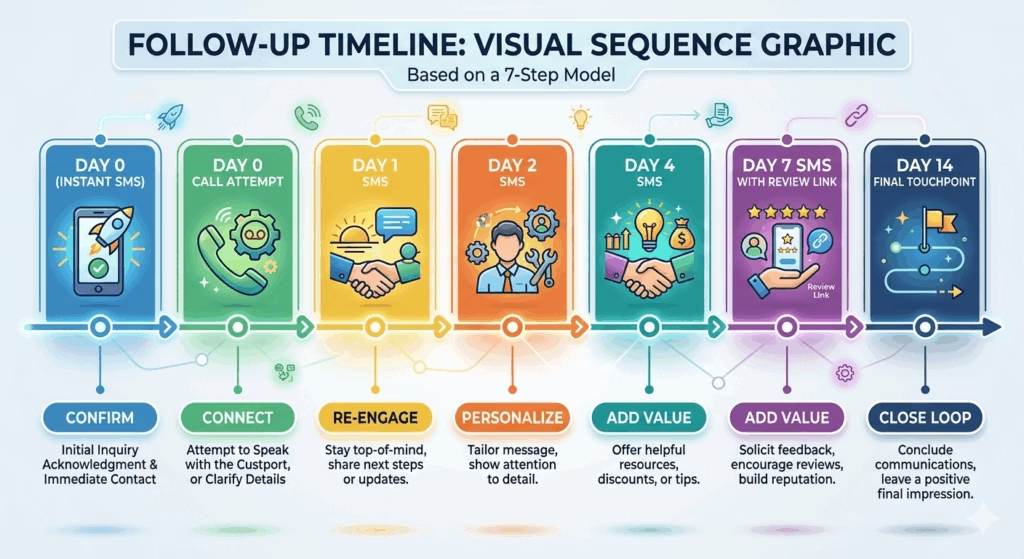
Phase 4: The Quote Follow-Up (Days 1–5 Post-Quote)
A separate sequence triggers the moment a quote is sent.
Most contractors treat the quote as the finish line. It’s actually the starting line of a new follow-up phase.
Day 1 after quote sent:
“Hi [First Name], just wanted to make sure the quote came through clearly sometimes these go to spam. Happy to walk you through anything in detail or answer any questions you have. What’s the best way to reach you?”
Day 3:
“Hey [First Name], following up on the estimate we sent over. We currently have [timeframe] available to start if you’d like to move forward. No pressure just want to make sure you have everything you need to make the best decision.”
Day 5:
“Hi [First Name] last follow-up on the quote. If you’ve decided to go a different direction, no worries at all. If you’re still deciding or have questions, I’m happy to chat. Either way, appreciate you giving us the opportunity to bid.”
Short. Human. Not pushy. That Day 5 message in particular which explicitly releases pressure often generates responses from leads who had quietly decided to go elsewhere. Sometimes that honest, low-pressure touchpoint is exactly what brings them back.
Phase 5: The “Closed Lost” Reactivation (30–90 Days Out)
This is the most underused phase in contractor follow-up and one of the highest-ROI activities available.
A lead that didn’t book isn’t always a lead that said no. They might have:
- Put the project on hold for budget reasons
- Gone with a competitor who couldn’t start until later
- Had a life event that pushed the timeline back
- Simply needed more time to decide
Ninety days later, a brief, casual reactivation message often converts a surprising percentage of these “dead” leads:
“Hi [First Name], [Your Name] here from [Company Name]. We connected a few months back about your [project type]. I know timing doesn’t always line up just wanted to check back in and see if the project is still on your radar for this season. We’ve had some openings come up and would love to make it work if the timing is better now.”
Most contractors never send this message. The ones who do consistently book jobs they had written off as lost.
The Tool That Makes All of This Possible: A CRM
Reading through the phases above, you might be thinking: There’s no way I can manually track all of this for every lead.
You’re right. That’s exactly the point.
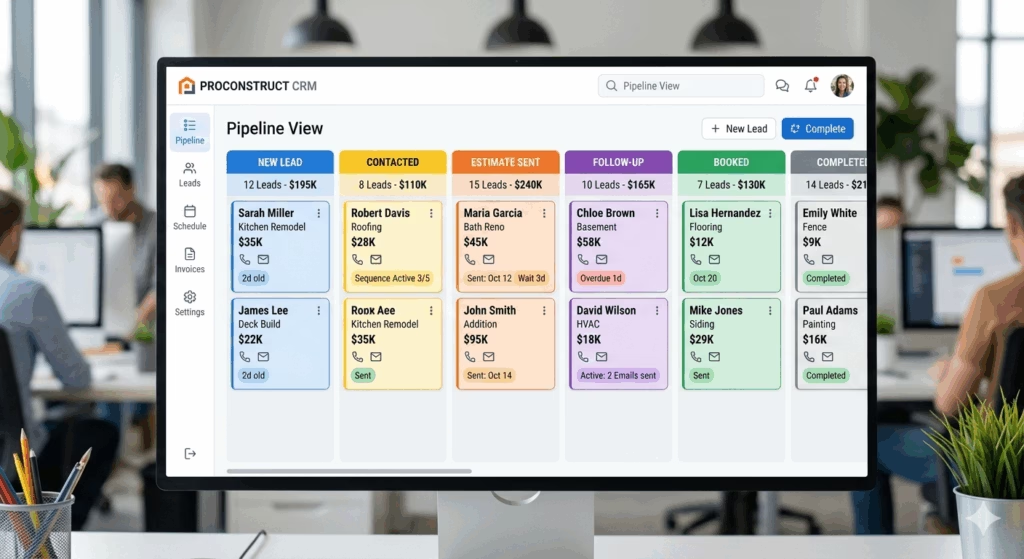
None of this is meant to be done manually. A CRM Customer Relationship Management software is the infrastructure that runs the entire system automatically. It:
- Captures leads the moment they come in, from every source
- Fires the instant auto-response without anyone touching a keyboard
- Triggers each follow-up message at the right time based on lead status
- Alerts you when a lead responds so you can jump into the conversation
- Tracks every touchpoint, every status update, and every quote sent
- Shows you at a glance which leads are hot, which are cold, and which need attention
Without a CRM, this system is a collection of good intentions. With one, it runs 24 hours a day, seven days a week, without anyone having to remember what to send or when to send it.
For contractors specifically, the right CRM doesn’t just manage contacts it integrates with your lead sources (website, Facebook, Google Ads), your quoting process, and your job scheduling so that the entire pipeline from first inquiry to completed job lives in one place.
This is the infrastructure behind the fastest-growing roofing, construction, and shed businesses and it’s one of the core systems built into a purpose-built CRM solution for construction and contracting businesses.
How to Write Follow-Up Messages That Don’t Feel Robotic
The biggest fear contractors have about automation is that it’ll feel impersonal that prospects will know they’re getting a form message and tune it out.
That concern is valid. Badly written automation is obvious and off-putting. Well-written automation is indistinguishable from a personal message and often more consistent than what a human sends on a rushed day.
Here’s what separates automation that converts from automation that gets ignored:
Use the prospect’s first name in every message. This is table stakes any modern CRM can insert this automatically but it still works. Messages that start with a name feel personal. Messages that start with “Hello” feel like a newsletter.
Reference the specific project. “Your roofing project” reads better than “your project” which reads better than “your inquiry.” Pull the service type from the form submission and insert it. The more specific, the more human it feels.
Write like you talk. Read every message out loud before you set it live in your automation. If you wouldn’t say it in a conversation, don’t put it in a message. Ditch corporate language. Use short sentences.
Vary the channel. A sequence that’s all SMS feels like spam. A sequence that’s all email gets lost. Mix it up SMS for immediacy, email for longer messages with quotes or links, a phone call for the personal touch. Different people respond to different channels.
Give them an easy out. Paradoxically, messages that say “no pressure” or “happy to help even if the timing isn’t right” convert better than ones that create urgency. Contractors build long-term reputations in their communities. Low-pressure follow-up protects that reputation even when a lead doesn’t book.
Measuring Whether Your Follow-Up System Is Actually Working
A system without measurement is just activity. Here are the numbers to track monthly:
Lead Response Rate: What percentage of new leads receive a response within one hour? This should be 100% if your automation is set up correctly.
Contact Rate: Of all new leads, what percentage do you successfully reach by phone within 48 hours?
Estimate-to-Booked Ratio: Of all estimates sent, what percentage convert to booked jobs? Industry average for contractors ranges from 20–40%. A follow-up system should push this toward the higher end.
Lead-to-Revenue by Source: Which lead sources (website, Facebook, referral, Google Ads) produce the highest close rates? This tells you where to invest more marketing budget and where your follow-up sequence may need adjustment.
Reactivation Conversion Rate: Of the leads you send 30–90 day reactivation messages to, what percentage respond and ultimately book? Even a 5–10% reactivation rate on what you’d written off as dead leads represents significant recovered revenue.
Most CRM platforms generate these reports automatically. Review them monthly, identify your weakest stage, and improve the sequence at that specific point.
The “Good Problem” This System Creates
Here’s something worth addressing honestly: if you set this system up correctly, you will have more leads in active follow-up than you can personally track.
That’s the goal but it also creates a new challenge. When a lead responds after Day 7 and asks a question about your timeline or pricing, you need to be able to pick up the conversation contextually. You can’t respond as if you’ve never spoken with them.
This is another place a CRM earns its keep. Every automated message, every call log, every reply is stored in the lead’s contact record. When you open that record, you see the full history. You can jump in as if you’ve been tracking the conversation personally because the system has been doing it for you.
The combination of automated volume and human-quality context is what allows one contractor to manage 50+ active leads simultaneously without a sales staff.
Putting It Together: Your System Build Checklist
Building this system doesn’t have to happen all at once. Here’s a prioritized checklist:
Week 1 — Foundation
- Choose and set up your CRM (there are options built specifically for contractors at a range of price points)
- Connect your primary lead sources website form, Facebook, Google Ads so leads flow automatically into the CRM
- Write and activate your instant auto-response message (SMS and email)
Week 2 — The Core Sequence
- Write all five touchpoints for the new lead follow-up sequence
- Set the delivery timing for each message (Day 1, 2, 4, 7, 14)
- Test the sequence by submitting a test lead and confirming every message fires correctly
Week 3 — Quote Follow-Up
- Write the three-message quote follow-up sequence
- Connect it to your quoting trigger (manually tagged or automatically triggered when a quote is marked “sent”)
- Test and confirm
Week 4 — Reactivation and Measurement
- Build your 30–90 day reactivation sequence for leads marked “closed lost”
- Set up your monthly reporting dashboard in the CRM
- Review the first month’s data and adjust any underperforming messages
This is a one-time build that runs for years with only minor maintenance. Most contractors who set it up report it pays for itself within the first month.
The Bigger Picture: Follow-Up as a Competitive Advantage
In most markets, the bar for contractor follow-up is embarrassingly low. Slow responses, single callbacks, quotes sent and never followed up on this is the industry standard.
That’s actually good news for the contractor willing to build a better system.
When your business responds instantly, follows up consistently, and stays in touch professionally through a multi-week sequence, you don’t just book more jobs. You develop a reputation as the contractor who actually communicates which, based on the number of homeowner reviews that mention responsiveness specifically, is a competitive differentiator that money can’t easily buy.
Pair a strong follow-up system with a lead generation strategy that fills the top of your pipeline and a complete digital marketing presence that makes your business easy to find and easy to trust, and you’ve built something that compounds: more leads, better conversion, faster growth, and a reputation that reinforces itself with every job you complete.
That’s what a follow-up system actually is. Not a sales trick. Not a gimmick. A professional infrastructure that treats every lead with the consistency and care they deserve and books more of the jobs your marketing is already generating.
The Bottom Line
You don’t need another employee to follow up on your leads. You need a system that does it for you automatically, professionally, and without fail.
The leads are already coming in. The demand for what you do already exists. The only question is whether your follow-up process is capturing the revenue that your marketing is generating, or quietly letting it walk out the door to a competitor who happened to call first.
Build the system. Set it once. And let it work while you’re on the job doing what you do best.
Recent Post
What Does a $1,500/Month Marketing Budget Actually Get a Shed or Construction Business?
DIY vs. Agency: Should a Roofing Company Handle Their Own Marketing?
7 Signs Your Construction Company’s Website Is Losing You Jobs (And How to Fix It)
Google Business Profile vs. Google Ads: Which One Should a Contractor Invest in First?
How Much Should a Roofing or Construction Company Spend on Marketing? (A No-BS Breakdown)
Categories
You Might Also Like
Explore additional articles based on your interests.
View All
Pudgy Squirrel Marketing
Seasonal Marketing: How Smart Contractors Stay Busy in the Slow Season
Read More
Pudgy Squirrel Marketing
What Does a $1,500/Month Marketing Budget Actually Get a Shed or Construction Business?
Read More
Pudgy Squirrel Marketing
DIY vs. Agency: Should a Roofing Company Handle Their Own Marketing?
Read More
Pudgy Squirrel Marketing
7 Signs Your Construction Company’s Website Is Losing You Jobs (And How to Fix It)
Read More
Pudgy Squirrel Marketing
Google Business Profile vs. Google Ads: Which One Should a Contractor Invest in First?
Read More
Pudgy Squirrel Marketing
How Much Should a Roofing or Construction Company Spend on Marketing? (A No-BS Breakdown)
Read More

Pudgy Squirrel Marketing
The Before-and-After Effect: Why Project Photos Are Your Best Marketing Asset as a Builder
Read More
Pudgy Squirrel Marketing
Roofing Leads vs. Roofing Customers: Why Most Contractors Are Targeting the Wrong Thing
Read More