Get In Touch
Pudgy Squirrel Marketing
How Roofers Get More Leads in the Off-Season: A Practical Marketing Playbook for Slow Months
By Tony
October 13, 2026
12 mins
Share:
The Off-Season Is a Competitive Opportunity, Not a Dead Zone
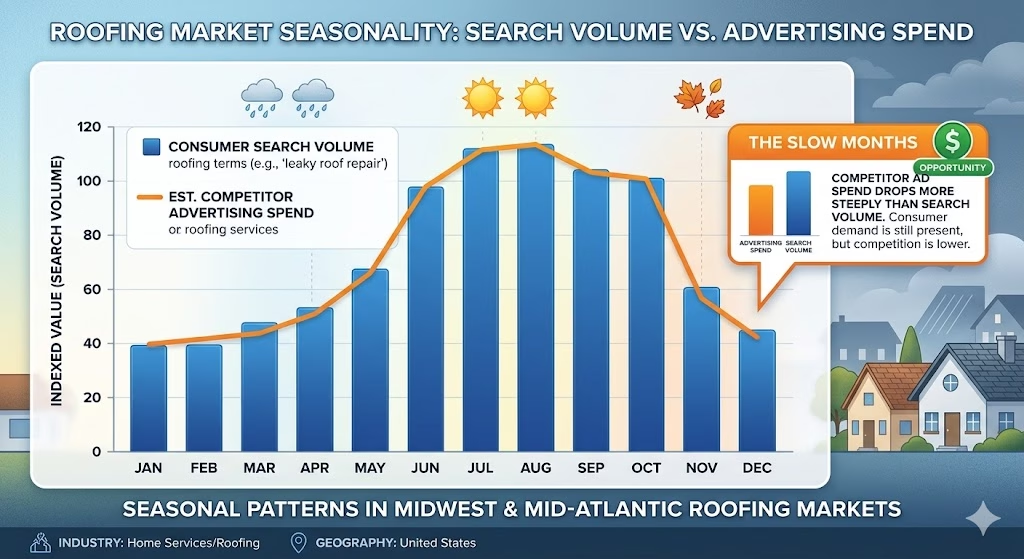
Here is what happens in most roofing markets between November and March: the majority of roofing companies stop advertising, stop posting on social media, stop following up with unconverted leads, and wait for the phone to ring again in spring.
This predictable retreat creates a window.
Homeowners do not stop having roofing problems in winter. They stop calling about them as frequently, partly because fewer problems are visible, partly because they assume contractors are not taking winter work, and partly because the urgency of other seasonal life pressures pushes the roof inspection to the back of the list.
But some homeowners do search in the off-season. And they search in a market where fewer competitors are running ads, fewer companies are actively generating reviews, and fewer local contractors have updated their Google Business Profile in the last two months.
The roofing company that is visible, credible, and responsive in January is often the only serious competitor in the room.
This playbook walks through the specific activities that produce off-season leads and that position a roofing company to dominate the spring ramp-up. It is organized by investment level and payoff timeline so you can build a realistic off-season plan rather than a wish list.
Foundation Work: What to Fix Before You Market
Before spending money on advertising or time on content, the off-season is the right moment to make sure the foundation is solid. Traffic driven to a website that does not convert, or advertising dollars spent by a company with no review credibility, produce worse results than the same investment after these fundamentals are addressed.
Your Google Business Profile
Your Google Business Profile (GBP) is the most important single marketing asset a local roofing company has. It is what appears when someone searches your company name, when someone searches “roofing contractor near me,” and when someone searches a specific service term like “roof replacement Charlottesville.”
The off-season is when most roofing companies let their GBP go stale. Posts stop appearing. Photos stop being added. Response times to questions and reviews slow down. This staleness is visible to both Google and to potential customers, and it affects where the profile ranks in local search results.
Off-season GBP activities that cost nothing:
- Post every week. Google Business Profile posts are indexed by Google and signal active business operation. A post showing a completed fall project, a before-and-after from the past season, or a practical tip for homeowners about winter roof maintenance keeps the profile active during the slow months.
- Respond to every review. Any reviews that came in during busy season without a response should be responded to now. All new reviews, positive and critical, should receive a thoughtful response within 48 hours.
- Update photos. Add project photographs from the recent season. GBP profiles with recent, high-quality photographs perform better than those with outdated or minimal photo content.
- Answer questions. The Q&A section of a GBP profile is indexed by Google and visible to searchers. Answer any outstanding questions and add your own preemptive Q&As for common customer questions (How long does a roof replacement take? Do you work in winter? What does a free inspection include?).
- Verify service areas and categories. Confirm that the profile accurately reflects the areas you serve and the specific services you offer. Incorrect or incomplete category and service area information costs you visibility in relevant local searches.
The investment is an hour or two per month. The return is compounding: a GBP that is actively maintained through winter is ranked higher by the time spring search volume picks up, and that ranking advantage is paid for by the time invested during the slow months.
Your Website’s Conversion Capacity
Off-season is the right time to audit your website’s ability to convert a visitor into a lead. This is the work that never happens during busy season because there is no time.
The conversion questions to answer:
- Does your homepage have a visible, above-the-fold call to action (CTA) that makes it obvious what a visitor should do next?
- Is your phone number click-to-call on mobile?
- Does your site load in under three seconds on a mobile connection? (Check with Google PageSpeed Insights, which is free.)
- Do you have a contact form that is simple, short, and actually delivers submissions to your email?
- Does your website communicate your service area clearly so that a visitor immediately knows whether you serve their location?
- Do you have at least 10 genuine reviews displayed prominently, either embedded from Google or as testimonials?
Fixes to any of these conversion problems produce returns on every visitor your site receives for as long as the site is live. The off-season investment in conversion capacity is one of the highest-ROI activities available, and it enables everything else on this list to work better.
Review Generation: The Most Underused Off-Season Asset
Reviews are the most consistently influential factor in a homeowner’s contractor selection. A roofing company with 60 genuine Google reviews at an average of 4.8 wins the credibility comparison against a company with 12 reviews at 4.9 in almost every scenario.
The off-season is the best time of year to systematically close the review gap, for two reasons:
- Your crew has finished fewer jobs, so you have more time to invest in follow-up
- Customers from your recent season are at their peak satisfaction and their peak memory of the project experience
A job completed in October that received no follow-up for reviews is still a potential review in November. Most customers who had a good experience are willing to leave a review if they are asked clearly and given a simple path to do it.
A Simple Review Generation System
Step 1: Build your list. Compile every completed project from the past 12 months that ended with a satisfied customer. Include name, email, and phone number.
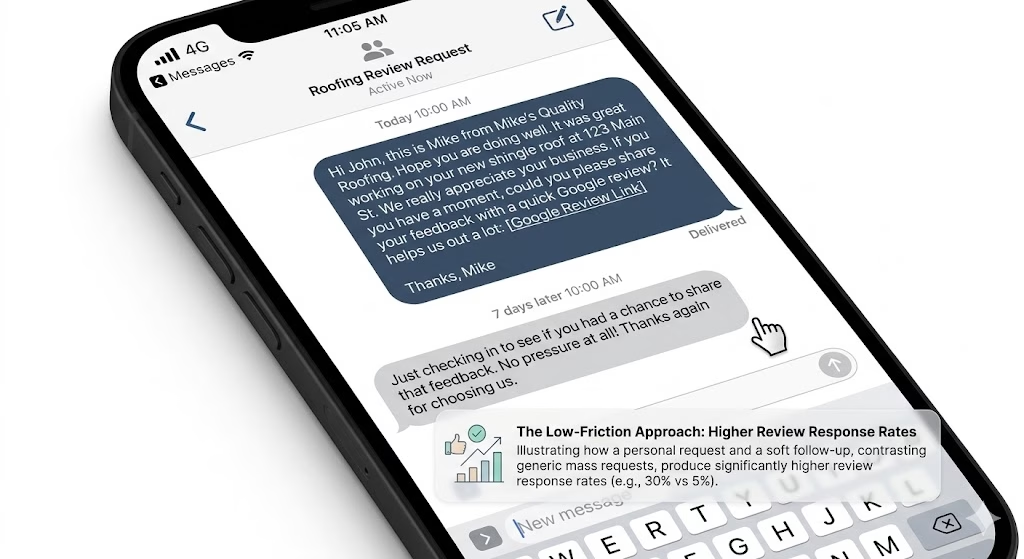
Step 2: Send a direct request. A personal email or text from the owner or project manager, referencing the specific project, asking for a review, and providing a direct link to the Google review page. Not a mass blast. A genuine, personal message.
Example message: “Hi [name], this is [owner] from [company name]. We finished your roof in [month] and I wanted to follow up to see if everything has held up well. If you had a good experience, I’d really appreciate it if you took a moment to leave us a Google review — it makes a big difference for our business. Here’s a direct link: [link]. Thanks again.”
Step 3: Follow up once. A single follow-up message for those who did not respond to the first, seven to ten days later.
Step 4: Make it systematic going forward. Set up an automated post-project review request that goes out 10 days after project completion. This ensures every future customer is asked rather than only the ones you remember to follow up with.
Pudgy Squirrel builds CRM and follow-up automation systems for roofing companies specifically to make this kind of systematic follow-up happen without manual effort for every project. If your current process relies on the owner remembering to ask for reviews, the CRM and automation services solve that problem at scale.
Content Marketing: Building the Assets That Produce Spring Traffic
The SEO value of content is time-delayed. An article published in November may not rank meaningfully until February or March. An article published in March is competing with everyone else who had the same idea and may not rank until summer.
The off-season is exactly the right time to create the content assets that will rank when spring traffic picks up.
The Content Types That Work for Roofers
Service area pages: A dedicated page for every city, suburb, or region you serve that includes specific information about your work in that area. These pages rank for “[city] roofing contractor” searches and are often the highest-converting pages on a roofing company’s website.
If you do not have service area pages for every market you want to be found in, the off-season is when to build them. Each page should include: specific reference to the area, a gallery of local projects if possible, specific service descriptions, and a clear CTA.
Educational blog content: Posts that answer the questions homeowners search before they are ready to call a contractor. “How long does a roof last?” “When should I replace my roof vs. repair it?” “What does a roof inspection include?” These posts build organic search traffic and establish credibility with homeowners who are in the research phase.
The off-season reader who finds your educational post and bookmarks it or subscribes to email updates is often the easiest spring conversion available.
Project spotlights: Posts or pages featuring specific completed projects with before-and-after photographs and a brief description of the work. These posts rank for specific search terms, provide visual social proof, and give you content for social media and email at the same time.
FAQ content: A comprehensive FAQ page that answers 20 to 30 of the most common roofing questions in detail. This page ranks for long-tail queries, populates Google’s People Also Ask features, and reduces the time your team spends answering the same questions repeatedly.
What Good Roofing Content Actually Looks Like
Generic, thin content does not rank in 2025-2026. Google’s current algorithm rewards content that demonstrates genuine expertise, provides specific and accurate information, and serves the reader’s actual question rather than keyword-targeting a phrase.
For roofing content, this means: specific material recommendations for the actual climate of your service area, accurate cost ranges based on current local market conditions, honest discussion of the tradeoffs between repair and replacement, and content written with enough specificity that a homeowner reading it comes away with information they could not have gotten from a generic national website.
If writing is not a skill set your team has in-house, Pudgy Squirrel’s content and SEO services produce this type of locally specific, genuinely useful content for roofing companies across the country.
Off-Season Advertising: What Works and What Doesn’t
Paid advertising in the off-season is not the same as paid advertising in the peak season. The strategies that work are different, the costs are different, and the buyer’s journey is different.
Google Ads in the Off-Season: Lower Volume, Lower Cost, Different Intent
Search volume for roofing-related keywords drops significantly in winter, but so do competitor bids. The homeowners who are searching in January are often more motivated than the average May searcher: they have a problem that has been bothering them, they have delayed addressing it, and they are now actively looking for a solution.
Off-season Google Ads strategy:
- Reduce spend proportionally with volume reduction. Do not maintain the same budget against lower search volume without adjusting. Lower bids on competitive terms and focus budget on the specific service terms most relevant to urgent, year-round need (emergency roof repair, leak repair, storm damage).
- Shift toward informational intent keywords. Off-season searchers include a higher proportion of homeowners in the research phase who are not ready to call but are getting close. Bidding on these terms at lower cost per click acquires potential customers earlier in the journey and supports the review and retargeting strategy.
- Increase bid on emergency and urgent terms. A leaking roof is urgent regardless of season. “Emergency roof repair [city]” is worth maintaining and potentially increasing budget on through the slow months because the intent is immediate and conversion is high.
Retargeting: The Off-Season’s Best ROI
Retargeting campaigns serve ads to people who have previously visited your website. These are the homeowners who searched roofing, found your site, and did not convert either because they were just researching, were not ready to call, or got distracted and intended to come back.
Why retargeting works especially well in the off-season:
The pool of people who visited your website during peak season and did not convert is large. Many of these homeowners have been thinking about their roof for months. In the off-season, they are less bombarded by general advertising. A well-timed retargeting ad that appears when they are browsing in January (“Still thinking about your roof? We offer free winter inspections.”) reconnects with a warm audience at very low cost.
Retargeting on both Google Display and Meta (Facebook/Instagram) platforms costs a fraction of peak-season search advertising and produces meaningful conversions from homeowners who were already interested. Setting up retargeting campaigns during the slow season, before you need them, is the right preparation for the spring ramp-up.
Social Media in the Off-Season: Organic Before Paid
Most roofing companies underinvest in organic social media during busy season because there is no time. The off-season is when to fix that.
What to post:
- Before-and-after project photographs from the past season
- Short video walkthroughs of completed projects (this format gets significantly more organic reach than static images on both Instagram and Facebook)
- Educational posts about what homeowners should watch for in winter
- Team spotlights and behind-the-scenes content that builds the human connection with the brand
- Customer testimonials as graphics or short video quotes
- Storm damage tips when relevant weather events occur in your market
Consistent posting through the slow months keeps your brand visible to the audience you built during busy season and builds the organic reach that reduces your dependence on paid advertising. Pudgy Squirrel builds and manages social media systems for contractors that keep the content pipeline moving without requiring the owner to be the one creating it.
Email Marketing to Past Customers and Unconverted Leads
A roofing company’s past customer list and unconverted lead list are two of the most valuable assets the business has, and most roofing companies do almost nothing to market to either one in the off-season.
The Past Customer Email Campaign
Past customers who had a good experience are the most likely source of repeat business (gutters, HVAC vents, chimney repairs, skylight installation) and referrals. An off-season email campaign to past customers costs almost nothing and produces a consistent trickle of referrals and small-project inquiries throughout the slow months.
Off-season email campaign to past customers:
- Seasonal maintenance email (November): A practical email about winter preparation for the roof — clearing gutters, checking for ice dam risk, knowing the signs of a leak. Educational, not salesy. The email that provides value generates goodwill and keeps the company top-of-mind.
- Referral request email (December/January): A direct, honest request for referrals. “If you know someone who mentioned their roof needs attention, we’d love the introduction. We’ll make sure they’re taken care of the same way we took care of you.”
- Spring reminder email (February/March): “Spring inspection season is coming up. We have limited availability for free inspections before the busy season — would you like to get on the calendar?”
Each of these emails is simple, conversational, and not a hard sell. They work because they maintain a relationship rather than trying to extract a transaction.
The Unconverted Lead Reactivation Campaign
Unconverted leads from the past 12 months are homeowners who showed genuine interest and then did not proceed. Some of them were not ready. Some got three quotes and chose someone else but may not have been fully satisfied. Some simply got busy and forgot to follow up.
A short reactivation sequence in January or February addresses this audience directly:
- Email 1: “We wanted to follow up on your inquiry from [month]. Are you still thinking about your roof? We’d love to offer a fresh look with no pressure.”
- Email 2 (one week later if no response): “Still here when you’re ready. We’ve just opened some early-spring inspection slots if you’d like to get on the schedule before the busy season.”
This sequence converts a meaningful percentage of unconverted leads who are now ready to move. The conversion cost is essentially zero: the lead acquisition cost was already paid.
The Off-Season Activities Calendar: A Month-by-Month Reference
| Month | Priority Activities |
|---|---|
| November | Review request campaign to all completed projects; GBP update and photo refresh; begin website conversion audit |
| December | Seasonal maintenance email to past customers; set up retargeting campaigns; complete any website fixes identified in audit |
| January | Unconverted lead reactivation sequence; social media content creation for Q1; service area page creation for underserved markets |
| February | Spring inspection campaign to past customers; Google Ads budget review and bid adjustments; content publishing cadence begins |
| March | Spring ramp-up advertising begins from the foundation built through winter; GBP posting frequency increases; follow-up automation confirmed and running |
What Most Roofers Get Wrong in the Off-Season
The most common off-season marketing mistake is treating it as a binary: either you are in marketing mode or you are not. Busy season is marketing mode. Off-season is not.
This binary thinking means that when spring arrives and the phone starts ringing more naturally, the company is starting from scratch rather than from a running start. The Google Business Profile has gone stale. The review count has not increased. The website still has the same conversion problems it had in March of last year. The leads who visited the website in October and never called have not been retargeted.
The contractors who pull ahead of the market are the ones who treat the off-season as a different kind of marketing investment rather than a pause. They invest in the assets (reviews, GBP presence, website conversion, content) that produce compounding returns rather than in the campaigns that produce immediate impressions.
The campaigns matter in season. The assets matter always.
Getting the Right System in Place Before Spring
The activities in this playbook produce results, but they produce better results when they are organized into systems rather than executed as one-off actions. A review request process that happens manually is a review request process that happens inconsistently. A follow-up sequence built in a CRM runs every time, for every lead, without the owner having to remember.
Pudgy Squirrel works specifically with roofing and construction companies to build the marketing infrastructure that makes these systems run: the CRM that tracks every lead and triggers follow-up automatically, the website that converts visitors rather than just attracting them, the content calendar that keeps the Google Business Profile and social media active without requiring manual effort every week, and the ad campaigns that are set up and ready to scale when spring demand arrives.
If your roofing company is heading into another off-season without a system for generating leads through slow months, the window to address that is open right now.
The Bottom Line
The off-season does not have to be slow if you use it intentionally. The homeowners who search for roofing contractors in January are fewer than in May, but they are real, they are often motivated, and they are shopping in a market where most of your competitors have gone quiet.
The company that shows up consistently through the slow months with a maintained GBP, a strong review base, active retargeting, and a systematic follow-up process for past customers and unconverted leads is the company that starts spring from a position of strength rather than a position of catch-up.
Start with the free activities Google Business Profile, review requests, past customer emails and build toward the systems that make those activities run automatically. Each month of consistent off-season effort compounds into a competitive advantage that shows up in the spring booking calendar.
Why Schedule a Call?
Popular Insights
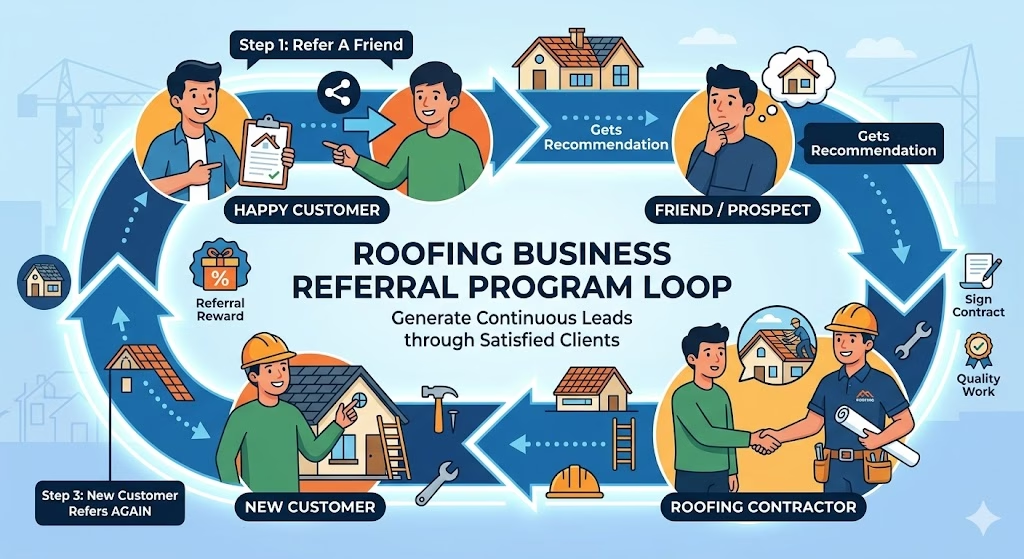
How to Build a Referral Program for Your Roofing or Construction Business (Without Spending a Fortune)
Oct. 09, 2026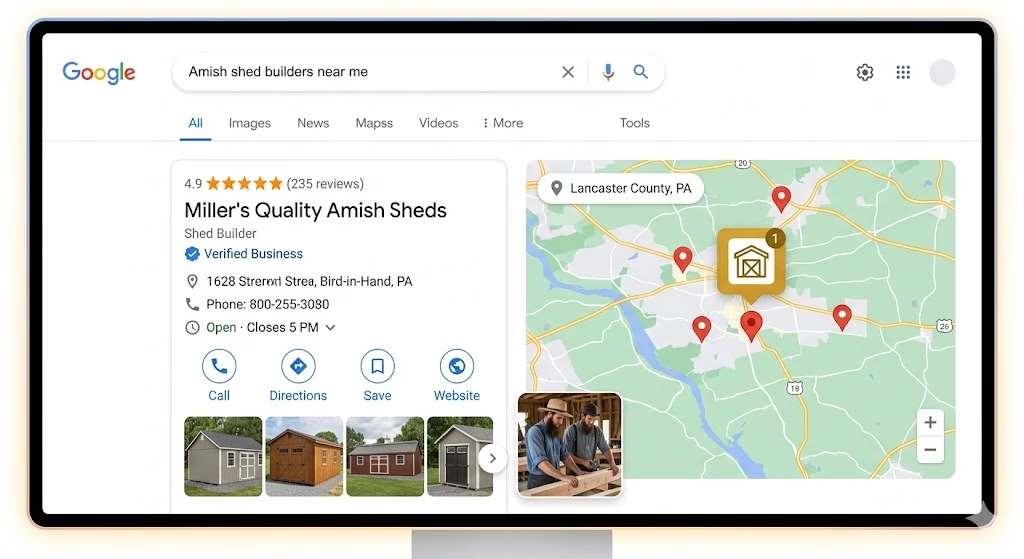
The Amish and Plain Community Business Owner’s Guide to Online Marketing
Oct. 02, 2026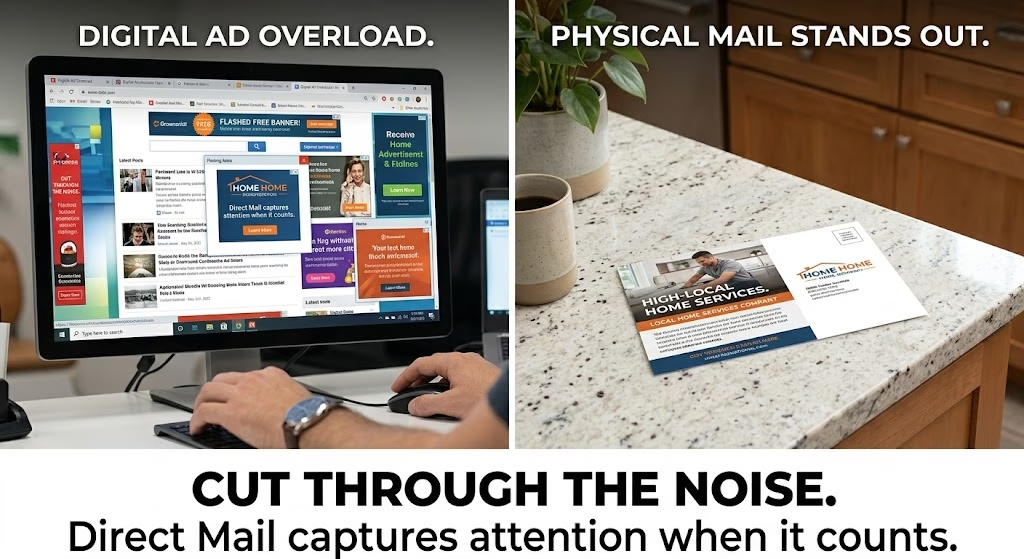
Mailers Aren’t Dead: Why Direct Mail Still Works for Roofing and Construction (And How to Run One That Converts)
Sep. 22, 2026
Storm Season is Coming: How to Market Your Roofing Business Before, During, and After a Major Weather Event
Sep. 18, 2026
Email Marketing for Contractors: The 5 Campaigns That Actually Bring Back Past Customers
Sep. 11, 2026Topics
Pudgy Squirrel Marketing
How Roofers Get More Leads in the Off-Season: A Practical Marketing Playbook for Slow Months
Read More
Pudgy Squirrel Marketing
How to Build a Referral Program for Your Roofing or Construction Business (Without Spending a Fortune)
Read More
Pudgy Squirrel Marketing
The Amish and Plain Community Business Owner’s Guide to Online Marketing
Read More
Pudgy Squirrel Marketing
Mailers Aren’t Dead: Why Direct Mail Still Works for Roofing and Construction (And How to Run One That Converts)
Read More
Pudgy Squirrel Marketing
Storm Season is Coming: How to Market Your Roofing Business Before, During, and After a Major Weather Event
Read More
Pudgy Squirrel Marketing
Email Marketing for Contractors: The 5 Campaigns That Actually Bring Back Past Customers
Read More
Pudgy Squirrel Marketing
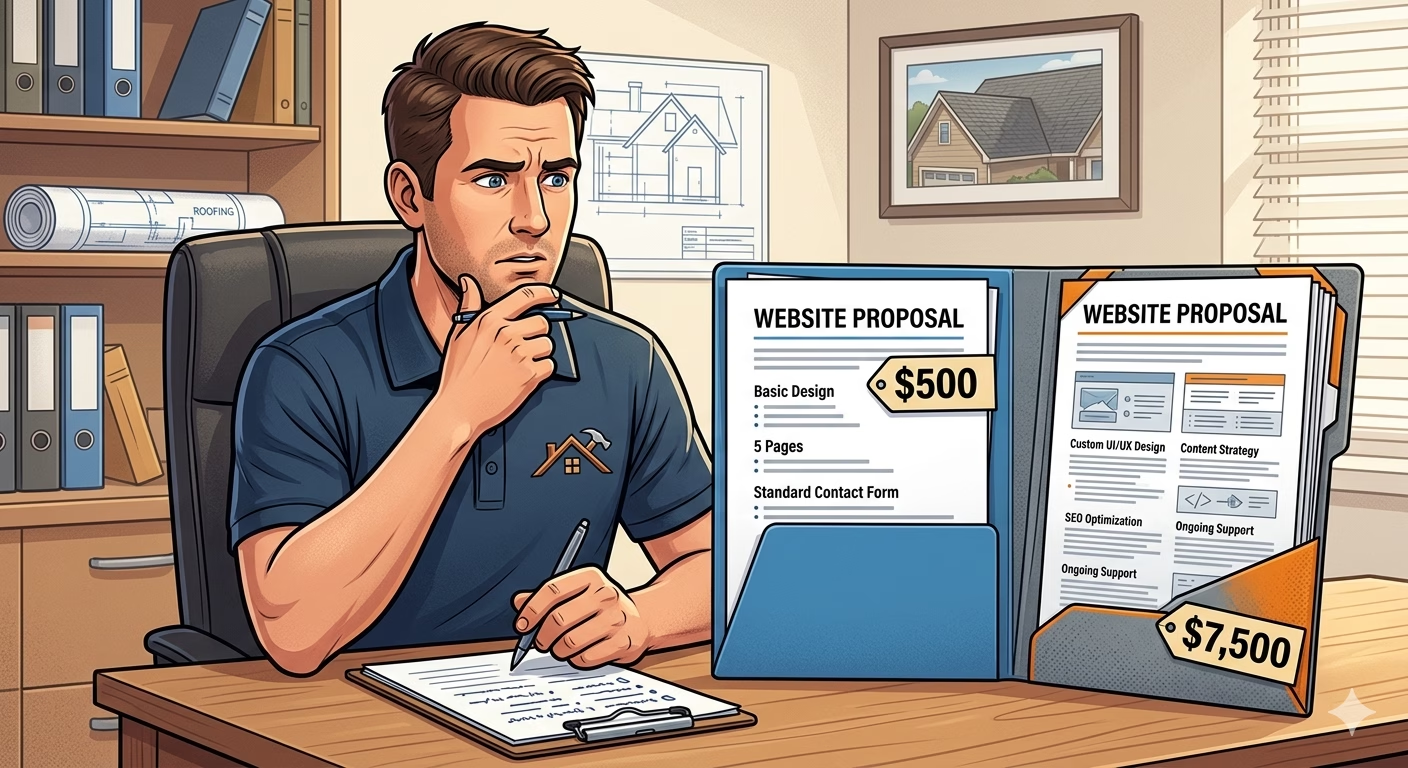
What a Roofing Website Should Cost in 2026 (And What You Actually Get for the Money)
Read More
Pudgy Squirrel Marketing
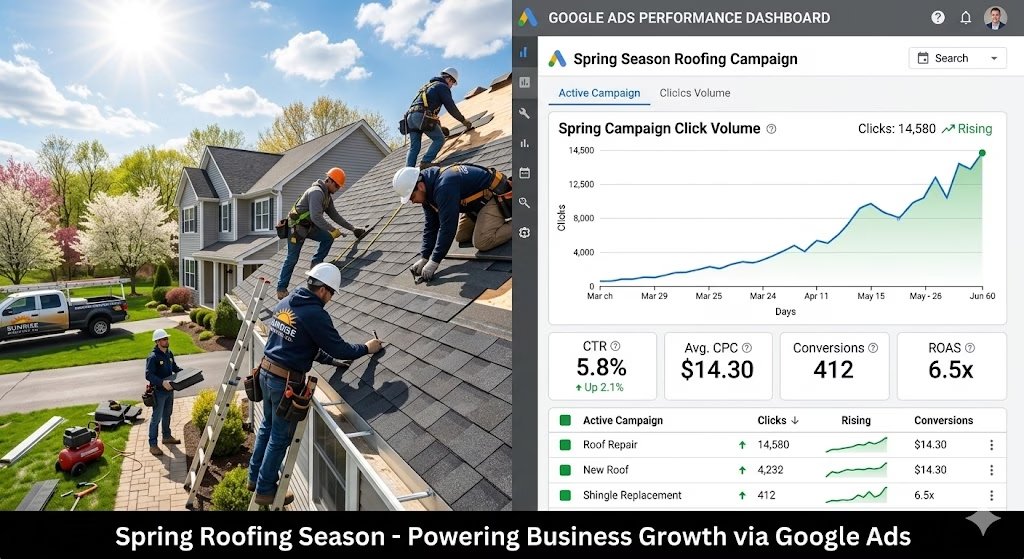
Spring Marketing Surge: How Roofing and Construction Companies Should Prepare Their Ads Before Peak Season
Read More