
Get In Touch
Pudgy Squirrel Marketing
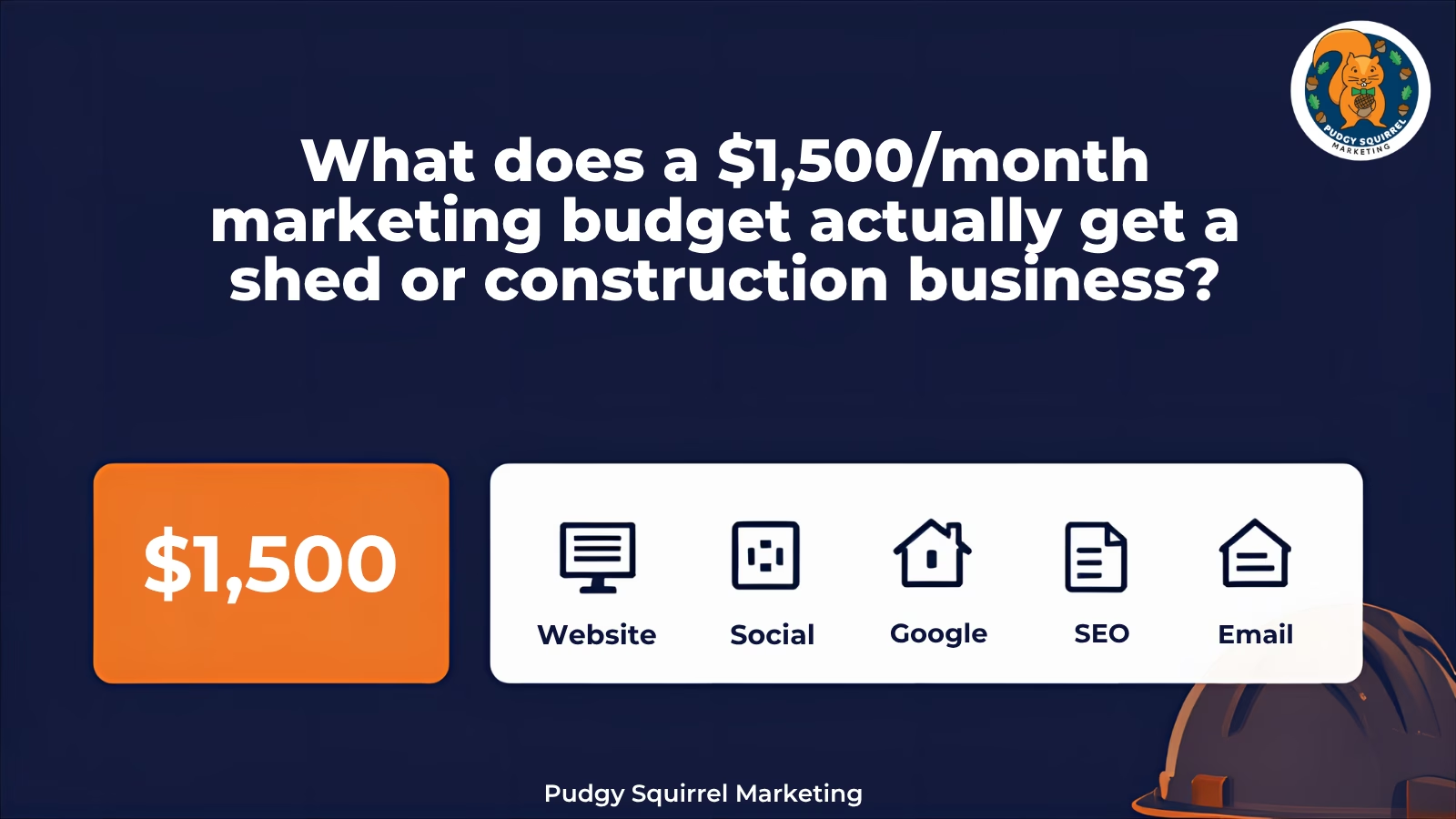
What Does a $1,500/Month Marketing Budget Actually Get a Shed or Construction Business?
By Tony
July 10, 2026
13 mins
Share:
Key Takeaways
- $1,500/month is a meaningful but constrained marketing budget enough to build a strong foundation and generate consistent leads if allocated correctly, not enough to do everything simultaneously.
- The single biggest mistake businesses make with this budget level is spreading it too thin across too many channels, producing mediocre results everywhere instead of real traction anywhere.
- At $1,500/month, channel prioritization is everything. The right two or three channels, executed well, will dramatically outperform a scattered approach across six channels executed poorly.
- For most shed and construction businesses at this budget level, the highest-ROI allocation is: Google Business Profile optimization and review generation first, a professional website with dedicated service pages second, and a focused Google Ads or SEO investment third.
- Infrastructure investments (website, CRM, conversion optimization) that increase the ROI of every marketing dollar you spend should take priority over pure traffic generation at this budget level.
- A $1,500/month budget that’s correctly allocated and consistently executed will produce more revenue than a $3,000/month budget scattered without strategy.
The Budget Most Small Construction and Shed Businesses Actually Have
Not every construction or shed business is ready to drop $5,000 a month on marketing. Most small and growing operations are working with something closer to $1,000–$2,000 per month real money that has to work hard because there’s no slack in the system if it doesn’t.
The problem is that most marketing advice is written for companies with larger budgets. “Run Google Ads, invest in SEO, do social media, build email lists, post daily content” great advice for a business with $5,000+/month to allocate. For a business with $1,500, it’s a recipe for doing everything inadequately and none of it effectively.
This post is written specifically for the $1,500/month budget. It tells you what that money can realistically accomplish, what it can’t, how to allocate it across the channels that matter most at this spend level, and what success actually looks like at month three, month six, and month twelve.
No fluff. No aspirational hypotheticals. Just what the money actually buys.
First: What $1,500/Month Cannot Do (Being Honest About Constraints)
Before building the ideal allocation, it’s worth being completely clear about what this budget level cannot accomplish because unrealistic expectations set up real disappointment.
$1,500/month cannot:
- Run aggressive Google Ads campaigns in a competitive metro market. In high-competition roofing or construction markets in major cities, cost-per-click on high-intent keywords can run $15–$45. At that rate, $800 in ad spend produces 18–53 clicks not enough volume to generate consistent lead flow or enough conversion data to optimize the campaign meaningfully.
- Fund full-service SEO and full-service Google Ads simultaneously at a meaningful level. Effective SEO requires consistent monthly investment in content, technical optimization, and link building. Effective Google Ads requires consistent ad spend plus management time. Trying to do both at $1,500/month produces two underfunded strategies instead of one well-executed one.
- Build a comprehensive brand presence across every platform. Social media management, email marketing, video production, blog content creation, and paid advertising all running simultaneously require a budget three to four times this size to execute with real quality and consistency.
- Produce results overnight. No marketing budget at any level produces guaranteed immediate results. At $1,500/month, the time-to-meaningful-results horizon is typically 60–120 days for paid channels and 4–9 months for SEO and organic strategies.
Understanding these constraints isn’t discouraging it’s the honest foundation for making smart allocation decisions within what’s actually possible.
What $1,500/Month Can Do (When Spent Intelligently)
Within those constraints, $1,500/month is a real number that can produce real results specifically for a shed or construction business operating in a small-to-mid size market.
Here’s what’s genuinely achievable:
- A fully optimized Google Business Profile that ranks competitively in the Local Pack for 3–5 high-intent local search queries
- A professional, mobile-optimized website with 3–5 dedicated service pages that converts visitors at 4–8% (meaningfully better than most contractor websites)
- A review generation system that consistently builds your Google profile’s social proof month over month
- A focused, well-structured Google Ads campaign that generates 8–20 qualified leads per month in a low-to-mid competition market
- OR a consistent SEO strategy that begins building organic rankings and compounding traffic over a 6–12 month horizon
- A basic CRM and automated follow-up sequence that captures and responds to every lead from every channel
Done right, this foundation produces 10–25 leads per month in most markets enough to keep a small construction or shed business consistently busy and growing at a healthy rate.
The Recommended $1,500/Month Allocation (And Why)
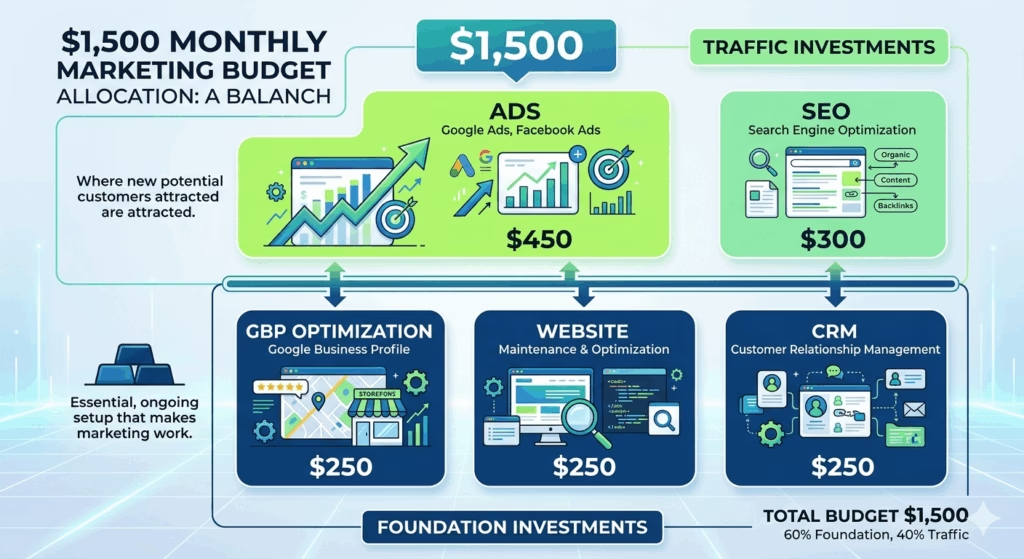
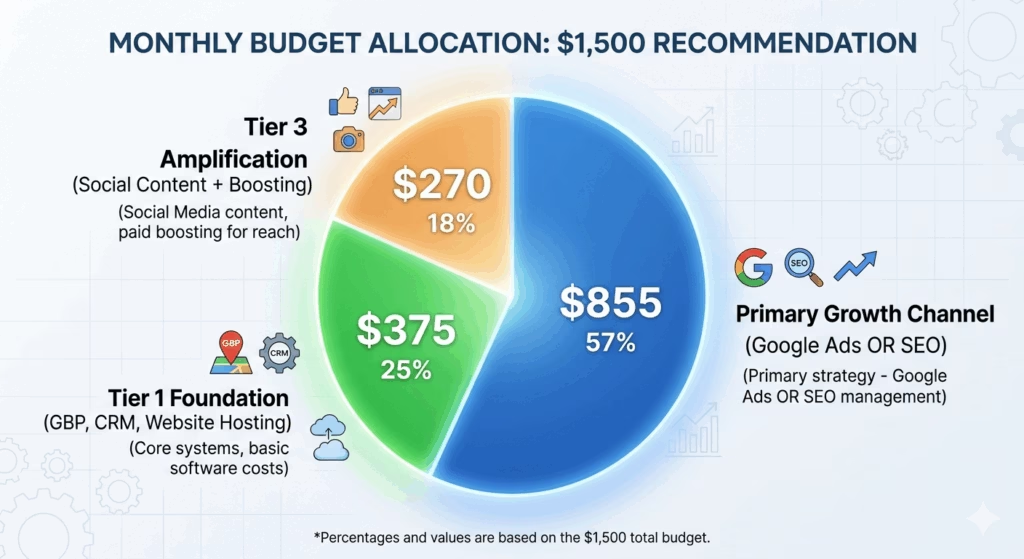
Here is the allocation that produces the best results for most shed and construction businesses at this budget level, broken into specific monthly spend with rationale for each.
Tier 1: Foundation Investments ($300–$400/month)
These are the infrastructure costs that make every other dollar work harder. Skip them and you’re driving traffic to a leaky bucket.
Website Hosting + Maintenance: $50–$100/month
Your website is the destination for every ad click, every Google search result, every social media link, and every QR code you hand out. If it’s slow, outdated, or hard to navigate on a phone, the money you spend sending people there is partially wasted.
This line item assumes you have a professionally built website already in place. If you don’t, read on the first three months of your budget need to be different, and we’ll address that below.
Monthly hosting on a quality server (not the cheapest shared hosting that makes your site load slowly) runs $25–$50/month. Basic maintenance security updates, plugin updates, occasional edits runs another $50/month if outsourced, or zero if you’re comfortable doing it yourself.
Google Business Profile Management: $150–$200/month
GBP is the single highest-ROI marketing channel available to a local shed or construction business and it’s the only major channel where you can generate leads at near-zero cost once it’s ranking.
At $1,500/month total, allocating $150–$200/month toward consistent GBP management regular photo uploads, Google Posts, Q&A management, and a systematic review generation process is one of the smartest investments in the stack.
Over six months, a well-managed GBP in a low-to-mid competition market can reach Local Pack visibility and generate 8–15 free leads per month. Those leads cost nothing to generate once the ranking is established making this the single best investment for a constrained budget.
CRM + Follow-Up Automation: $100–$150/month
At this budget level, letting leads fall through the cracks is something you genuinely cannot afford. A CRM that captures every inquiry, fires an immediate auto-response, and triggers a multi-touch follow-up sequence costs less than you might think and pays for itself immediately by recovering leads that would otherwise go cold.
Basic CRM platforms appropriate for a small shed or construction business run $97–$149/month and include lead capture, automated SMS and email sequences, pipeline tracking, and reporting. This is infrastructure, not advertising but it’s infrastructure that directly increases the ROI of every other line item in the budget.
Tier 2: Primary Growth Channel ($800–$900/month)
At $1,500/month, you have budget for one primary growth channel done well. Trying to split this across two channels produces two underfunded, underperforming strategies. Pick one based on your timeline.
Option A: Focused Google Ads ($800–$900/month in combined spend + management)
- $500–$600 in ad spend directed at Google
- $200–$300 in campaign management (keyword research, negative keyword management, bid optimization, landing page testing, conversion tracking, monthly reporting)
For a shed business or small construction company in a low-to-mid competition market, this ad spend generates enough click volume to produce 8–18 qualified leads per month, depending on local CPC rates and landing page conversion quality.
This option is right for you if:
- You need leads within 30–60 days
- You’re in a market where competitors aren’t spending aggressively on ads
- You have a website with dedicated service landing pages capable of converting paid traffic
- Your follow-up system is in place so paid leads don’t fall through the cracks
Option B: SEO Foundation ($800–$900/month)
- $400–$500 in ongoing SEO work: on-page optimization, content creation, local citation building, internal linking, technical audits
- $300–$400 in content production: 2–3 blog posts or service pages per month, written and optimized for specific local keywords
SEO at this spend level won’t produce overnight results — the realistic timeline is 4–8 months before rankings move meaningfully for competitive keywords. But in months 9–18, a consistent SEO strategy at this investment level begins producing organic leads at a cost-per-acquisition that paid advertising cannot match.
This option is right for you if:
- You can sustain the business for 4–6 months without heavy lead flow from this channel (other channels or referrals are covering short-term needs)
- You’re thinking 12–24 months ahead and want to reduce long-term dependency on paid advertising
- Your website already has a solid foundation and just needs ongoing content and authority building
- You’re in a market where GBP alone isn’t enough for organic visibility
Option C: Hybrid Lite ($400 ads + $400–$500 SEO)
For some businesses, splitting the primary growth budget between a small Google Ads campaign and foundational SEO work makes sense especially if you’re in a market where some paid competition exists but organic opportunity is strong.
The trade-off: you’re getting a reduced version of both, so results from each channel come more slowly. This approach works best when GBP is already producing some organic leads and you’re layering growth channels on top of a functioning baseline.
Tier 3: Amplification ($200–$300/month)
What’s left after foundation and primary growth channel goes toward content amplification and social presence.
Social Media Content + Minimal Paid Amplification: $200–$300/month
At this budget level, this is not full social media management. It’s targeted amplification of high-value organic content.
Specifically:
- $100–$150 in Facebook/Instagram ad spend to boost your two or three best-performing project posts per month, targeted to homeowners in your service area within a 25-mile radius
- $50–$100 for occasional content support a tool subscription, a Canva Pro account for graphics, or a part-time content assistant for photo editing and caption writing
This is not a strategy for building a large social following. It’s a strategy for ensuring your best content reaches the local homeowners most likely to become customers at a spend level that’s realistic for a constrained budget.
The First 90 Days: What to Expect Month by Month
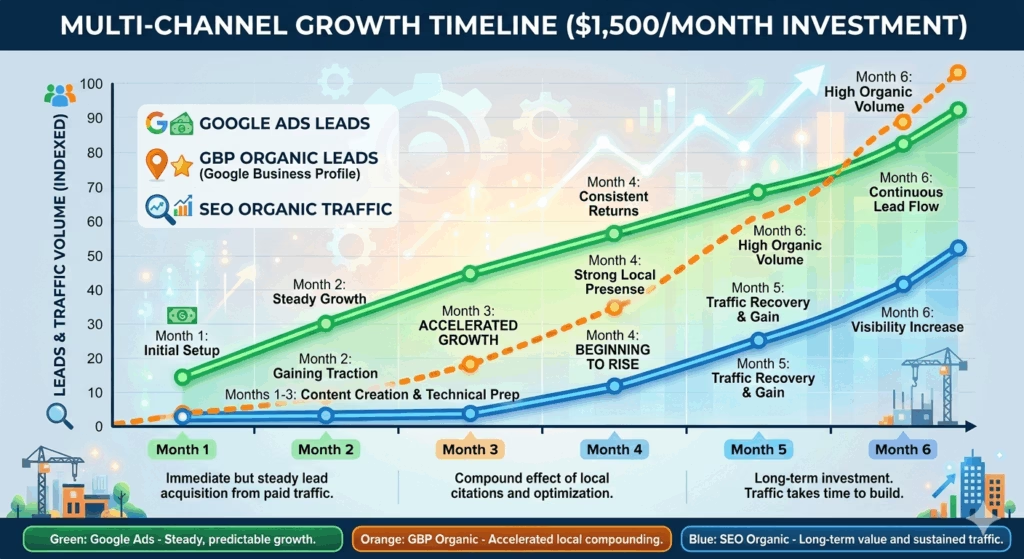
One of the most important things to understand about a $1,500/month marketing budget is that results don’t arrive on a flat timeline. Here’s a realistic picture of what each phase looks like.
Month 1: Foundation Setting
This is the highest-cost, lowest-immediate-return month. You’re building the infrastructure that makes everything else work.
What gets done:
- Google Business Profile fully optimized (all sections complete, photos uploaded, review request process activated)
- CRM set up with lead capture connected to all contact forms and inquiry sources
- Auto-response and follow-up sequence activated and tested
- Google Ads campaign structured, keywords researched, negative keyword list built, tracking installed
- Or SEO audit completed and first content pieces commissioned
What you see: Very little, visibly. Some early ad clicks. A few review requests going out. No rankings change yet from SEO.
What’s actually happening: The foundation that will produce consistent results over the next 6–12 months is being built correctly. The temptation to judge Month 1 by lead volume is understandable resist it. Judging a foundation by the height of the walls is how you end up rebuilding.
Month 2: Early Signal
What gets done:
- First Google Ads optimization pass based on real click and conversion data
- First 3–5 Google reviews coming in from the new request process
- GBP beginning to gain engagement (more profile views, click-through improvement)
- First SEO content published and indexed (if SEO route was chosen)
What you see: First paid leads arriving from Google Ads (typically 3–8 in month 2 as the campaign exits the learning phase). First reviews improving GBP trust signals. Minor SEO movement, if any.
What to measure: Cost per lead from ads. Review count vs. last month. GBP profile views week-over-week.
Month 3: Traction Building
What gets done:
- Google Ads campaign fully past the learning phase and optimized based on real data
- 8–15 reviews accumulated, GBP rating and volume visibly improving
- First SEO rankings movement for lower-competition keywords (if SEO route)
- Social content amplification added to the strategy
What you see: More consistent lead flow from paid channel. GBP beginning to appear in Local Pack for some queries. First organic keyword rankings in positions 10–30 for targeted terms.
What to measure: Lead volume per channel, cost per lead, close rate on leads generated. Is the CRM follow-up sequence producing appointments?
Months 4–6: Compounding Begins
What gets done:
- Ongoing optimization, content production, and review accumulation
- GBP gaining ground in Local Pack potentially generating 5–12 free leads/month in lower competition markets
- Paid campaign hitting a steady rhythm of 10–18 leads/month
- SEO producing first measurable organic traffic to service pages
What you see: The most exciting month-over-month progress in the campaign. Lead volume increasing. Cost per lead decreasing as conversion rate improves from the accumulated reviews and refined landing pages. First signs of channel diversification not entirely dependent on one source.
What If You Don’t Have a Website Yet?
For shed and construction businesses that don’t yet have a professional website or have one that clearly isn’t working the first two to three months of the $1,500/month budget need to be reallocated toward website development.
A professional, conversion-focused website built for a shed or construction company runs approximately $2,500–$6,000 as a one-time investment. That can be funded in two to four months of budget redirect or financed separately.
During the website build period, focus your monthly budget on:
- Google Business Profile optimization and review generation (free lead source that works with or without a strong website for phone calls and map clicks)
- CRM setup (so you’re ready to capture leads the moment the site launches)
- Basic Google Ads to a simple landing page (even a temporary one-page site with a strong CTA can convert paid traffic while the full site is built)
Do not run a significant SEO campaign to a website you’re about to replace. SEO work on the old site is largely wasted when the new one launches.
A purpose-built website for shed dealers and construction businesses is the highest-leverage infrastructure investment at this budget level because it improves the ROI of every other dollar in the stack the moment it goes live.
The Compounding Math: How $1,500/Month Grows Over Time
Here’s the long-term picture that makes the early patience worth it.
At Month 1: $1,500 spent. Leads: 3–5 (mostly paid). Revenue from marketing: early.
At Month 6: $9,000 total invested. Leads: 12–20/month from combined channels. GBP beginning to contribute free leads. Close rate improved from accumulated reviews.
At Month 12: $18,000 total invested. Leads: 18–30/month. GBP generating 8–15 free leads/month. SEO beginning to contribute organic traffic. Paid channel optimized to lowest cost-per-lead yet. CRM recovering 15–20% of leads that would have previously gone cold.
The key insight: The cost-per-lead from your marketing investment decreases over time as the fixed foundation costs stay constant but the lead volume increases. At Month 12, you’re generating significantly more leads than at Month 1 for the same monthly spend because the owned assets (GBP ranking, SEO content, review volume) are producing without requiring proportional additional investment.
This is the compounding effect of building owned marketing assets rather than purely renting visibility through advertising.
How to Know If Your $1,500/Month Is Working
A common mistake at this budget level: measuring the wrong things and either pulling the plug too early or throwing good money after a bad strategy too long.
Here’s what to track monthly and what the numbers should look like if the allocation is working:
Leads generated per channel:
- Google Ads: 8–18 leads/month by Month 3
- GBP (calls + direction requests): 5–15 actions/month by Month 4–6
- Organic (SEO): 3–10 visitors/month from target keywords by Month 6 (growing from there)
Cost per lead (CPL) from Google Ads:
- Month 2: $60–$120 (still in learning phase)
- Month 6: $35–$80 (optimized, negative keywords in place)
- Month 12: $25–$65 (fully optimized with historical data)
Google review count (monthly net new):
- Month 1–2: 2–4 new reviews
- Month 3–6: 4–8 new reviews/month
- Month 6+: 6–10 new reviews/month with a consistent request system
Close rate on leads:
- Month 1: Baseline (whatever it was before)
- Month 3: Should show improvement from CRM follow-up automation
- Month 6: Target 30–45% close rate on qualified leads
Website conversion rate (visits to contacts):
- Target: 4–8% of website visitors taking a contact action
- If below 3%: Landing page or conversion issue needs to be addressed before increasing traffic spend
If your numbers are consistently below these benchmarks after six months of disciplined execution, investigate the specific channel that’s underperforming before adding budget. More spend on a broken channel produces more waste not more leads.
The Scenarios Where $1,500/Month Falls Short (And What to Do)
There are specific market conditions where $1,500/month produces less than the benchmarks above — and it’s worth naming them honestly so you’re not troubleshooting a strategy problem when you’re actually facing a market problem.
Highly competitive urban markets: In major metros where roofing or construction companies are spending $5,000–$15,000/month on Google Ads, your $500–$600 in ad spend competes for the same clicks at the same cost-per-click. Your budget runs out faster, generates fewer leads, and produces a higher cost-per-lead than the same spend in a smaller market.
What to do: Lean harder on GBP and SEO owned channels where money doesn’t directly buy position. Tighten your ad geographic targeting to a very small radius where you have the best competitive positioning.
Established markets with dominant incumbents: If three competitors each have 200+ reviews, top-three Local Pack positions, and first-page SEO rankings across all your target keywords, displacing them with a $1,500/month budget takes longer than in a market where those positions are open.
What to do: Focus first on review velocity accumulating reviews faster than incumbents are. Target lower-competition long-tail keywords in your SEO content. Use ads to stay visible while organic position builds.
Business models with very high average ticket prices: A shed company with an average sale of $3,500 has different ROI math than one with a $15,000 average sale. At the lower ticket, a cost-per-lead of $75 and a 25% close rate means a cost-per-job of $300 which may eat a meaningful percentage of margin. Understanding your specific margin math tells you what cost-per-lead is acceptable and whether $1,500/month makes financial sense at your price point.
What to do: Track cost-per-booked-job, not just cost-per-lead. If the math is tight, prioritize free channels (GBP, SEO, referrals) over paid.
When to Increase the Budget
$1,500/month is a starting foundation not a ceiling. Here’s how to know when you’ve outgrown it:
Signal 1: Your paid leads are consistently converting and your close rate is above 30%, but you’re turning down jobs because of capacity not budget. This isn’t a marketing problem. Fix capacity before adding marketing spend.
Signal 2: Your GBP is ranking competitively, your ads are generating leads at a profitable cost-per-lead, and your website is converting at 5%+ but you want to add a second service area or a new service line. Expand the budget proportionally to support the new growth vector.
Signal 3: Your cost-per-lead has been decreasing month-over-month for three consecutive months, and the ROI on the last dollar spent is clearly positive. This is the signal that more investment in the same direction continues to produce positive returns. Scale up.
Signal 4: You’re ready to add a second primary growth channel. You’ve been running ads and building GBP for six months successfully now you want to add a serious SEO investment on top. Budget for it properly rather than squeezing it into the existing allocation.
A comprehensive marketing strategy review at the 6-month mark helps identify whether the current allocation is optimally deployed or whether specific channels merit more investment based on real performance data rather than intuition or habit.
The Bottom Line: $1,500/Month Is Enough to Start. It’s Not Enough to Do Everything.
The businesses that get the most out of a $1,500/month marketing budget are the ones that resist the temptation to do everything at once, pick the two or three channels they can execute well, build the infrastructure that makes those channels work, and stay consistent long enough to let the compounding take effect.
The businesses that waste it are the ones that try to be everywhere, spread the money too thin, switch strategies every 60 days when results aren’t instant, and never give any single approach long enough to produce the data needed to improve it.
$1,500/month, allocated with discipline and executed consistently, will move the needle for a shed or construction business in most markets. It won’t happen in 30 days. It will happen in 90–180 days and it will keep improving from there.
Build the foundation. Pick your primary channel. Measure what matters. Give it time.
That’s what the money actually buys.
Why Schedule a Call?
Popular Insights
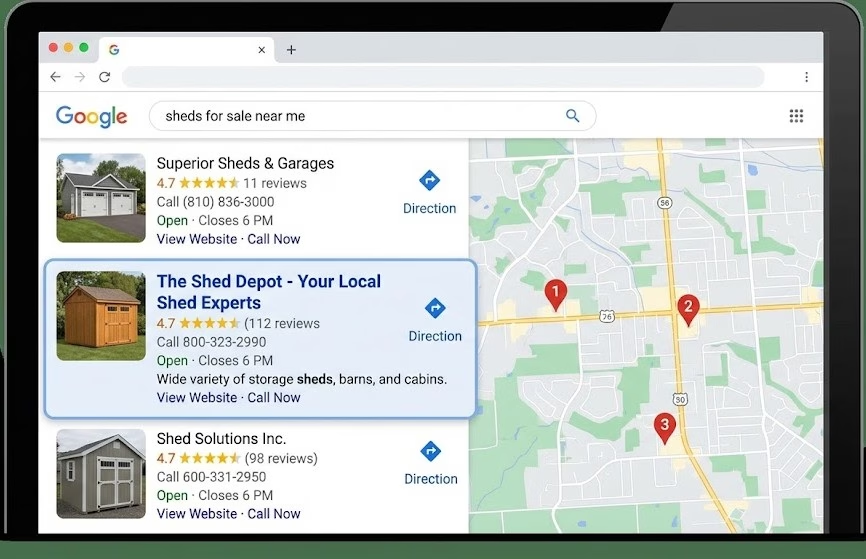
The Shed Dealer’s Digital Playbook: How to Get Found Online and Fill Your Lot
Aug. 21, 2026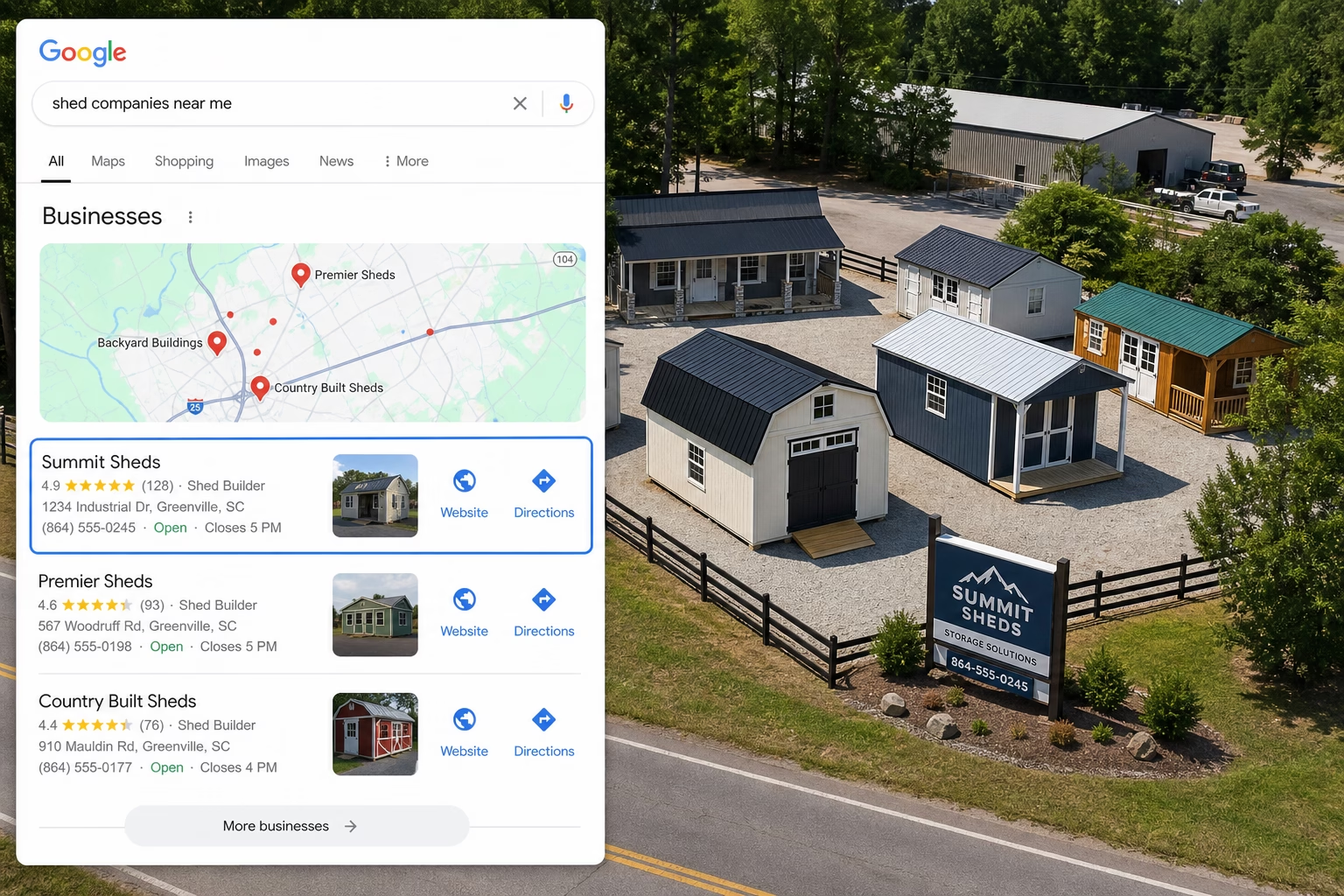
The Shed Business Owner’s Blueprint for Getting Found on Google
Aug. 14, 2026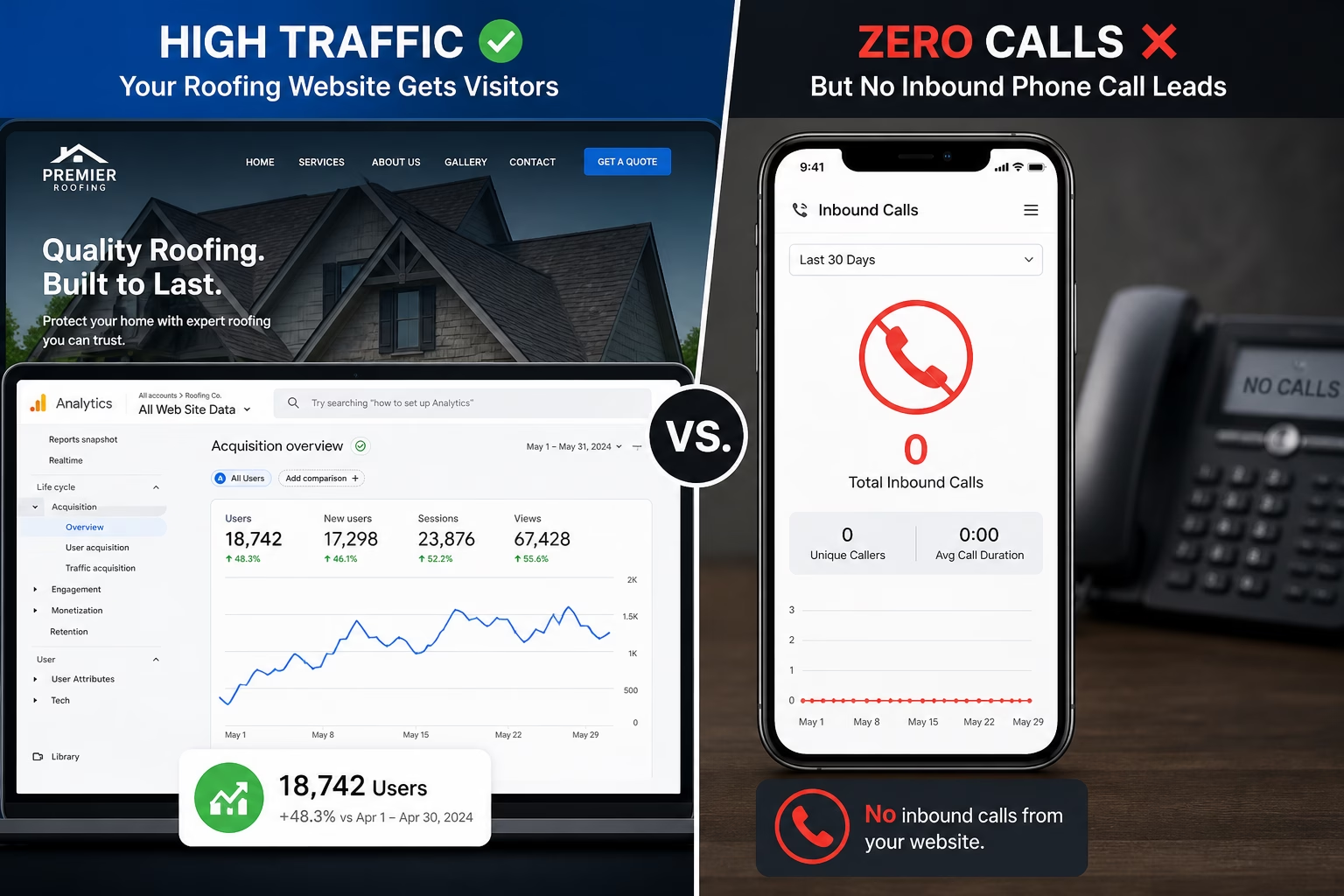
Why Your Roofing Website Gets Traffic But No Phone Calls (And How to Fix It)
Aug. 07, 2026How to Use Video to Book More Jobs as a Roofer or Builder (Even If You Hate Being on Camera)
Jul. 31, 2026The Anatomy of a High-Converting Contractor Website: What Customers Actually Look for Before Calling
Jul. 24, 2026Topics
Pudgy Squirrel Marketing
The Shed Dealer’s Digital Playbook: How to Get Found Online and Fill Your Lot
Read More
Pudgy Squirrel Marketing
The Shed Business Owner’s Blueprint for Getting Found on Google
Read More
Pudgy Squirrel Marketing
Why Your Roofing Website Gets Traffic But No Phone Calls (And How to Fix It)
Read More

Pudgy Squirrel Marketing
How to Use Video to Book More Jobs as a Roofer or Builder (Even If You Hate Being on Camera)
Read More
Pudgy Squirrel Marketing
The Anatomy of a High-Converting Contractor Website: What Customers Actually Look for Before Calling
Read More

Pudgy Squirrel Marketing
Seasonal Marketing: How Smart Contractors Stay Busy in the Slow Season
Read More
Pudgy Squirrel Marketing
What Does a $1,500/Month Marketing Budget Actually Get a Shed or Construction Business?
Read More
Pudgy Squirrel Marketing
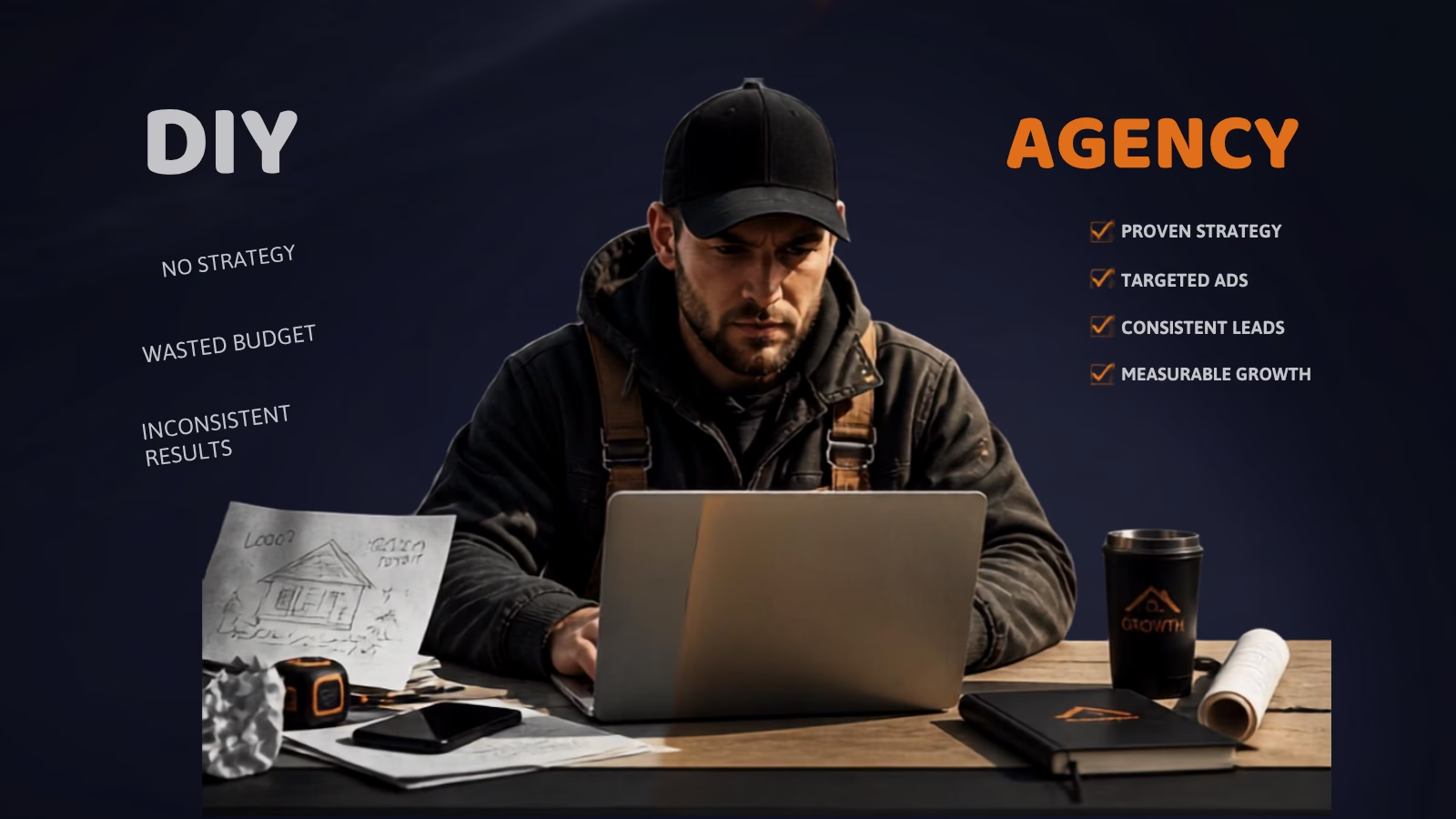
DIY vs. Agency: Should a Roofing Company Handle Their Own Marketing?
Read More