
Get In Touch
What to Post on Facebook When You’re a Contractor (And Have No Time to Think About It)
By Tony
May 15, 2026 12 mins
Share this post


Digital Marketing Solutions Tailored for Construction, Roofing, and Shed Businesses
Digital Marketing Solutions Tailored for Construction, Roofing, and Shed Businesses
Digital Marketing Solutions Tailored for Construction, Roofing, and Shed Businesses
Key Takeaways
- Most contractors don’t fail at social media because they’re bad at marketing they fail because they don’t have a repeatable system that fits into a real workday.
- The best-performing Facebook content for contractors is already happening at the job site every day. You just need to capture it.
- Five content categories cover 90% of what a contractor should ever post and rotating through them eliminates the “what do I even say?” paralysis.
- Short, authentic phone videos consistently outperform polished graphics for engagement and reach on Facebook in 2025–2026.
- Facebook posts alone don’t generate leads. Posts need to be connected to a clear next step and that next step needs a system behind it to convert interest into booked jobs.
- Consistency beats perfection. Three average posts a week outperform one perfect post per month every single time.
The Contractor’s Social Media Problem (It’s Not What You Think)
Pull up a random contractor’s Facebook page. You’ll usually find one of two things:
A feed of sporadic posts a few project photos from three months ago, a shared meme, a post promoting a seasonal special that got two likes and then nothing. A long, quiet gap that communicates, however unintentionally, that the business might not be all that active.
Or you’ll find nothing at all. A page created years ago and abandoned after the first week.
This isn’t laziness. It’s a systems problem.
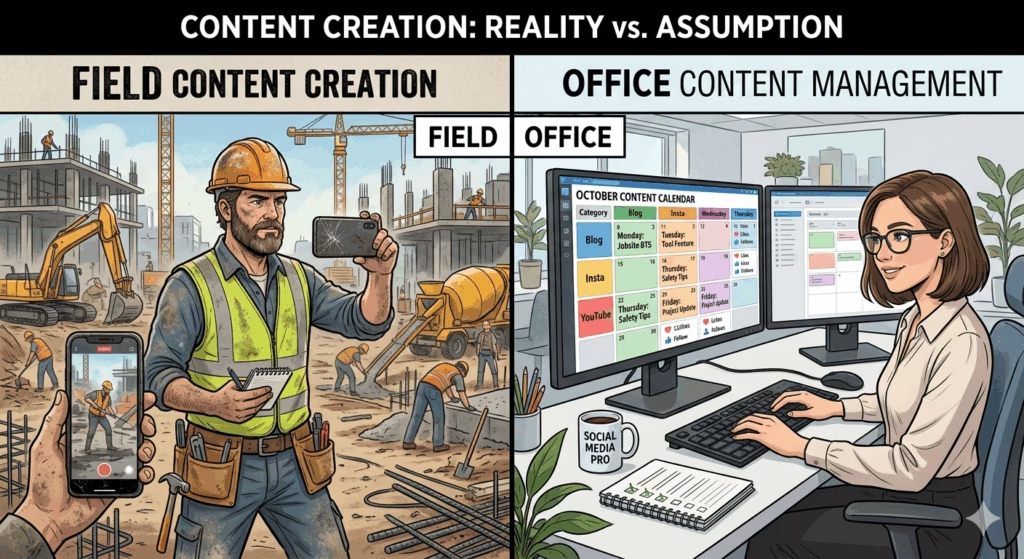
Contractors are running crews, quoting jobs, managing materials, dealing with weather delays, and putting out fires all day. Sitting down to craft a thoughtful Facebook post isn’t just low on the priority list on most days, it’s not on the list at all.
The advice most marketing content gives “create a content calendar,” “batch your content on Sundays,” “hire a social media manager” is technically sound but completely disconnected from the reality of running a field-based business.
This post is different. It’s built around what a contractor can actually do, with what they already have, in the time they realistically have to spare.
Why Facebook Still Matters for Contractors in 2025
Before getting into the what and how, let’s address the question some contractors are already thinking: Does Facebook even matter anymore?
For contractors specifically yes, more than most other industries.
Here’s why:
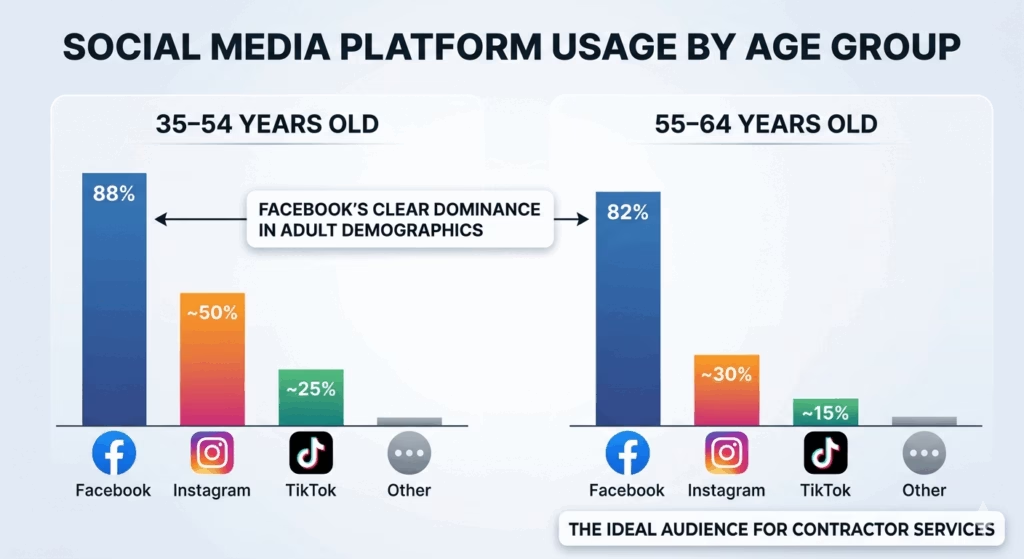
- Your buyers are there. Homeowners between 35 and 65 the demographic that hires the most contractors remain the most active age group on Facebook. They’re not on TikTok looking for your next roof replacement. They’re on Facebook.
- Local reach is unmatched. Facebook’s algorithm still heavily favors local content. A post showing a project completed two streets over from a potential customer has a legitimate shot at appearing in their feed organically.
- Facebook Marketplace and Groups drive direct inquiries. Many contractors generate consistent leads just from Marketplace listings and local community group activity neither of which requires polished content.
- It builds trust before the first call. A potential customer who finds your business on Google will often check your Facebook page before they pick up the phone. An active, professional page converts that curiosity into contact. A dead page does the opposite.
- It’s free. Organic Facebook content costs nothing but time and this post is about minimizing even that.
The 5 Content Categories Every Contractor Needs
The fastest way to eliminate “I don’t know what to post” is to stop treating every post as a blank canvas and start thinking in categories.
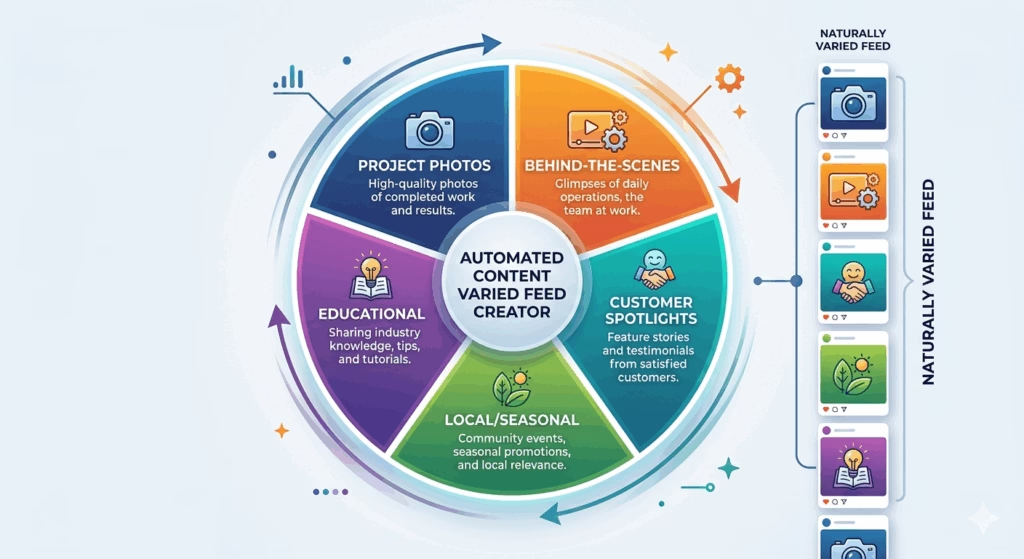
These five categories cover the full range of what contractors should post on Facebook and cycling through them gives you a built-in rotation that keeps your page varied, relevant, and consistently active.
Category 1: Project Photos and Progress Shots
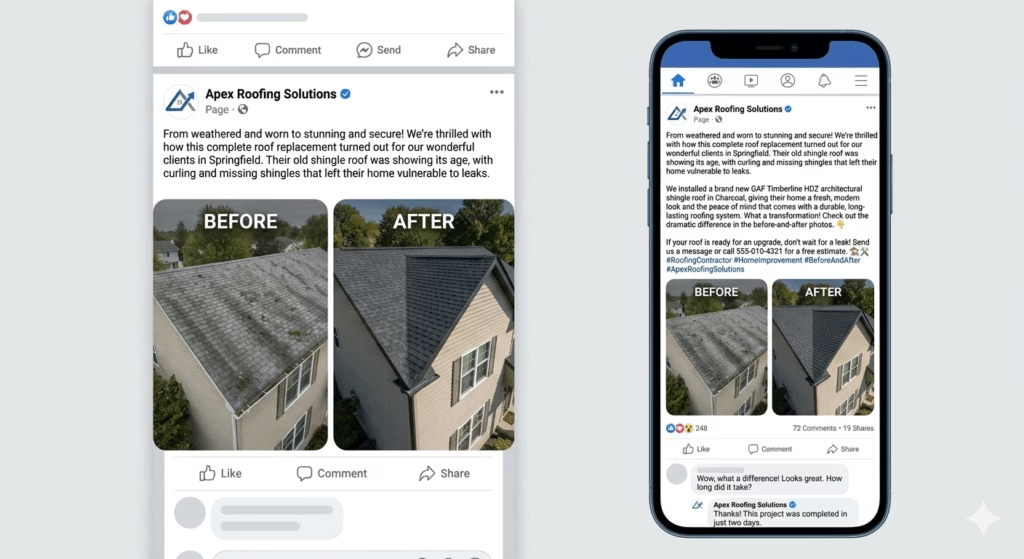
This is your bread and butter. Before-and-after photos are the single highest-performing organic content type for contractors on Facebook and you’re already standing next to the content every day.
What to capture:
- A “before” shot when you arrive at the job site
- A mid-project progress shot (this builds anticipation and shows process)
- The finished product from the best angle, in good light
- Wide shots that show scale, and close-ups that show craftsmanship detail
What to write in the caption:
You don’t need a paragraph. Two to four sentences is plenty.
Lead with the result, add a brief detail that shows expertise, and close with a soft call-to-action:
“Wrapped up a full roof replacement in Wichita today stripped down to the deck, addressed some soft spots we found underneath, and installed 30-year architectural shingles. Looks good and built to last. If your roof’s been on your mind, give us a call we’re booking estimates now.”
Notice what that caption does: it’s human, it demonstrates knowledge without being technical, and it ends with a clear next step. No hashtag avalanche needed.
One important note on photo quality:
You don’t need a professional camera. But you do need to:
- Shoot in good light (overcast days are actually ideal no harsh shadows)
- Hold the phone horizontally for wide shots
- Remove debris and equipment from the frame before shooting the “after”
The bar is “clearly shows the quality of the work” not “could run in a magazine.”
Category 2: Behind-the-Scenes and Process Content
Buyers are curious about what actually happens on a job site. Most have never seen a roof stripped to the deck, a foundation form poured, or a shed delivered and set in a backyard. That curiosity is a content opportunity.
Behind-the-scenes content does something project photos alone can’t: it builds trust by showing the work, not just the result. When a homeowner sees you checking for rot before you re-sheath a roof deck, they understand you’re not cutting corners. That’s worth more than any number of “We’re the best!” posts.
Quick behind-the-scenes ideas:
- A 30-second video panning across your crew’s setup at the start of a job
- A photo of materials being delivered with a caption explaining why you use that specific brand or grade
- A short video of a technique “Here’s how we ensure proper flashing around a chimney so water never gets in”
- A time-lapse or series of photos showing a project from start to finish posted as a Facebook photo album
What to say:
The caption doesn’t need to be educational. It just needs to be real.
“Early start in Overland Park this morning. Six-square tear-off on a two-story this is what the first hour of a full replacement looks like before the new material goes down.”
That’s it. Authentic, specific, professional. No fluff.
Category 3: Customer Spotlights and Testimonials
Social proof is the most persuasive force in local service marketing and Facebook is built for it.
When a satisfied customer leaves you a Google review, that’s one touchpoint. When you turn that same review into a Facebook post with a photo of the finished job it becomes a piece of content seen by potentially hundreds of local homeowners.
How to do this without it feeling awkward:
- Ask permission to feature the customer (most are happy to be highlighted, especially if you tag them)
- Pair the quote with a project photo
- Keep the caption brief let the customer’s words carry the post
“‘Best contractor we’ve ever hired showed up on time every day, kept us informed the whole way through, and the finished deck is better than we imagined.’ Sarah M., Lenexa KS. Really appreciate the kind words, Sarah. This cedar deck turned out beautifully.”
Simple. Authentic. Persuasive to anyone who reads it.
You can also screenshot Google reviews directly and post the screenshot as an imagethis visually reinforces your star rating while making the testimonial feel verifiable.
Category 4: Local and Seasonal Relevance Posts
One of Facebook’s biggest advantages for contractors is its local algorithm. Posts that reference specific neighborhoods, cities, weather events, or community moments get disproportionate organic reach compared to generic content.
This category also requires the least effort because you’re simply connecting your work to what’s already happening.
Ideas in this category:
- Weather-triggered posts: After a hailstorm, post about what homeowners should look for when inspecting their roof. After the first freeze, post a reminder about gutter maintenance before winter. You’re being helpful and reaching exactly the people who just experienced the relevant event.
- Neighborhood posts: “Working in Olathe this week if you’ve noticed your neighbors getting new siding, here’s why this time of year is a great window to get on the schedule.”
- Seasonal booking posts: “We just opened up spots for spring installs booking now for April and May. If you’ve been putting off [project], now’s a good time to get on the calendar before the rush.”
These posts are low-effort and high-relevance exactly the combination that drives organic reach.
Category 5: Educational “Did You Know” Posts
You know things your customers don’t. That knowledge gap is a content opportunity and sharing useful, practical information positions you as the trusted expert in your trade, not just another contractor asking for business.
Educational posts don’t need to be long. A single useful fact, explained in plain language, is enough.
Examples by trade:
Roofing: “Did you know most roof warranties become void if a second layer of shingles is installed over an existing one? A proper tear-off isn’t just about aesthetics it protects your investment. We always inspect before we recommend.”
Shed/Construction: “A 12×20 shed placed directly on the ground will have moisture and rot issues within a few years regardless of how well it’s built. A proper gravel pad or concrete foundation is the difference between a 10-year shed and a 30-year shed.”
General contractor: “One of the most overlooked items in any remodel is permit pulls. Work done without proper permits can void homeowner insurance coverage and create serious problems at resale. Always ask your contractor if permits are required and if they’re pulling them.”
These posts generate saves and shares which signals to Facebook that the content is valuable and expands its organic reach significantly.
A Simple Weekly Posting Framework
You don’t need to post every day. For most contractors, three posts per week is the sweet spot enough to maintain consistent visibility without turning content creation into a part-time job.
Here’s a framework that works:
Monday — Project or Progress Post Share a photo or short video from the current or most recently completed job. Write two to four sentences. Done in under five minutes if you captured the photo on site.
Wednesday — Behind-the-Scenes or Educational Post A quick tip, a process video, a material explanation. This can be written from memory in two minutes you already know the information. The challenge is just sitting down to type it.
Friday — Social Proof or Local Post A customer testimonial, a Google review screenshot, or a neighborhood/seasonal relevance post. These tend to get high engagement because they’re personal and locally specific.
That’s twelve posts a month. At five to ten minutes per post, that’s under two hours of total effort. Most contractors spend longer than that waiting on a supplier callback.
The goal isn’t viral content. The goal is a consistent, professional presence that proves to every potential customer who checks your page that your business is active, skilled, and trustworthy.
The Phone Video Strategy That Outperforms Everything Else
Here’s something counterintuitive: the most polished content is rarely the best-performing content for contractors on Facebook.
Short, authentic phone videos shot vertically, without scripts, showing real work in progress consistently outperform stock-photo graphics, professionally designed promotional images, and even high-quality camera photos in terms of organic reach and engagement.
Why? Because Facebook’s algorithm actively promotes video content. And because authenticity builds trust in a way that produced content simply doesn’t.
A 60-second phone video formula that works:
- Point and frame — Stand back from the project or material you’re showing. Keep the camera steady.
- One sentence of context — “We’re about halfway through a full deck replacement in Shawnee. Here’s what we pulled up when we got into the framing…”
- Show the thing — Pan slowly. Let the viewer see what you see. No cuts needed.
- One sentence close — “This is why we always recommend a structural inspection before any surface-level deck work. Saves homeowners from major surprises down the road.”
- End naturally — You don’t need a branded outro or a call-to-action every time. Let a few videos just be informative.
That video took three minutes to shoot and will outperform a $200 graphic post. Shoot it on the job site, upload directly to Facebook (not through Instagram first native uploads get preferential reach), and write a caption in two sentences.
Do this twice a week for a month and watch what happens to your page engagement.
What NOT to Post (The Mistakes That Kill Contractor Pages)
Knowing what to avoid is as valuable as knowing what to do.
Don’t post stock photos. Homeowners can tell immediately when the photo isn’t yours and it undermines the authenticity that makes contractor social media effective in the first place. If you don’t have a current project photo, skip the post entirely. Silence is better than fake.
Don’t over-promote. A page that’s 80% “Call us today for a free estimate!” posts feels like a billboard, not a business worth following. The general rule: for every promotional post, publish at least two posts that offer value or authenticity first.
Don’t argue in the comments. If a dissatisfied customer leaves a negative comment on a post, respond once, briefly, professionally, and offer to resolve it offline. Then stop. Public arguments damage your reputation with every person who reads them not just the person you’re arguing with.
Don’t share irrelevant content. Political posts, controversial shares, and off-brand memes alienate portions of your audience no matter which direction they lean. Your Facebook page is a business asset keep it focused on your work and your customers.
Don’t go dark for weeks and then post a burst. Sporadic activity silence followed by five posts in one day followed by more silence signals to Facebook’s algorithm that your page isn’t worth promoting. Consistent spacing matters.
Turning Facebook Engagement Into Actual Leads
Here’s the gap most contractor Facebook strategies miss entirely: generating engagement is not the same as generating business.
Someone who likes your post is not a lead. Someone who comments “great work!” is not a lead. They become a lead when they take a specific action call, DM, form fill that puts them in your pipeline.
Every post you publish should have a clear, low-friction next step available:
- Your phone number visible in your page’s cover image or about section
- A “Book a Free Estimate” button active on your page
- A pinned post at the top of your page with your most important call-to-action
- Occasional posts that explicitly invite action: “We have two spots open for June message us to get on the calendar”
But even that’s only half the system. When a lead comes in through Facebook DM, do you respond within the hour? Within the day? Do leads from Facebook go into the same follow-up sequence as leads from your website?
If the answer is “it depends on who checks the page,” you’re losing sales that the Facebook content worked to generate. Connecting your social media activity to a CRM that captures and follows up on every inquiry automatically is what closes the loop between a liked post and a signed contract.
When to Consider Paid Facebook Ads
Organic Facebook content builds presence and trust over time. Paid ads generate leads fast.
For contractors, Facebook Ads work best for:
- Promoting a specific seasonal offer (“Spring Roof Inspections Free This Month”)
- Retargeting website visitors who’ve already shown interest but haven’t contacted you
- Reaching new homeowners in your service area who don’t yet know your business exists
- Amplifying high-performing organic posts if a project photo is getting strong organic engagement, a small spend behind it can expand its reach to thousands more local homeowners
The minimum viable budget for most contractor Facebook ad campaigns is $300–$500/month. The key is targeting ads served to homeowners within your service radius, in relevant income brackets, with interests in home improvement, real estate, or outdoor living will dramatically outperform untargeted spend.
Ad creative that converts: authentic project photos or short videos, a simple value proposition headline, and a single call-to-action. The same content that performs well organically almost always performs well as an ad which is one more reason to invest in the organic content habits first.
A properly managed social media and online advertising strategy combines organic content consistency with targeted paid amplification so your best work gets seen by the right people, not just whoever already follows your page.
The Content Capture Habit: How to Never Run Out of Things to Post
The single biggest unlock for contractors who struggle with social media consistency isn’t better ideas it’s a better capture habit.
Here’s the challenge: the best content moments happen in the field, where you’re focused on the work, not your phone. By the time you get home or back to the office, the shot is gone.
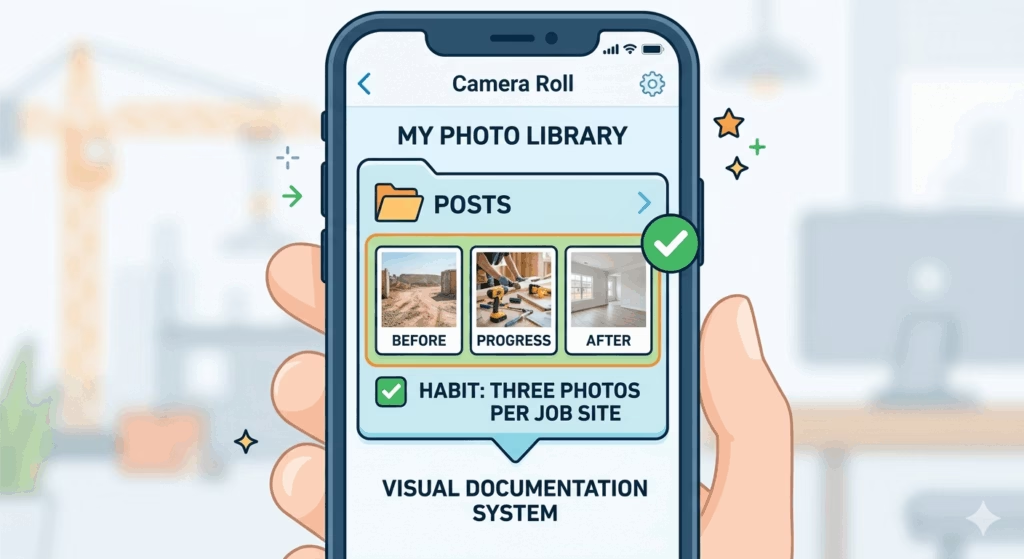
The solution is a dead-simple habit: before you leave any job site, take three photos.
Just three. No thinking required. Before shot, mid-point or detail shot, after shot. Put them in a dedicated camera roll album labeled “Posts.”
When you have a few minutes waiting on a call back, sitting in the truck at lunch pull from that album and write a two-sentence caption. Upload it natively to Facebook. Done.
No content calendar. No scheduling software. No monthly planning session. Just three photos per site and five minutes of writing when it’s convenient.
Do that consistently and you’ll never stare at a blank “What’s on your mind?” box again.
Your 30-Day Facebook Quick-Start Plan
You don’t need to figure this all out at once. Here’s a simple first month:
Week 1 — Set the Foundation
- Update your profile photo (use your logo or a professional headshot), cover image (a great project photo), and About section (include your phone number, service area, and website)
- Pin a post to the top of your page with your most important call-to-action
- Enable the “Book Now” or “Call Now” button on your page
Week 2 — Start the Habit
- Take three photos at every job site this week
- Post one project photo with a two-to-four sentence caption
- Post one behind-the-scenes or educational post
Week 3 — Add Social Proof
- Find your best Google review and turn it into a Facebook post
- Post a second project photo from your growing camera roll
- Post one local or seasonal relevance post
Week 4 — Evaluate and Adjust
- Check which posts got the most engagement make a note of what type and why
- Double down on the format that performed best
- Set a recurring reminder on your phone for Monday, Wednesday, and Friday: “Post to Facebook”
The Bottom Line
Facebook for contractors isn’t about going viral. It isn’t about building a massive following or becoming a content creator. It’s about one thing: making sure that when a homeowner in your area is looking for someone to do the work you do, your business shows up and looks like the obvious, trustworthy choice.
You already have everything you need to make that happen. The work. The results. The expertise. The satisfied customers.
You just need a system simple enough to actually stick to.
Three photos per job site. Five minutes of writing when you can find it. Three posts a week. A consistent presence that compounds over months into a lead source that works even when you’re on the roof.
Start this week. Not perfectly. Just start.
Recent Post
Shed Business Marketing 101: How to Sell More Sheds Without Relying on Lot Traffic
The 5-Star Formula: How Contractors Can Generate More Google Reviews Without Being Pushy
Why Every Roofing Company Needs a Dedicated Landing Page for Each Service
Sniper Marketing: How Small Shops Win at Google Ads Without Corporate Budgets
Stop Chasing Strangers: Why Customer Lifetime Value is the Real Growth Engine
You Might Also Like
Explore additional articles based on your interests.
View All
Uncategorized
What to Post on Facebook When You’re a Contractor (And Have No Time to Think About It)
Read More
Uncategorized
Shed Business Marketing 101: How to Sell More Sheds Without Relying on Lot Traffic
Read More
Uncategorized
The 5-Star Formula: How Contractors Can Generate More Google Reviews Without Being Pushy
Read More
Uncategorized
Why Every Roofing Company Needs a Dedicated Landing Page for Each Service
Read More
Uncategorized
Sniper Marketing: How Small Shops Win at Google Ads Without Corporate Budgets
Read More
Uncategorized
Stop Chasing Strangers: Why Customer Lifetime Value is the Real Growth Engine
Read More
Uncategorized
The Great Florida Migration: How Site Speed and Core Web Vitals Impact Your Rankings
Read More
Uncategorized
Local SEO Checklist for 2026: 5 Ways to Own the Google Maps “3-Pack”
Read More