
Get In Touch
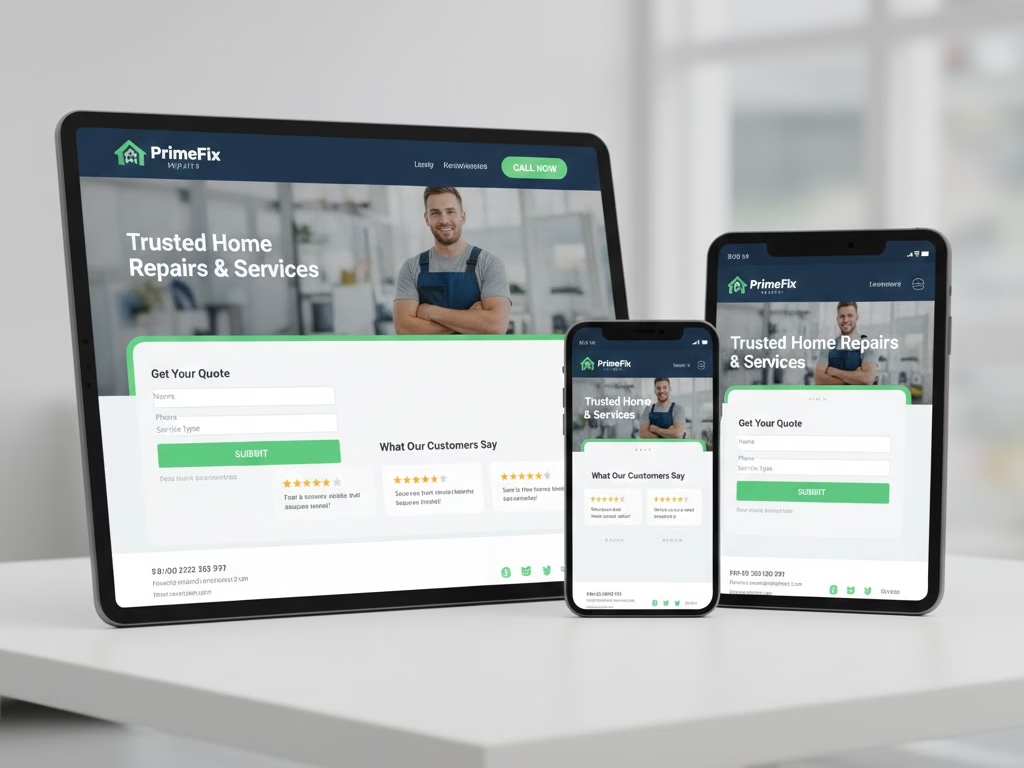
Why Every Roofing Company Needs a Dedicated Landing Page for Each Service
By Tony
April 24, 2026 7 mins
Share this post


Digital Marketing Solutions Tailored for Construction, Roofing, and Shed Businesses
Digital Marketing Solutions Tailored for Construction, Roofing, and Shed Businesses
Digital Marketing Solutions Tailored for Construction, Roofing, and Shed Businesses
Key Takeaways
- A single “Services” page splits your SEO authority across every offering, diluting your rankings for all of them.
- Dedicated landing pages let Google clearly understand what each page is about, dramatically improving your chances of ranking for high-intent, bottom-of-funnel keywords.
- Service-specific pages convert better because they match the exact intent of the visitor they searched for “metal roof installation,” and that’s exactly what they land on.
- Each landing page becomes an independent asset for paid ad campaigns, reducing your cost-per-click and improving Quality Score.
- Roofing companies that combine dedicated landing pages with a strong SEO strategy and lead generation system create a compounding growth engine that works 24/7.
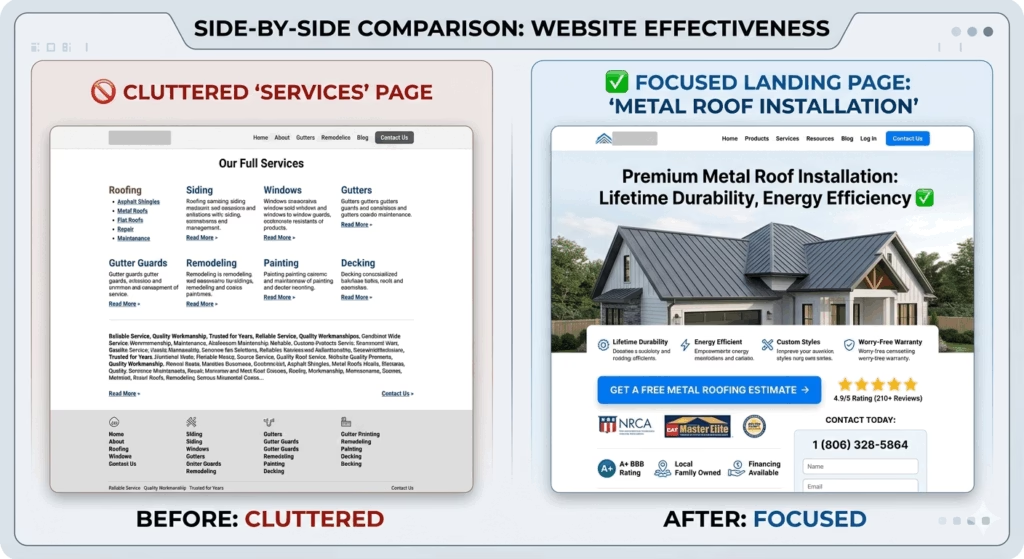
The Problem With the “One Page Fits All” Approach
Most roofing company websites follow the same tired template: a homepage, an about page, a contact page, and one catch-all “Services” page that lists everything from asphalt shingle replacement to metal roofing to storm damage repair all in one place.
It feels efficient. It’s actually a growth killer.
Here’s what’s really happening when you lump all your services onto a single page:
- Google can’t rank you confidently for any one service. Search engines reward specificity. A page that tries to rank for “asphalt shingle roofing,” “metal roof installation,” “flat roof repair,” and “roof inspections” at the same time ends up dominating none of them.
- Your bounce rate climbs. A homeowner searching for “TPO flat roof replacement” doesn’t want to scroll past five other services to find what they need. They’ll leave.
- Your ad spend bleeds. When you run Google Ads to a generic services page, you’re paying for clicks that land on irrelevant content. Quality Score drops. Cost-per-lead rises.
The fix is straightforward and the roofing companies already doing it are quietly pulling ahead of everyone else in local search.
What Is a Dedicated Service Landing Page?
A dedicated service landing page is a standalone page built around a single roofing service optimized to rank for that specific service in search, designed to convert visitors into booked estimates, and structured to guide one type of buyer through one clear decision.
Think:
/metal-roof-installation//asphalt-shingle-replacement//storm-damage-roof-repair//flat-roof-repair//roof-inspections//gutter-installation/
Each page lives at its own URL, carries its own keyword focus, and speaks directly to the homeowner searching for that exact solution.
This is not about stuffing more pages onto your website. It’s about building a digital sales team one page for each service, each doing its job around the clock.
5 Reasons Dedicated Landing Pages Are Non-Negotiable for Roofing Companies
1. They Win the SEO Battle for High-Intent Keywords
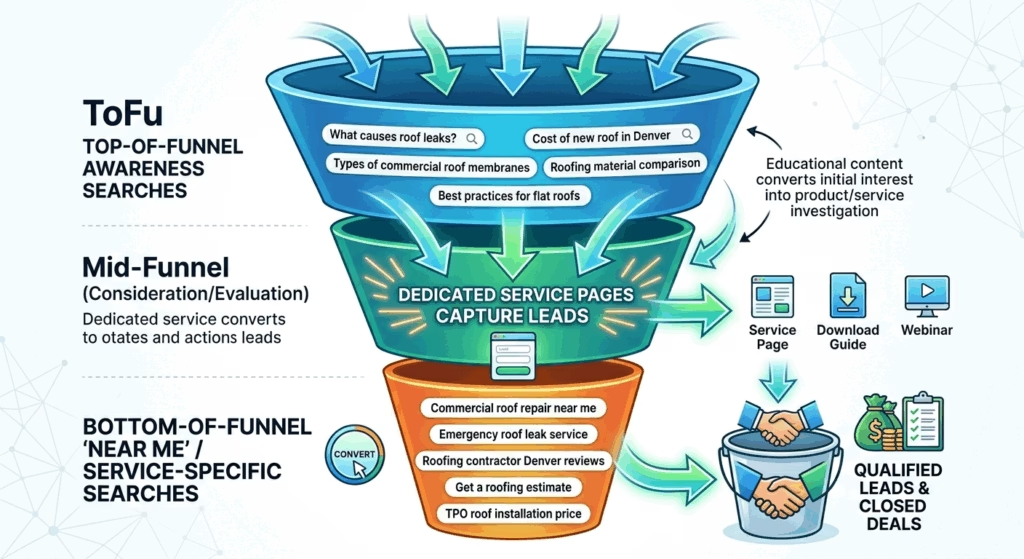
When a homeowner types “metal roof installation near me” into Google, they are not browsing. They are ready to hire. These are called bottom-of-funnel keywords and they are the most valuable traffic you can capture.
A dedicated page for metal roof installation, built with the right keyword strategy, on-page structure, and localized content, gives Google exactly what it needs to rank you for that search. A generic services page does not.
Here’s the math: 10 service-specific pages each ranking for 3–5 targeted keywords vastly outperforms 1 services page trying to rank for 30 keywords at once.
2. They Match Search Intent and Intent Matching Drives Conversions
Google’s algorithms in 2025–2026 prioritize search intent matching above almost everything else. When a visitor’s search query matches the page they land on word for word, topic for topic engagement metrics improve: time on page goes up, bounce rate goes down, form fills increase.
More importantly, the visitor feels like they found exactly what they were looking for. That psychological match is the difference between a lead and a lost click.
A dedicated “Flat Roof Repair” page speaks to:
- The specific problem (flat roof is leaking or deteriorating)
- The specific solution (repair vs. replace)
- The specific trust signals they need (photos of flat roof jobs, relevant testimonials, warranty information)
You cannot replicate that specificity on a shared services page.
3. They Give Your Paid Ads a Fighting Chance
If you’re running Google Ads for your roofing business, this one point alone could save you thousands of dollars a month.
Google assigns every landing page a Quality Score a 1–10 rating that directly affects how much you pay per click and how often your ads show. Quality Score is determined largely by ad relevance to landing page content.
When your ad says “Storm Damage Roof Repair” and it sends visitors to a generic services page, your Quality Score tanks. When it sends them to a dedicated storm damage repair landing page, your Quality Score rises and your cost-per-click drops.
Dedicated landing pages make every dollar you spend on paid advertising work harder.
4. They Build Topical Authority the Currency of Modern SEO
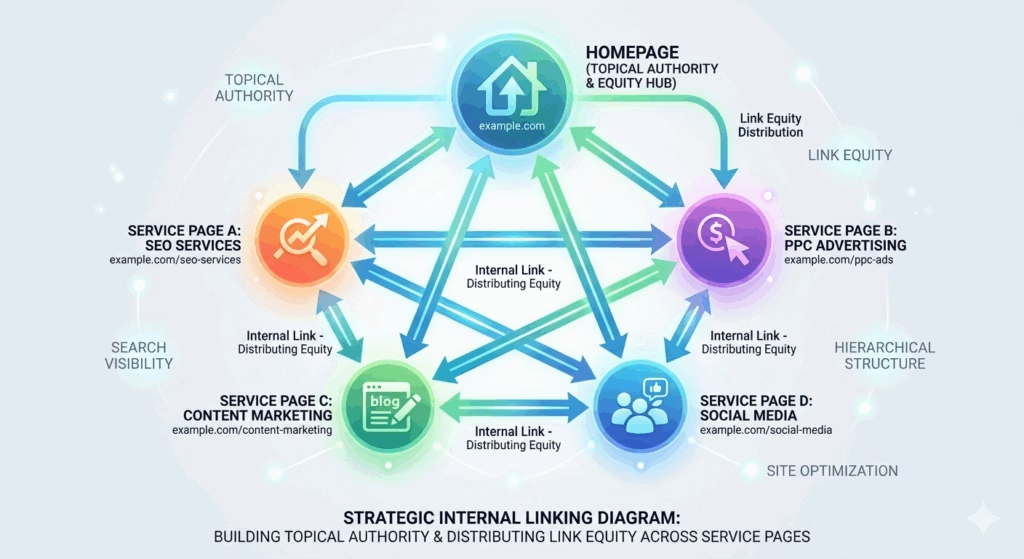
Google’s Helpful Content system and E-E-A-T (Experience, Expertise, Authoritativeness, Trustworthiness) framework reward websites that demonstrate deep knowledge of a topic, not broad surface-level coverage.
When your site has individual, thoroughly developed pages for every roofing service you offer each with unique content, service-specific FAQs, local relevance signals, and visual proof of work your website sends a clear signal: this company is the authority on roofing in this area.
That topical depth compounds over time. The more high-quality service pages you build, the stronger your entire domain becomes. New pages rank faster. Existing pages climb higher.
This is the long-term SEO flywheel that separates market-leading roofing companies from the ones perpetually stuck on page two.
5. They Enable Hyper-Targeted Local SEO
Roofing is inherently local. Your customers are searching “[service] + [city]” “roof replacement Columbus OH,” “metal roofing contractors Tampa FL,” “emergency roof repair Denver.”
Dedicated landing pages let you build geo-specific service pages that combine service intent with local signals:
- Service area mentions woven naturally into the copy
- Local landmarks, weather patterns, and building codes referenced contextually
- Location-specific testimonials and project photos
- Schema markup tying the service to your geographic area
A general services page cannot do this for every service and every city you serve. Dedicated pages can and the roofing companies using this approach are often the ones appearing in the Google Local Pack for multiple service + city combinations simultaneously.
What a High-Converting Roofing Service Landing Page Includes
Building the page is half the battle. Building it right is what generates calls.
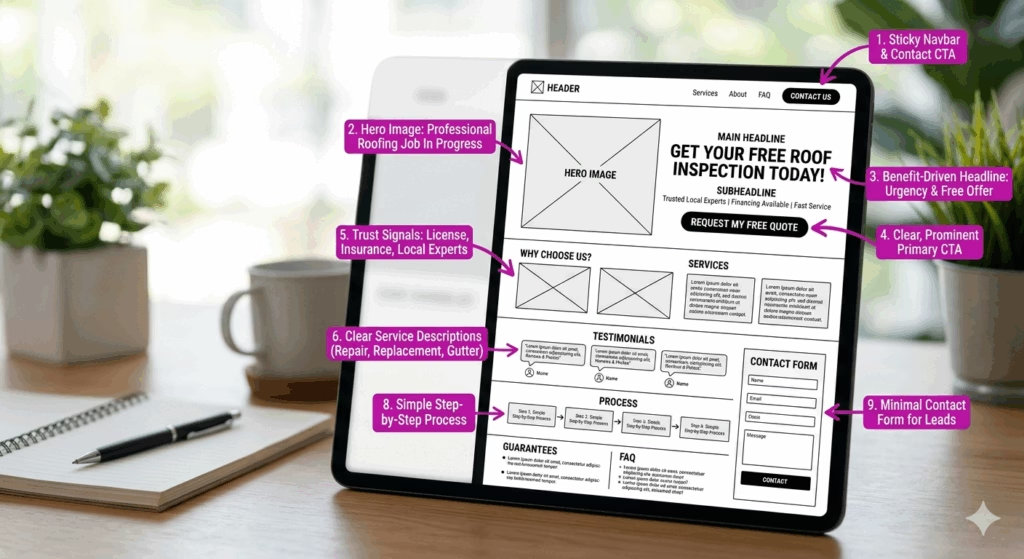
Every dedicated service landing page should include:
Above the fold:
- A clear, keyword-rich H1 headline (e.g., “Metal Roof Installation in [City] Built to Last 50+ Years”)
- A compelling subheadline that addresses the visitor’s core concern
- A single, prominent CTA (phone number or “Get a Free Estimate” button)
- A hero image showing a completed job of that exact service type
Body content:
- A thorough explanation of the service, written for the homeowner not Google
- What the process looks like (step by step)
- Materials used, warranties offered, what makes your approach different
- Answers to the 3–5 questions every customer asks before calling
Trust signals:
- Photos and videos of real completed jobs of that service type
- Testimonials specifically mentioning that service
- Licensing, insurance, and certification badges
- Years in business and number of jobs completed
Bottom of page:
- A secondary CTA (lead form or callback request)
- Internal links to related service pages and your main services hub
- FAQ section targeting long-tail keyword variations
How Many Landing Pages Does a Roofing Company Actually Need?
A good rule of thumb: one page per distinct service offering, multiplied by your primary service areas.
For a roofing company serving 3–5 cities with 6–8 core services, that’s 18–40 dedicated landing pages. That may sound like a large undertaking but it doesn’t happen all at once.
Start with your highest-revenue services in your primary market. Build those pages first, optimize them, let them rank, and reinvest the leads they generate into expanding the strategy to additional services and locations.
This is exactly the kind of structured, scalable approach built into a smart SEO strategy for roofing and construction businesses where every page is built with intention and tied to measurable business outcomes.
The Difference Between a Landing Page and a Blog Post
One common mistake roofing companies make: they write a blog post about a service and expect it to rank and convert like a landing page. It won’t and here’s why.
| Service Landing Page | Blog Post | |
|---|---|---|
| Primary Goal | Convert visitors into leads | Educate and build topical authority |
| Keyword Target | Commercial intent (“X service near me”) | Informational intent (“how does X work”) |
| CTA Placement | Multiple, prominent throughout the page | Minimal, usually at the end |
| Content Tone | Persuasive, benefit-driven | Educational, informational |
| URL Structure | /services/metal-roof-installation/ | /blog/what-is-metal-roofing/ |
Both serve important roles in your digital marketing ecosystem. But they are not interchangeable. A blog post about metal roofing will not outrank or out-convert a properly built metal roofing service page for commercial-intent searches.
Getting Started: Your 4-Step Landing Page Rollout Plan
You don’t need to build 30 pages this week. You need a plan.
Step 1 — Audit your current website. List every service you offer. Identify which ones have no dedicated page, which have thin or shared pages, and which (if any) are already well-developed.
Step 2 — Prioritize by revenue and search volume. Use a tool like Google Search Console or Google Keyword Planner to identify which services are being searched most frequently in your area. Start there.
Step 3 — Build with intent. Write each page for the homeowner first, Google second. Answer their real questions. Show your real work. Make the path to contact frictionless.
Step 4 — Connect your pages to your broader marketing system. Landing pages don’t work in isolation. They need to be connected to your lead generation and CRM system so that every form fill, every call, and every inquiry is captured, tracked, and followed up on automatically. A great landing page feeding into a broken follow-up process is a leaky bucket.
The Bottom Line
The roofing companies winning in local search right now are not doing anything magical. They’ve simply made the commitment to build a digital presence that matches the specificity of how their customers actually search.
Every service you offer is a keyword cluster. Every keyword cluster is a revenue opportunity. And every revenue opportunity deserves its own dedicated page one built to rank, built to convert, and built to grow.
If your website is still sending all of that potential to a single “Services” page, you’re not just missing leads. You’re handing them to your competitors.
Recent Post
Sniper Marketing: How Small Shops Win at Google Ads Without Corporate Budgets
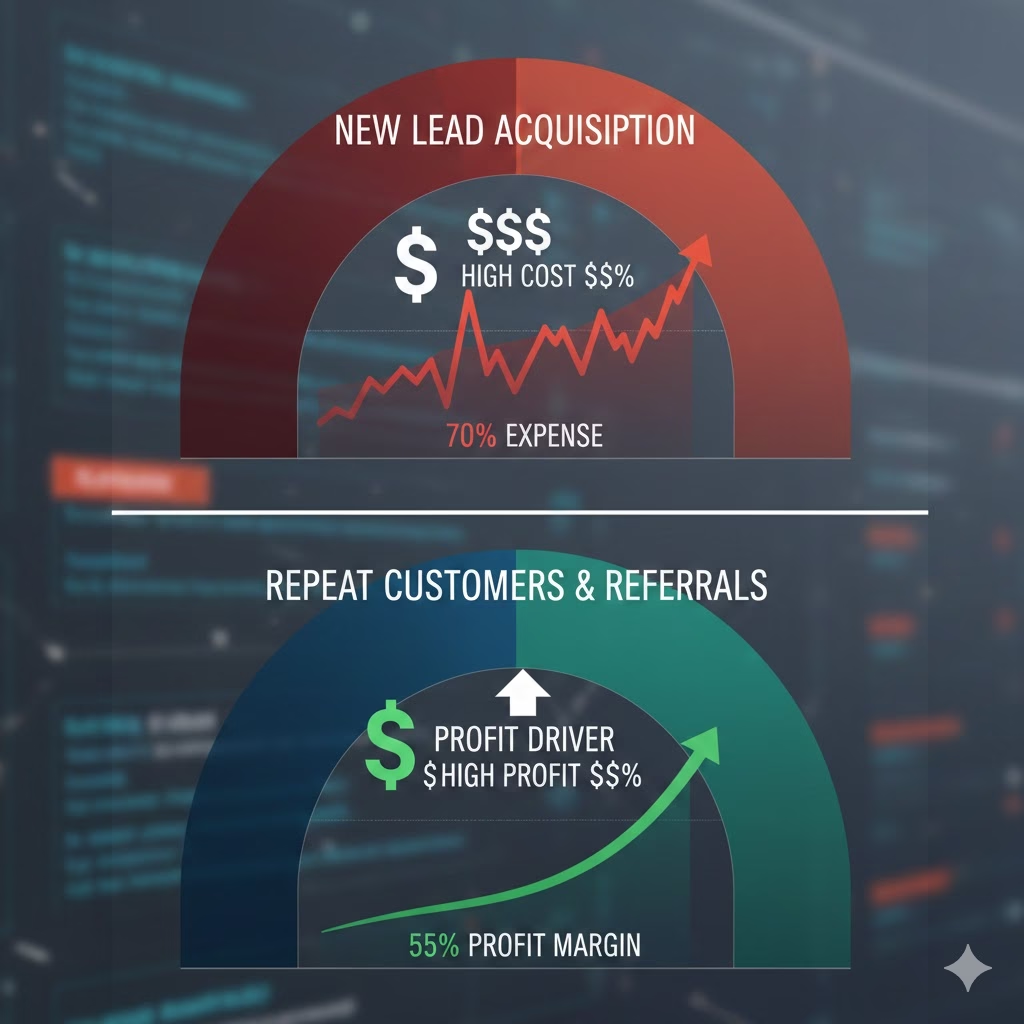
Stop Chasing Strangers: Why Customer Lifetime Value is the Real Growth Engine
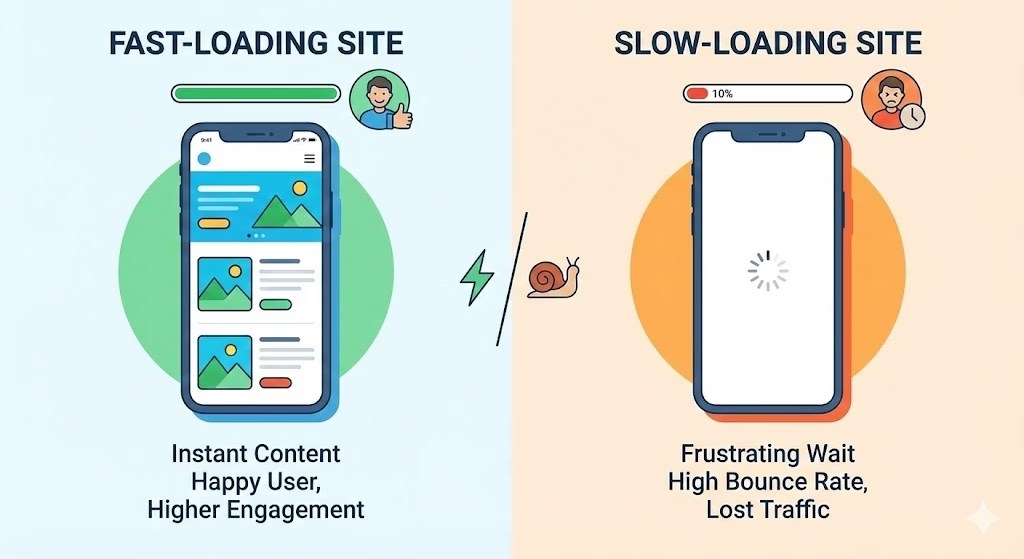
The Great Florida Migration: How Site Speed and Core Web Vitals Impact Your Rankings
Local SEO Checklist for 2026: 5 Ways to Own the Google Maps “3-Pack”
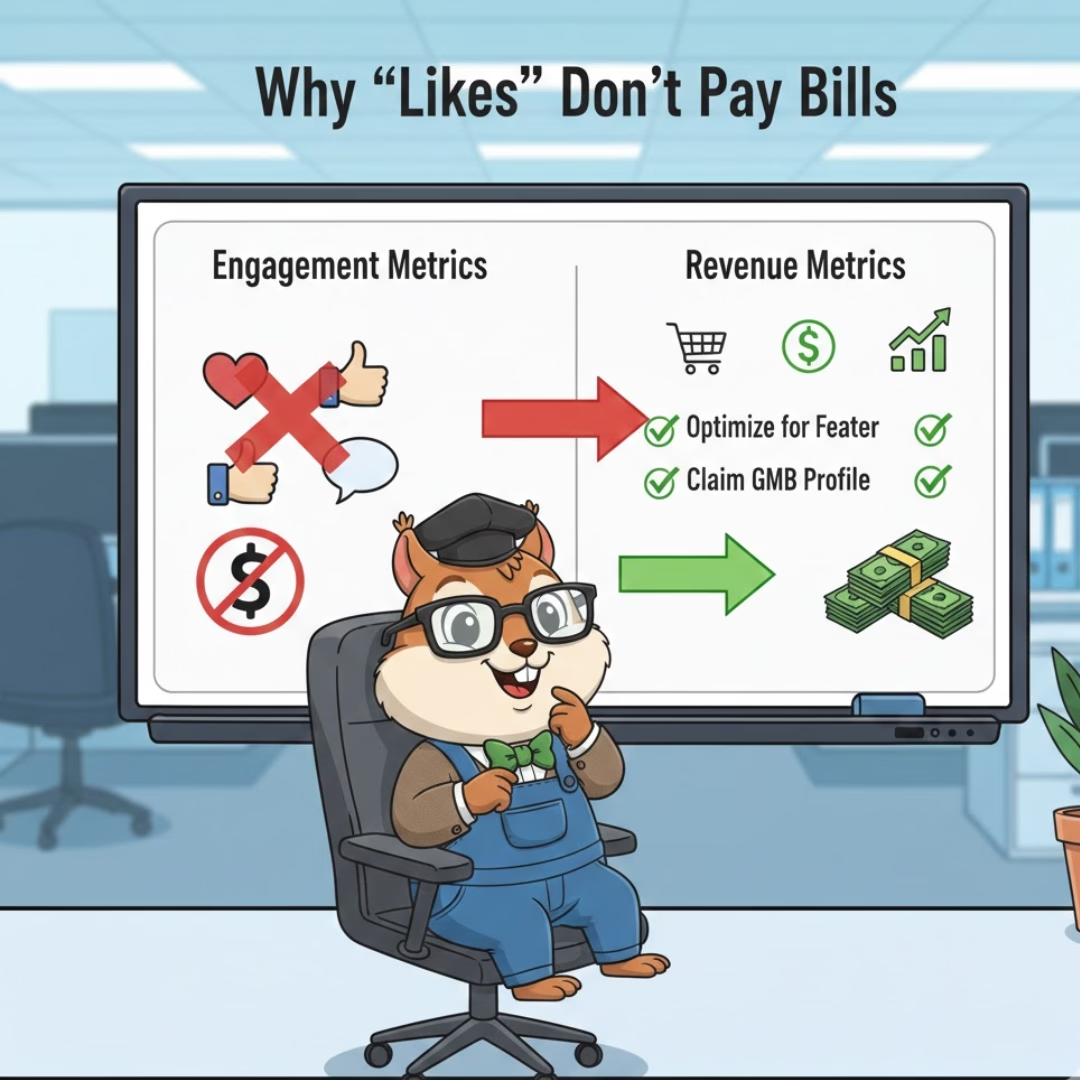
Why “Likes” Don’t Pay Bills: The Business Owner’s Guide to Conversion-Driven Marketing
You Might Also Like
Explore additional articles based on your interests.
View All
Uncategorized
Why Every Roofing Company Needs a Dedicated Landing Page for Each Service
Read More
Uncategorized
Sniper Marketing: How Small Shops Win at Google Ads Without Corporate Budgets
Read More
Uncategorized
Stop Chasing Strangers: Why Customer Lifetime Value is the Real Growth Engine
Read More
Uncategorized
The Great Florida Migration: How Site Speed and Core Web Vitals Impact Your Rankings
Read More
Uncategorized
Local SEO Checklist for 2026: 5 Ways to Own the Google Maps “3-Pack”
Read More
Marketing & Sales Questions
Why “Likes” Don’t Pay Bills: The Business Owner’s Guide to Conversion-Driven Marketing
Read More
Marketing & Sales Questions
Is Your SEO Strategy ‘Weatherproof’? Adapting to Google’s Next Algorithm Update
Read More
Uncategorized
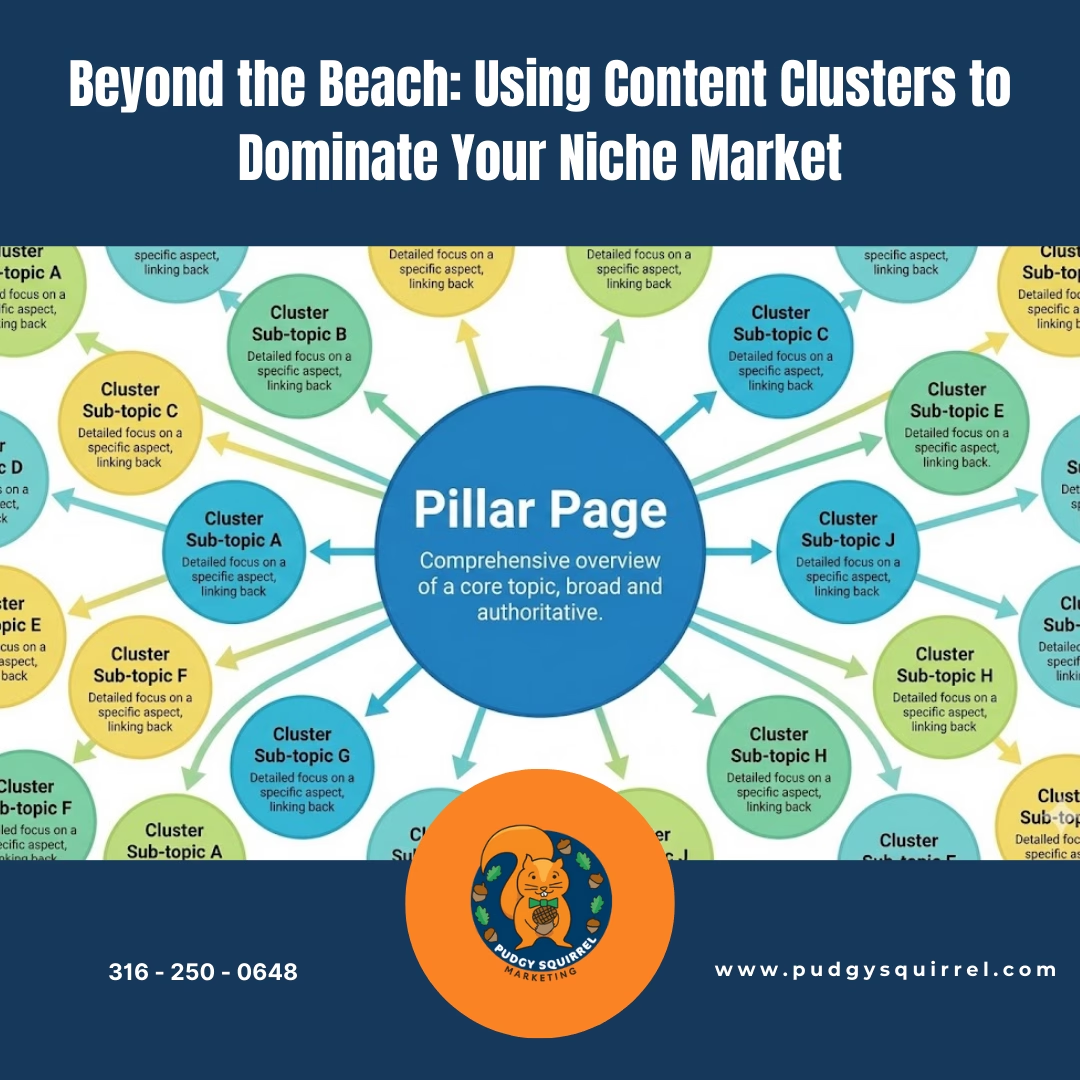
Beyond the Beach: Using Content Clusters to Dominate Your Niche Market
Read More