
Get In Touch
Shed Business Marketing 101: How to Sell More Sheds Without Relying on Lot Traffic
By Tony
May 8, 2026 11 mins
Share this post


Digital Marketing Solutions Tailored for Construction, Roofing, and Shed Businesses
Digital Marketing Solutions Tailored for Construction, Roofing, and Shed Businesses
Digital Marketing Solutions Tailored for Construction, Roofing, and Shed Businesses
Key Takeaways
- Lot traffic is declining as the primary driver of shed sales buyers research and decide online before they ever visit a lot or pick up the phone.
- A shed business with no digital presence is invisible to the majority of buyers who start their search on Google.
- The highest-leverage shift a shed company can make is building a website that works as an active sales tool, not just a digital brochure.
- Local SEO, targeted social media, and Google Ads each address a different stage of the buyer journey and work best when used together.
- Following up on leads quickly and consistently through an automated CRM is where most shed businesses lose sales they should be closing.
- Shed businesses that commit to a complete digital marketing system consistently outgrow those relying on location and word-of-mouth alone.
The Lot Traffic Problem Nobody’s Talking About
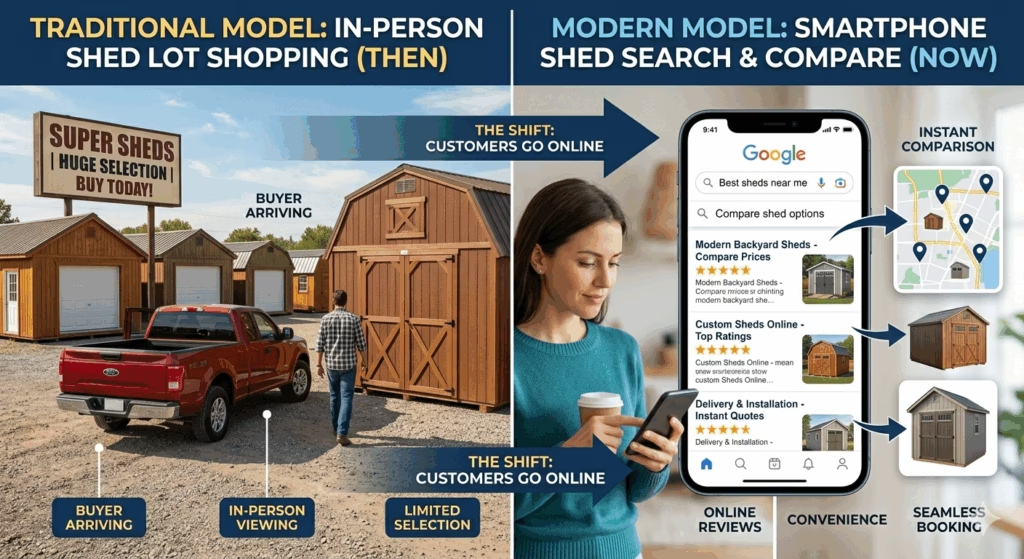
For decades, the shed business ran on a simple model: put your best-looking sheds on a visible lot, wait for traffic to pull in, and close the sale in person. Location was everything. A busy road meant a busy business.
That model still works but it’s working less every year.
Here’s what’s actually happening: the buyer who used to slow down and pull into your lot is now searching “storage sheds near me” on their phone while sitting in their driveway. They’re comparing options, reading reviews, looking at photos, and getting quotes all before they make a single in-person visit or phone call.
If your business isn’t showing up in that digital search, you simply don’t exist to that buyer. They’ll call someone else.
The shed companies growing fastest right now aren’t the ones with the best lot location. They’re the ones who’ve built a digital presence that intercepts buyers at every stage of the decision online, before the lot visit ever happens.
This post is a practical roadmap for how to do exactly that.
Understanding How Shed Buyers Actually Make Decisions
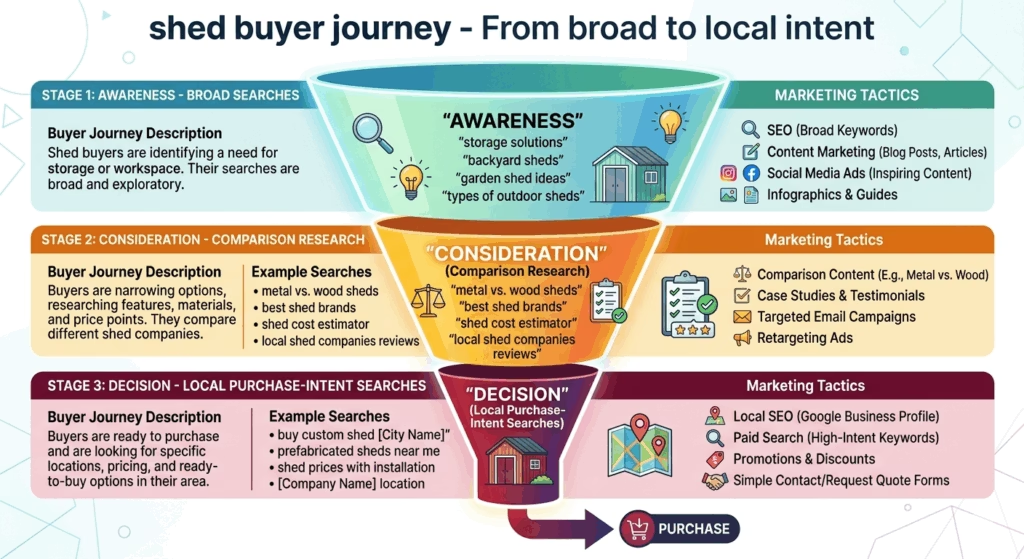
Before you can market effectively, you need to understand the journey your buyer takes from “I need a shed” to “I’m ready to buy.”
It typically looks like this:
Stage 1 — Awareness: Something triggers the need. The garage is too cluttered. The garden tools have nowhere to go. A new hobby needs space. The buyer starts broadly: “backyard storage ideas,” “how much does a shed cost,” “what size shed do I need.”
Stage 2 — Consideration: They start comparing options prefab vs. built-on-site, wood vs. vinyl vs. metal, local dealers vs. big box stores. They’re looking at photos, reading reviews, and narrowing down styles and budgets.
Stage 3 — Decision: They know what they want. Now they’re searching “[shed type] + [their city]” or “shed dealers near me.” They’re ready to talk price and timeline. This is the moment they call or fill out a form.
Most shed businesses only market to Stage 3 buyers the ones already ready to buy. That’s the most competitive, most expensive traffic to capture.
The businesses that grow fastest are the ones showing up at Stage 1 and Stage 2 as well educating, building trust, and positioning themselves as the obvious choice long before the buyer is ready to make a decision.
Your Digital Foundation: A Website That Actually Sells
Everything in your digital marketing strategy flows through your website. It’s the destination for every ad click, every Google search result, every social media link, and every QR code on your business card.
If the website doesn’t convert visitors into leads, nothing else matters.
Most shed company websites fail at this for one of three reasons:
- They look outdated. Low-quality photos, cluttered layouts, and fonts that belong in 2009 signal to buyers that the business might not be professional or trustworthy.
- They’re hard to navigate on a phone. The majority of shed shoppers are browsing on mobile. A website that isn’t mobile-optimized loses those visitors within seconds.
- They don’t have a clear next step. A visitor lands on the page, looks at some sheds, and… then what? If there’s no prominent call-to-action a phone number, a quote form, a “View Our Models” button most people leave without contacting you.
A high-performing shed business website includes:
- A clean, fast-loading homepage with a clear value proposition above the fold
- A full model gallery with high-quality photos and pricing (or starting-from pricing) for each style
- Individual pages for each shed type storage sheds, cabins, garages, playhouses each optimized for its own set of search terms
- A prominent quote request form that’s simple enough to complete in under two minutes
- Social proof Google review snippets, photos of completed installs, customer testimonials
- A clear phone number visible on every page, especially on mobile
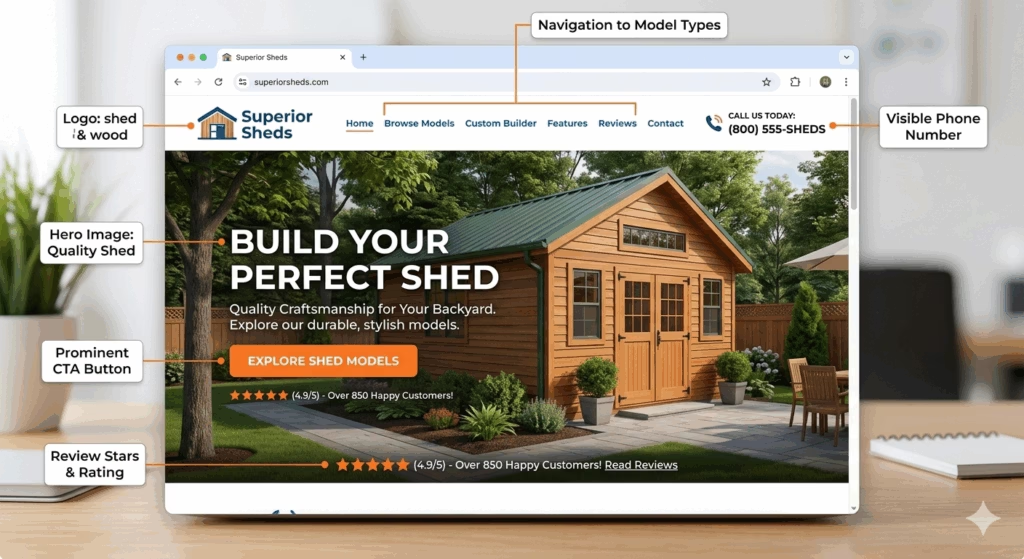
A professional, conversion-focused website is the single highest-leverage investment a shed business can make because it improves the return on every other marketing dollar you spend. This is why custom website design built specifically for construction and shed businesses is one of the most requested services for companies serious about growing beyond lot traffic.
Local SEO: Getting Found When Buyers Are Searching
Search Engine Optimization (SEO) is how you make your business show up in Google when someone in your area searches for what you sell.
For a shed business, the highest-value searches look like this:
- “storage sheds [city name]”
- “portable sheds for sale near me”
- “custom shed builders [county or region]”
- “vinyl sheds [city]”
- “shed installation [city]”
When someone types any of these into Google, you want your business to appear ideally in the Google Local Pack (the map with three business listings) and on the first page of organic results.
Here’s how shed businesses earn those positions:
Optimize Your Google Business Profile
Your Google Business Profile (formerly Google My Business) is the single most important free marketing tool available to a local shed business. And most shed companies have barely touched it.
A fully optimized profile includes:
- Complete and accurate business name, address, phone number, and hours
- The correct primary category (“Storage Shed Dealer” or “Shed Builder”)
- A thorough business description with natural keyword integration
- 20+ high-quality photos of your models, your lot, and installed projects
- Active review generation (covered in detail in our review generation guide)
- Weekly Google Posts featuring new inventory, promotions, or seasonal content
- Q&A section populated with the questions your customers most frequently ask
Build Service and Location Pages on Your Website
Google rewards specificity. A page dedicated to “vinyl storage sheds in [City, State]” will outrank a generic “Products” page for that search every time.
Build individual pages for:
- Each shed style or type you carry
- Each primary city or county you serve
- Combination pages like “12×16 Storage Sheds in [City]” for high-purchase-intent searches
Earn Local Citations and Backlinks
Citations are mentions of your business name, address, and phone number on other websites directories like Yelp, Houzz, the Better Business Bureau, and local chamber of commerce sites. Consistent citations across 20–30 directories reinforce your legitimacy to Google and improve your local rankings.
Backlinks from local news sites, community organizations, or industry publications carry even more weight.
The technical side of SEO site speed, structured data markup, crawlability also matters, but these foundational elements are where most shed businesses have the biggest gap. A purpose-built SEO strategy for shed and construction businesses addresses all of these layers systematically, rather than just checking boxes on a generic template.
Social Media: Where Shed Buyers Get Inspired
Social media plays a different role than SEO. Search captures buyers who already know they want a shed. Social media reaches buyers who haven’t started looking yet and makes them want one.
Facebook and Instagram are the two platforms that matter most for shed businesses. Here’s how to use each effectively.
Facebook: Community, Targeting, and Marketplace
Facebook remains the dominant platform for home improvement and outdoor living content, particularly among the 35–65 age group that buys the most sheds.
What works on Facebook for shed businesses:
- Before-and-after project posts — A cluttered garage transformed by a new storage shed is inherently shareable and emotionally resonant
- Video walkthroughs — A 60–90 second phone video walking through a new model on your lot performs significantly better than static photos
- Facebook Marketplace listings — Many shed buyers start their search here, and it’s free to list
- Customer spotlight posts — With permission, share a photo of a completed install at a customer’s home, tagging their location. Local engagement on these posts is high.
- Seasonal promotions — Spring and fall are peak shed buying seasons. Promotional posts during these windows convert well.
- Facebook Ads — Targeted to homeowners within your service radius, in specific income brackets, with interests in home improvement, gardening, or outdoor living. Even a modest budget of $300–500/month can generate consistent inquiry volume.
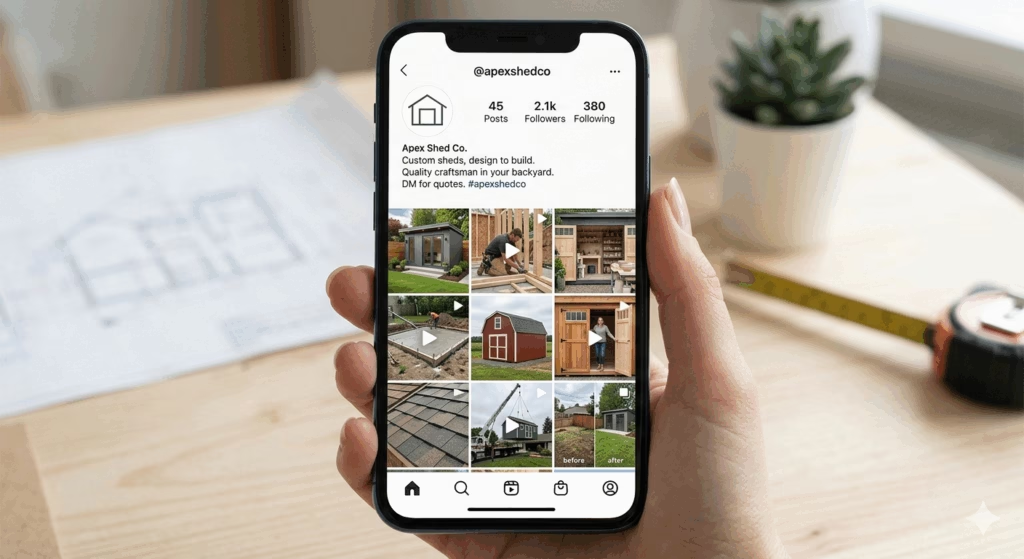
Instagram: Visual Portfolio and Discovery
Instagram is where you build the brand perception that makes buyers choose you over a competitor with similar pricing.
Post consistently to:
- Showcase your most visually striking models
- Highlight customization options windows, dormers, colors, lofts
- Show the installation process (buyers love seeing how it works)
- Feature your team faces build trust in a way that product photos alone cannot
Reels (short vertical videos) get the highest organic reach on Instagram right now. A 30-second video of a shed delivery and installation, set to upbeat audio, regularly outperforms photos by 3–5x in reach.
Google Ads: Capturing Buyers Ready to Purchase Right Now
SEO is a long-term strategy. Social media builds awareness over time. Google Ads is how you capture buyers who are searching right now, today, with purchase intent and generate leads immediately while your organic rankings are still climbing.
For shed businesses, the most valuable Google Ad campaigns target:
- High-intent keywords: “buy storage shed [city],” “portable shed for sale near me,” “12×16 shed installed price”
- Branded competitor terms: Bidding on the names of competitor shed dealers ensures you appear as an alternative when buyers are comparison shopping
- Seasonal windows: Spring (March–May) and fall (August–October) are peak demand periods increasing ad spend during these windows amplifies already high organic demand
What makes shed Google Ads actually work:
The ad itself is only 20% of the equation. The other 80% is what happens after the click. Sending paid traffic to your homepage rather than a dedicated landing page for the specific shed type or offer in the ad is the single biggest waste of ad budget shed businesses make.
Every campaign needs a matching landing page. “Vinyl Shed Sale Free Delivery This Month” ad → dedicated vinyl shed promotion landing page. The message match between ad and landing page is what converts clicks into quote requests.
A managed Google Ads campaign for shed and construction businesses combines keyword research, ad copy, landing page alignment, and ongoing optimization to ensure every dollar is working toward a booked sale not just generating impressions.
Lead Follow-Up: Where Most Shed Sales Are Actually Lost
Here’s a pattern that plays out constantly in the shed industry:
A buyer submits a quote request on your website. They’re ready to buy. They have a budget. They’ve already picked a style.
Nobody follows up for two days.
By then, they’ve already ordered from your competitor who called them back within an hour.
The National Sales Executive Association found that 80% of sales require five or more follow-up contacts. Most contractors and shed dealers follow up once, maybe twice, then move on.
This isn’t a judgment it’s a systems problem. When follow-up relies on whoever happens to check the inbox that day, leads fall through the cracks. Every time.
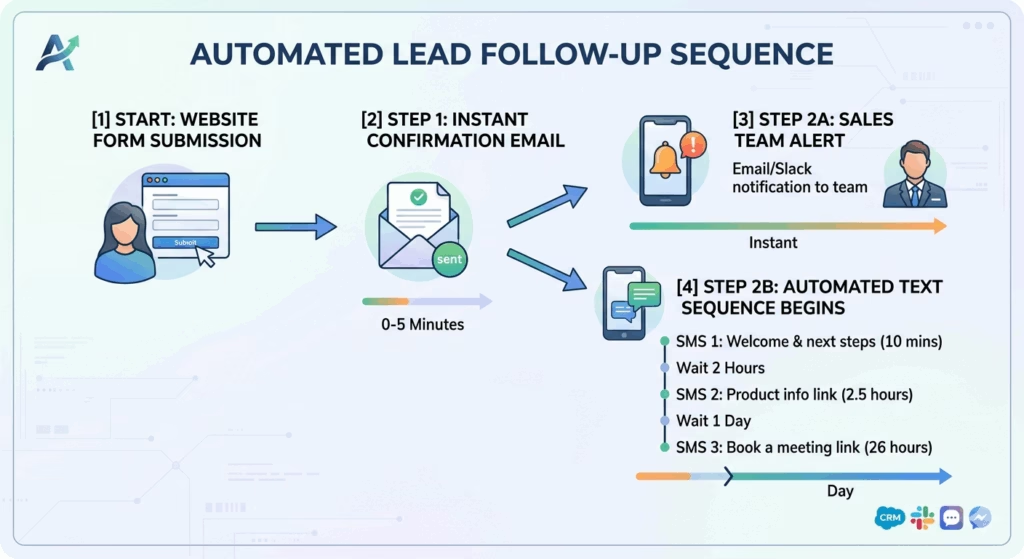
The fix is a CRM (Customer Relationship Management) system that:
- Captures every lead the moment it comes in from your website form, Facebook ad, Google ad, or phone call
- Immediately sends the lead an automated confirmation and initial response
- Alerts the sales person in real time
- Triggers a follow-up sequence if no contact is made within a set timeframe
- Tracks every conversation, quote, and status update in one place
For a shed business juggling deliveries, installations, production schedules, and customer calls, this kind of automation isn’t a luxury it’s what allows you to grow without dropping balls. A CRM built for construction and shed businesses does exactly this, turning your lead flow into a managed pipeline rather than a scramble.
Seasonal Marketing: Timing Your Push for Maximum ROI
Shed sales are seasonal, and your marketing calendar should reflect that. Here’s how to align your marketing investment with buyer demand:
Late Winter (February–March): Begin ramping up digital ad spend and social posting. Buyers start planning spring projects. Email campaigns to past inquiries and customers with early-bird promotions work well here.
Spring (April–June): Peak season. Maximum ad spend. New inventory reveals. Promotion-heavy content on social. This is when you want full visibility ads, SEO, social, and Google Business Profile activity all firing simultaneously.
Summer (July–August): Moderate demand. Focus on your backlog, reviews from spring customers, and content creation (blog posts, photos, videos) that will rank and compound into fall.
Fall (September–October): Second peak. “Get it installed before winter” messaging is highly effective. Reactivate past leads who inquired in spring but didn’t buy.
Winter (November–January): Lower demand, but an excellent time to lock in pre-orders with deposits, run clearance on remaining inventory, and plan next year’s marketing strategy.
The Referral and Review Engine: Turning Customers Into Your Sales Team
Digital marketing gets buyers to your door. Happy customers keep them coming.
Shed buyers talk. They post photos of their new shed on Facebook, they mention it to neighbors, they answer “where did you get that?” at block parties. That organic word-of-mouth is powerful and you can systematize it.
A simple referral program:
- Offer a flat referral fee ($75–$150 is standard) for every customer who refers a paying buyer
- Make it easy to refer a simple card with your phone number and website, or a text they can forward to a friend
- Follow up with every past customer 30–60 days post-install to check in, ask for a Google review, and remind them about the referral program
Generating Google reviews consistently: Google reviews do double duty they improve your search rankings and they convert hesitant buyers who find you organically. A shed company with 80+ reviews at 4.7 stars closes a significantly higher percentage of inquiries than one with 12 reviews at 3.9 stars.
Build a simple post-installation sequence: a personal thank-you message, a request for a Google review with a direct link, and a follow-up if no review comes through within a few days. The volume of reviews you generate will compound over months into one of your most durable competitive advantages.
Putting It All Together: The Shed Marketing Stack
No single tactic wins the game. The shed businesses growing fastest are running an integrated system where each channel reinforces the others:
| Marketing Layer | What It Does | Timeline to Results |
|---|---|---|
| Website (optimized) | Converts traffic from all channels into leads | Immediate improvement |
| Local SEO | Earns organic visibility for high-intent searches | 3–6 months |
| Google Business Profile | Captures Local Pack traffic and builds trust | 30–60 days |
| Google Ads | Generates immediate purchase-ready leads | Days to weeks |
| Social Media | Builds brand, earns referrals, creates demand | 2–4 months |
| CRM & Follow-Up | Closes more of the leads you’re already getting | Immediate improvement |
| Reviews & Referrals | Compounding trust and conversion rate improvement | Ongoing |
The goal isn’t to do all of this at once. It’s to build the stack deliberately, starting with your highest-leverage gaps, and add layers as each one is producing consistent results.
Where to Start: Your 90-Day Shed Marketing Kickoff
Month 1 — Fix the Foundation
- Audit your website for mobile usability, speed, and conversion elements
- Fully complete and optimize your Google Business Profile
- Set up a process for requesting Google reviews from every completed customer
Month 2 — Start Generating Traffic
- Launch a targeted Google Ads campaign for your top 1–2 service areas
- Begin posting consistently on Facebook (3x/week minimum) with quality photos and videos
- Create or improve your two highest-value service/product pages with SEO-optimized content
Month 3 — Close More of What You’ve Built
- Implement a CRM to capture and automate follow-up for every lead
- Build a referral program and introduce it to your existing customer base
- Review your ad and SEO data double down on what’s generating leads, adjust what isn’t
The Bottom Line
Lot traffic isn’t going to zero. But it’s going down — and it’s going to keep going down.
The shed businesses that thrive over the next five years will be the ones that build a digital presence capable of reaching buyers wherever they are in their decision process: on Google, on Facebook, on Instagram, and on the websites of businesses that show up first when it matters most.
You don’t need to be a marketing expert to make this work. You need a clear strategy, the right tools, and a system that runs consistently even when you’re focused on running the business.
That system exists. It’s being used by shed and construction businesses across the country right now — and it’s available to you.
Recent Post
Google Business Profile vs. Google Ads: Which One Should a Contractor Invest in First?
How Much Should a Roofing or Construction Company Spend on Marketing? (A No-BS Breakdown)
The Before-and-After Effect: Why Project Photos Are Your Best Marketing Asset as a Builder
Roofing Leads vs. Roofing Customers: Why Most Contractors Are Targeting the Wrong Thing
How to Set Up a Follow-Up System That Books More Jobs Without Hiring Another Employee
Categories
You Might Also Like
Explore additional articles based on your interests.
View All
Pudgy Squirrel Marketing
7 Signs Your Construction Company’s Website Is Losing You Jobs (And How to Fix It)
Read More
Pudgy Squirrel Marketing
Google Business Profile vs. Google Ads: Which One Should a Contractor Invest in First?
Read More
Pudgy Squirrel Marketing
How Much Should a Roofing or Construction Company Spend on Marketing? (A No-BS Breakdown)
Read More
Pudgy Squirrel Marketing
The Before-and-After Effect: Why Project Photos Are Your Best Marketing Asset as a Builder
Read More
Pudgy Squirrel Marketing
Roofing Leads vs. Roofing Customers: Why Most Contractors Are Targeting the Wrong Thing
Read More
Pudgy Squirrel Marketing
How to Set Up a Follow-Up System That Books More Jobs Without Hiring Another Employee
Read More
Pudgy Squirrel Marketing
What to Post on Facebook When You’re a Contractor (And Have No Time to Think About It)
Read More
Pudgy Squirrel Marketing
Shed Business Marketing 101: How to Sell More Sheds Without Relying on Lot Traffic
Read More