
Get In Touch
The Great Florida Migration: How Site Speed and Core Web Vitals Impact Your Rankings
By Tony
February 3, 2026 3mins
Share this post

Digital Marketing Solutions Tailored for Construction, Roofing, and Shed Businesses
Digital Marketing Solutions Tailored for Construction, Roofing, and Shed Businesses
Digital Marketing Solutions Tailored for Construction, Roofing, and Shed Businesses
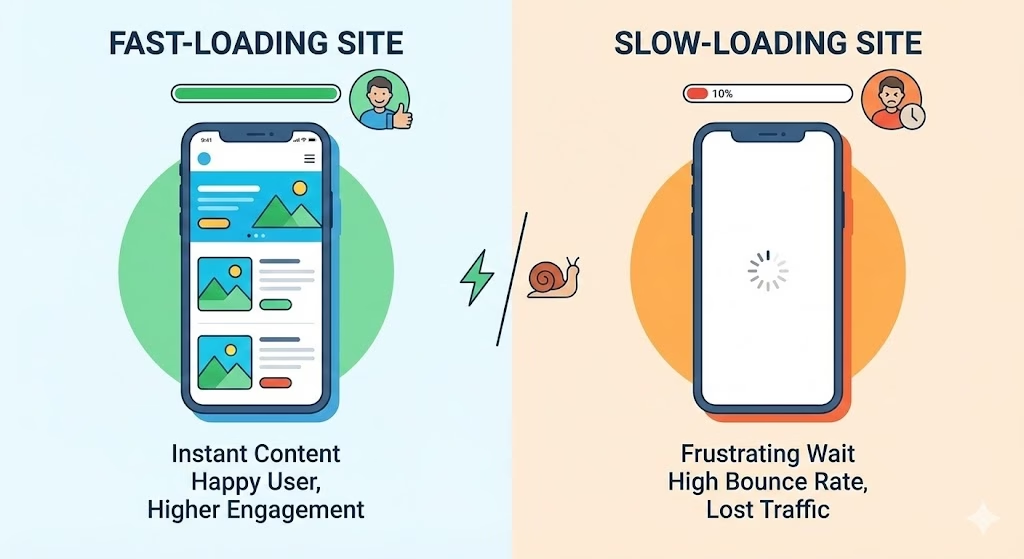
In Florida, everything moves fast: the tourists, the thunderstorms, and the competition. But what about your website? If your site is sluggish, you are essentially asking visitors to leave before they even see your excellent content. Pudgy Squirrel Marketing wants you to know that site speed is not just a nicety; it is a critical ranking factor known as Core Web Vitals (CWV).
What Are Core Web Vitals?
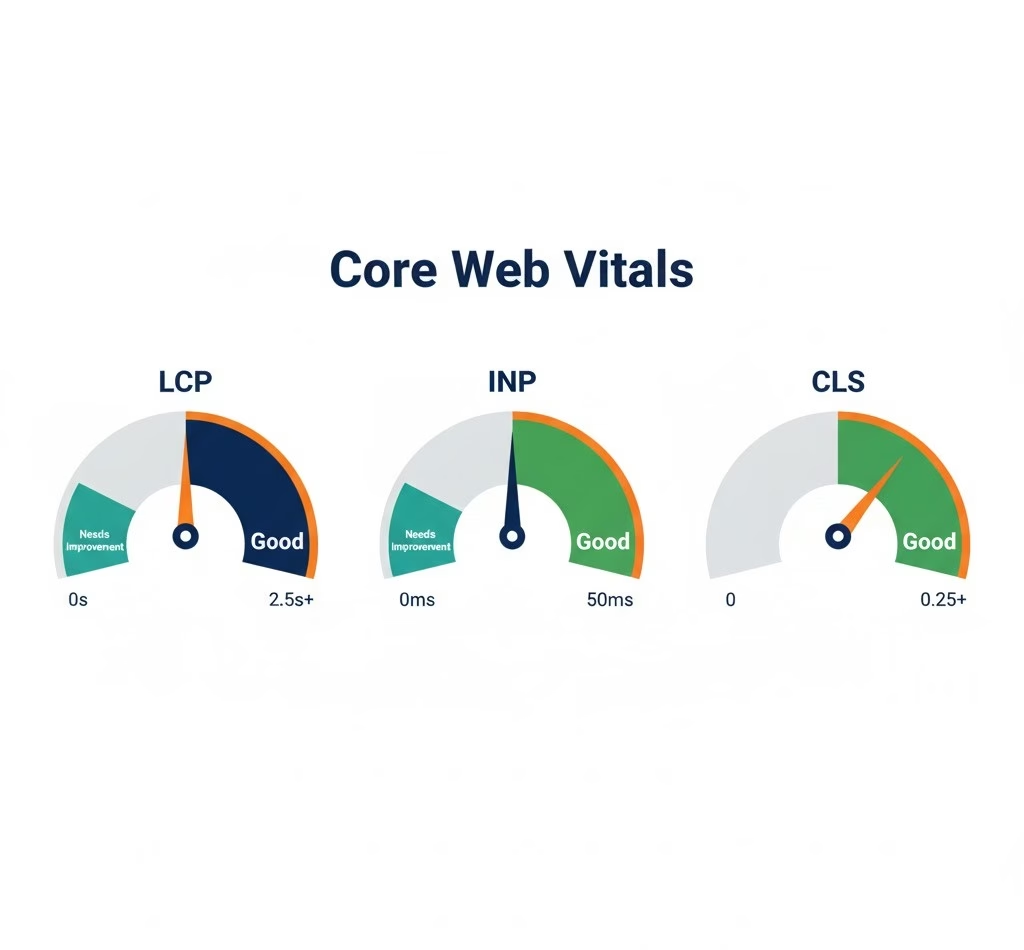
Core Web Vitals are a set of metrics Google uses to measure real world user experience. They measure how fast your page loads, how quickly it becomes interactive, and how stable the page remains while loading. Ignoring them means ignoring Google’s clear signal about prioritizing the user experience.
The Three Pillars of Site Health
Google focuses on three main metrics to assess your site’s health:
1. Largest Contentful Paint (LCP)
LCP measures how long it takes for the largest and most meaningful content element on your screen to load. For a user, this is when they feel the page has actually loaded. Google aims for an LCP under 2.5 seconds. If your Florida business is advertising last minute boat rentals or lunch specials, a slow LCP means lost customers.
2. Interaction to Next Paint (INP)
INP measures responsiveness. It tracks the delay between a user interaction (like clicking a button or tapping a menu item) and the browser providing visual feedback. A slow INP creates a frustrating, laggy experience. For ecommerce or booking sites, fast INP means smooth transactions and happy customers.
3. Cumulative Layout Shift (CLS)
CLS measures visual stability. Have you ever tried to click a button, only to have the text above it suddenly shift down, making you click the wrong item? That annoying jump is CLS. A low CLS score means your content stays put, offering a professional and trustworthy experience.
The Florida Connection: Speed for Mobile Users
Think about your primary audience. Many are tourists or people searching for local services on the go. They often use cellular data or weak Wi Fi connections at the beach or hotel.
- Mobile First: If your mobile experience is slow or unreliable, you are losing the vast majority of local searchers.
- Immediate Need: People searching for “towing service near me” or “best seafood restaurant Orlando” need immediate answers. If your site takes more than three seconds to load, they will migrate to a competitor.
Actionable Tips to Improve Your CWV
You do not need to be a coding wizard to make a difference:
- Optimize Images: Compress all large images before uploading. Use next generation formats like WebP where possible.
- Clean Up Code: Remove unused CSS and JavaScript. Less code means faster loading.
- Prioritize Above the Fold: Ensure the critical content visible immediately (above the fold) loads first. Defer loading of nonessential elements lower down the page.
- Invest in Quality Hosting: Cheap hosting often means slow servers. A reliable, fast server foundation is non negotiable.
Ready to Dominate the Search Landscape?
Do not let technical issues hold your business back. A healthy website that prioritizes user experience is key to surviving Google’s algorithm updates and capturing high quality Florida traffic.
Recent Post
Local SEO Checklist for 2026: 5 Ways to Own the Google Maps “3-Pack”
Why “Likes” Don’t Pay Bills: The Business Owner’s Guide to Conversion-Driven Marketing
Is Your SEO Strategy ‘Weatherproof’? Adapting to Google’s Next Algorithm Update
Beyond the Beach: Using Content Clusters to Dominate Your Niche Market
Mastering E E A T: Google’s Secret Sauce for Ranking Higher
You Might Also Like
Explore additional articles based on your interests.
View All
Uncategorized
The Great Florida Migration: How Site Speed and Core Web Vitals Impact Your Rankings
Read More

Uncategorized
Local SEO Checklist for 2026: 5 Ways to Own the Google Maps “3-Pack”
Read More
Marketing & Sales Questions
Why “Likes” Don’t Pay Bills: The Business Owner’s Guide to Conversion-Driven Marketing
Read More
Marketing & Sales Questions
Is Your SEO Strategy ‘Weatherproof’? Adapting to Google’s Next Algorithm Update
Read More

Uncategorized
Beyond the Beach: Using Content Clusters to Dominate Your Niche Market
Read More
Marketing & Sales Questions
Mastering E E A T: Google’s Secret Sauce for Ranking Higher
Read More
Marketing & Sales Questions
Zero Click SERPs: How to Win When Users Don’t Click
Read More
Marketing & Sales Questions
Content vs. Conversion: Finding the Perfect Digital Marketing Balance
Read More